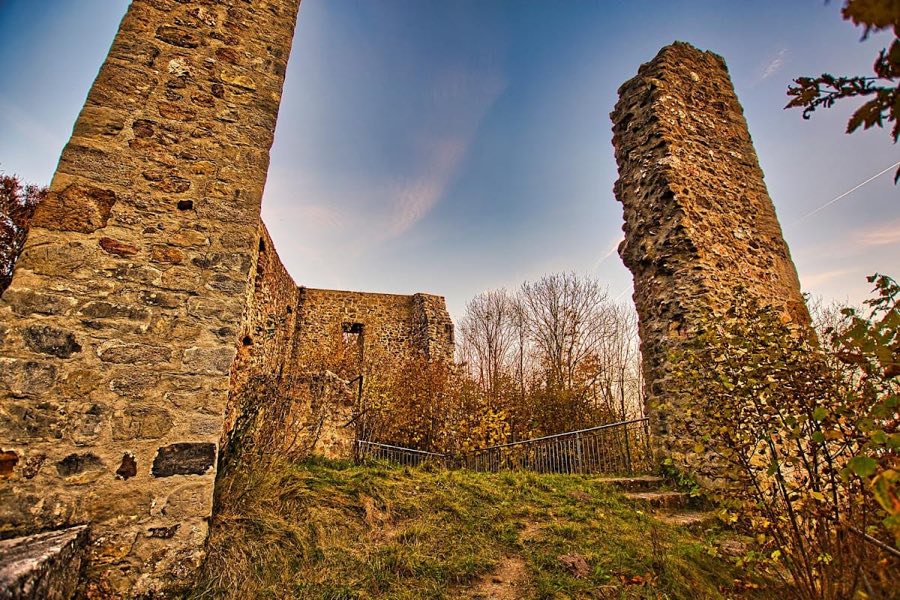
No. 32356
Burg Schwärzenberg
Germany
CastleRuin12th century
No. 42103
Castle · Germany
No. 42103 · 49.207 N, 12.217 E
Quick summary
Burg Hof am Regen is a castle in Germany with origins associated with the 12th century.
See all castles in GermanyBurg Hof am Regen is situated in the village of Hof am Regen within the municipality of Nittenau, Germany. It was established by members of the medieval German nobility and served as a fortified residence and administrative center within the Bavarian region.
The earliest records of the site date back to around 1150, when the noble family von Hof first appeared as ministeriales—unfree knights or officials—under the ruling Wittelsbach dynasty. This family held local political influence during the 12th and 13th centuries and exercised lower judicial authority through the Hofmark system, a territorial jurisdiction granting limited court rights. During this period, Burg Hof am Regen functioned not only as a noble residence but also as a seat of governance within the local feudal order.
In 1340, a family dispute led to the splitting of the von Hof lineage into two main branches. One branch continued to reside at Hof am Regen, while the other established itself at Burg Lobenstein. Two prominent family members, Otto and Dietrich von Hof, served as vassals to the Palatinate princes and retreated to Lobenstein during this division. The von Hof presence at Burg Hof am Regen gradually declined, with the last documented mention of the family occurring in 1488 with Hiltprand von Hof. This marked the end of the von Hof family’s documented involvement with the site.
Ownership changed hands several times in the subsequent centuries. In 1735, the property came under the control of the Counts of Thürheim. Later, it passed to the Lords of Fischbach before being acquired in 1801 by Lieutenant General Wilhelm Karl Count von Eckart. His descendants, including Count Du Moulin-Eckart, maintained possession of the castle into later generations. Throughout these transitions, Burg Hof am Regen remained an important heritage site, embedded within the local nobility’s holdings.
Today, the castle is also part of an annual community event called the Geisterwanderung, shared with nearby castles Stefling and Stockenfels, highlighting its continuing cultural relevance within the region.
The layout of Burg Hof am Regen consists of two main sections: a southern outer bailey and the northern main castle. The core of the main castle is a Romanesque country church constructed in the 12th century, reflecting the combined religious and defensive functions of the site. This early church building was later modified by adding two upper floors designed for residential and practical uses. As a result, the church tower was effectively transformed into a fortified living space, characteristic of so-called tower castles where defense and habitation are integrated.
The castle’s defensive architecture includes walls that extend up to 2.5 meters in thickness, demonstrating significant efforts to withstand assault. Numerous arrow slits—narrow vertical openings used by archers to shoot while protected—are incorporated in the walls, underscoring the site’s fortified nature.
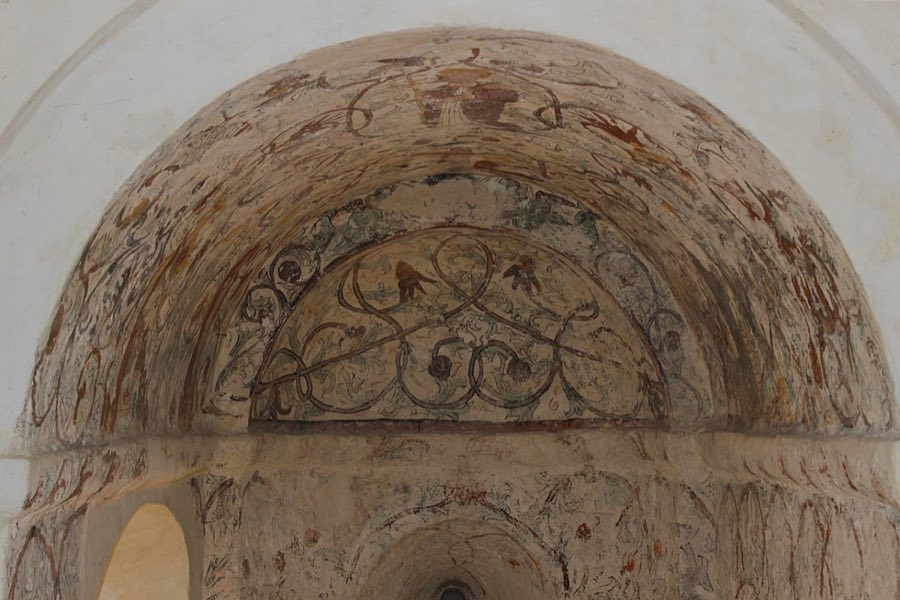
Inside the chapel located within the castle, the apse features frescoes dating from the second half of the 15th century. These wall paintings have undergone restoration to preserve their historical detail and remain a key element of the castle’s artistic heritage.
Beneath the visible structures, archaeological investigations have revealed earlier construction phases and subterranean remains that document the site’s long history of occupation and adaptation. Additionally, a partially preserved moat encircles part of the complex, classified today as a terrain monument. This moat once served as a defensive water barrier, further protecting the castle from intruders.
Together, these architectural and archaeological elements offer a tangible link to the medieval origins and continued evolution of Burg Hof am Regen across several centuries.
No. 32356
No. 36200
No. 75875
No. 19570
Comments
Comments for Burg Hof am Regen will require a verified account before posting.
We'll send a verification link before your first comment is published.