No. 80364
Wellheim Castle
Germany
CastleRuin15th century
No. 49642
No. 49642 · 48.799 N, 11.104 E
Quick summary
Burg Hütting is a castle in Germany with origins associated with the 19th century.
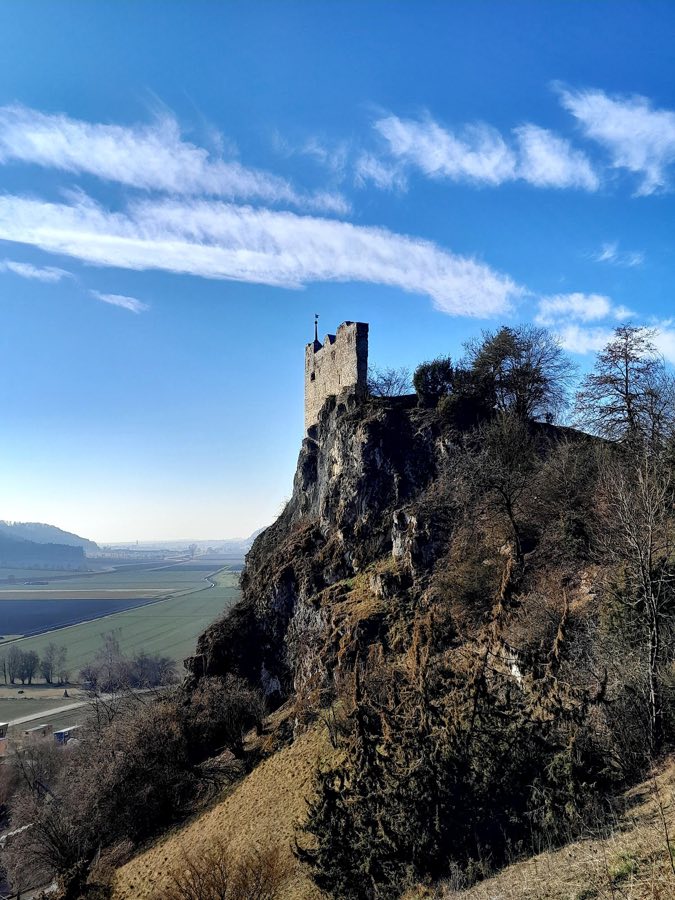
See all castles in GermanyBurg Hütting is situated above the village of Hütting in the municipality of Rennertshofen, Germany. It was established around the year 1060 by the Counts of Lechsgemünd, a noble family of the medieval Bavarian region, as a defensive stronghold perched on a steep rock ridge.
For nearly three centuries, the castle’s management was overseen by a ministerial family who adopted its name, becoming known as the Lords of Hütting. This family resided at the fortress and administered the surrounding lands until about 1342. Following the death of the final count associated with the castle, control of the county transferred to the Dukes of Bavaria. During this period, the lordship of Hütting was occasionally used as collateral in political dealings, reflecting the shifting power dynamics within the Bavarian duchies.
Tensions among rival Bavarian duchies culminated in violent conflicts around 1421 and 1422. During these struggles, Burg Hütting was set on fire, suffering significant damage that led to its abandonment. In the centuries that followed, local villagers gradually quarried the ruins for building materials. By the 19th century, the last substantial segment of the castle’s defensive ring wall gave way. Towards the end of the 20th century, efforts to conserve what remained of the main residential tower were undertaken, securing the site’s historical remnants. Today, Burg Hütting is officially recognized as a protected heritage monument and archaeological site by Bavarian authorities.
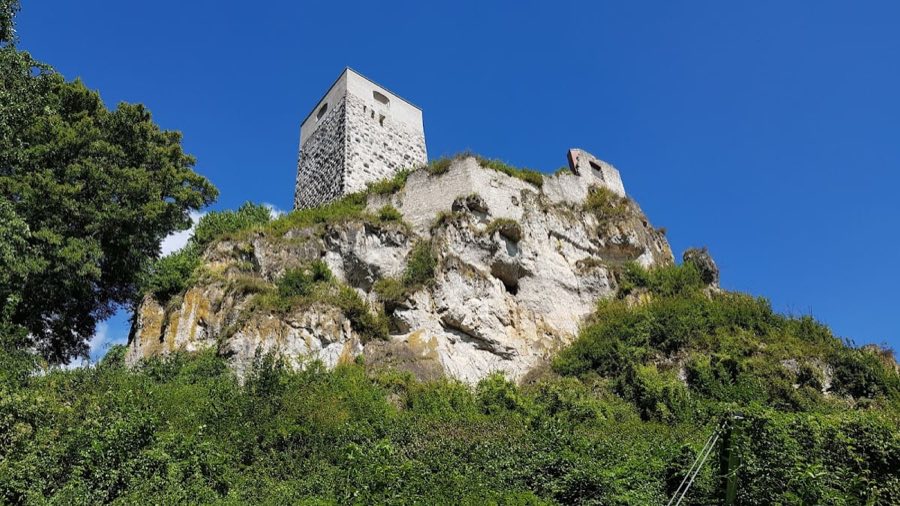
The ruins of Burg Hütting reveal a compact fortress with a simple but effective design focused on a small residential tower called a palas. This tower stood on an eastern rocky outcrop that marked the tip of the spur on which the castle was built. Its location atop a Jura massif provided nearly vertical natural cliffs to the north, south, and east, limiting access to the site from the west only.
The residential tower’s eastern wall remains standing to a height of approximately seven to eight meters and includes five original window openings. The southeastern corner of the building is also preserved. Built using roughly cut rubble stones arranged in walls about one meter thick, the masonry reflects the practical construction methods of the 11th century.
West of the palas lay a small outer bailey, or courtyard. Archaeological surveys have identified the foundations of an approximately square building within this area, though above-ground remains have largely disappeared. A shallow neck ditch once separated the inner castle from this outer enclosure, providing an additional defensive barrier; much of this ditch has since been leveled through natural and human activity.
The castle’s strategic position on a sharply elevated rock formation was both a defensive advantage and a determining factor in its layout. Today, the castle rock itself is regarded as a noteworthy geological site by the Bavarian environmental authorities. Conservation work has focused on stabilizing the remaining portion of the palas, preserving this fragment of medieval architecture amid the rugged landscape for future study and protection.
No. 80364
No. 36469
No. 14609
No. 39877
Comments
Comments for Burg Hütting will require a verified account before posting.
We'll send a verification link before your first comment is published.