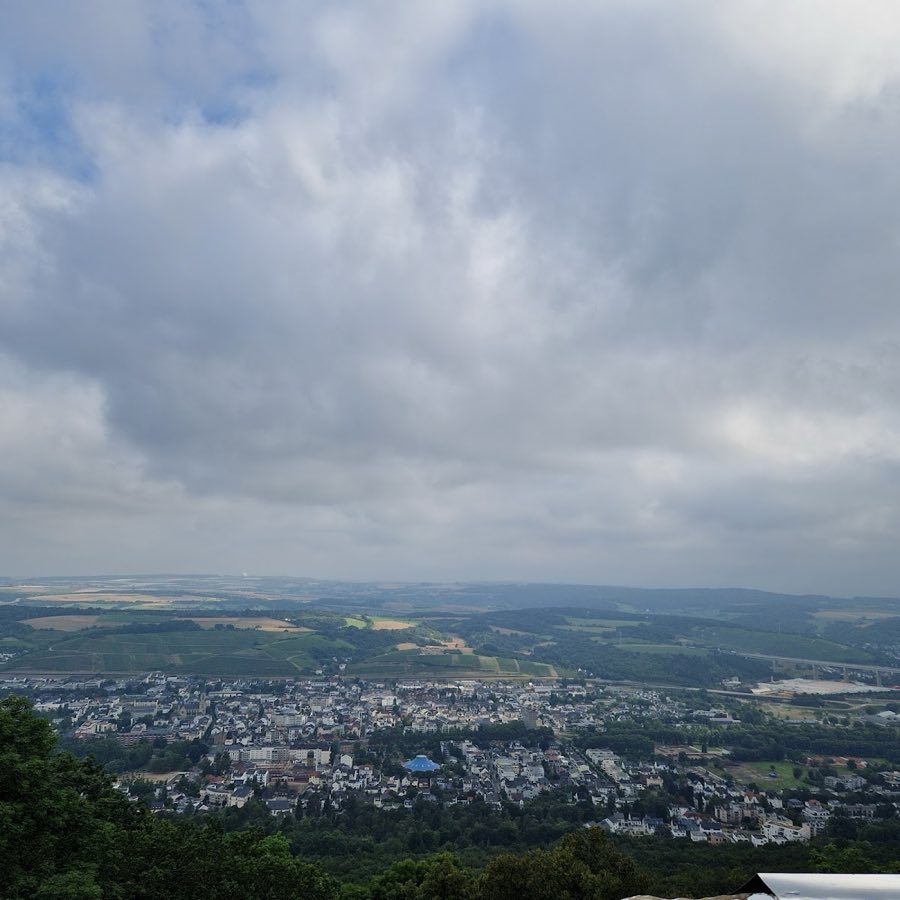
No. 20798
Burg Neuenahr
Germany
CastleRuin17th century
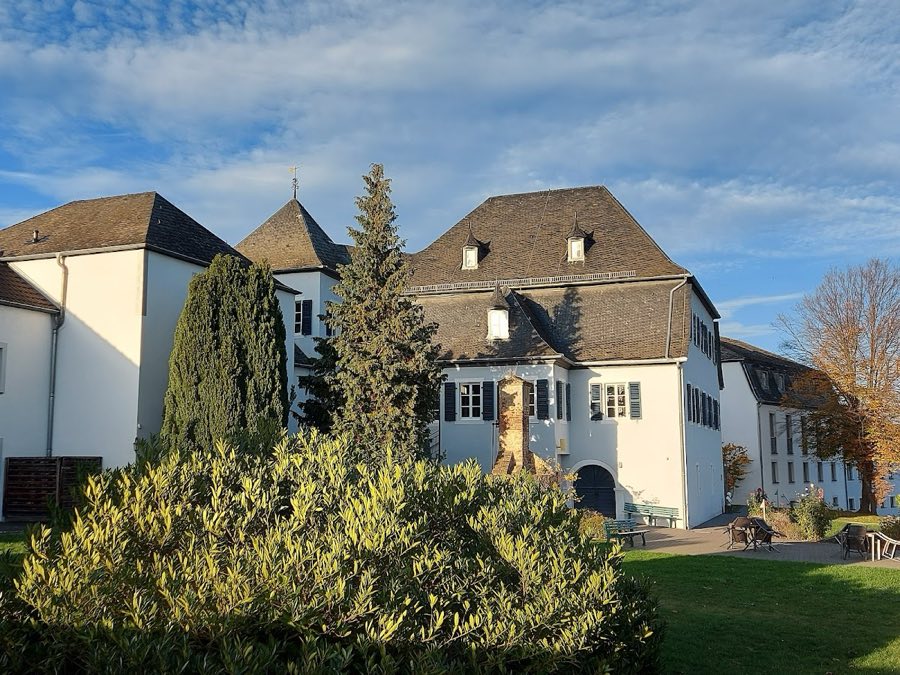
No. 48429
Castle · Germany
No. 48429 · 50.555 N, 7.105 E
Quick summary
Burg Lantershofen is a castle in Germany with origins associated with the 11th century.
See all castles in GermanyBurg Lantershofen stands in Lantershofen, Germany; the site occupies masonry left by the Romans, on which later fortifications were raised.
The place appears in written records on 1 July 1019, when Emperor Heinrich II gave the estate recorded as “Lantherishoffe” with its lands and dependents to the monastery at Michelsberg in Bamberg. That early name shows the settlement’s medieval identity in documentary sources.
A fortified complex was later established on the Roman masonry. A medieval stronghold known locally as “auf der Schauer” was captured and destroyed in 1372 by Archbishop of Cologne Friedrich III von Saarwerden. Four years afterward a new castle, called “am Blankart,” was built and came into the hands of Gerhard von Blankarts. The village owed dues and tithes to the Counts of Blankart; the area beside the church recorded as “im Frumech,” the manorial or lord’s square, preserves evidence of that feudal obligation.
During the Thirty Years’ War the estate suffered military damage in 1632 when Swedish forces partially destroyed the castle; the fortification was rebuilt after that action. In 1672 marauders carried out a final destruction of the castle that year. A new house was erected in 1708, reportedly under the last male Blankart. The Blankart male line ended in 1712 when Johann Otto Friedrich Blankart von Ahrweiler fell at the Battle of Denain. His heirs included his sisters Maria Anna, who married Freiherr Johann Heinrich Vlatten zu Drove, and Marie Sophie, who married Freiherr Ferdinand Ernst von Dalwigk zu Lichtenfels, together with descendants of a third sister, Maria Ottilia, wife of Johann Franz Capellini von Wickenburg genannt Stechinelli (1677–1752).
In 1714 the living heiresses divided the family property without mutual agreement; Johann Franz Capellini von Wickenburg litigated on behalf of his children and inheritance disputes persisted until 1790, when a judgment affirmed equal rights for the descendants of all three sisters. The house built in 1708 is later cited under the name “Freiherr von Stickeneil,” a designation identified with Johann Franz Capellini von Wickenburg genannt Stechinelli; ownership in this period is also associated with the Vlatten zu Drove and von Dalwigk families, and possession remained contested through the eighteenth century. By 1820 members of the Austrian Wickenburg family, descendants of Johann Franz Capellini, are recorded as owners. In 1915 the estate was bought by Friedrich Langen of Cologne. His heirs sold Burg Lantershofen in 1939 to the Apostolate for Priests and Religious Vocations. Under director Pfarrer August Dörner the partly decayed building was renovated and placed in use as the priest seminary Studienhaus St. Lambert.
The site presents a layered sequence of construction with Roman masonry at its foundation, medieval fortifications built above those remains, and the present house dating to the early eighteenth century. Archaeological evidence confirms the reuse of older walling beneath later structures, and the standing building reflects the estate’s survival after repeated destructions and reconstructions.
Fragments of Roman masonry underlie the medieval and modern fabric. These stone wall remains date to the Roman period and served as a structural base for later work. Medieval builders made use of these existing courses when they raised a defensive enclosure and living quarters on the hill. Those Roman-built sections survive as archaeological features embedded within the site’s later walls.
Remains related to the medieval strongholds are tied to two documented phases. A castle known as “auf der Schauer” occupied the position until its capture and demolition in 1372 by Archbishop Friedrich III von Saarwerden. A replacement fortification, identified as “am Blankart,” was constructed after 1376 and belonged to the Blankart family. The medieval towers and curtain walls underwent damage during the Swedish action of 1632 and again in 1672 when raiders destroyed the complex; the sequence of destruction and rebuilding is reflected in the site’s stratified masonry.
The house that survives today was erected in 1708 and represents the principal visible fabric. It stands on earlier foundations and incorporates reused material from former fortifications. By the early twentieth century parts of the building had fallen into decay, but renovation under Pfarrer August Dörner restored the fabric and adapted the interior for use as the priest seminary Studienhaus St. Lambert. The 1708 structure is therefore preserved in restored form and remains the dominant feature of the property.
No. 20798
No. 82338
No. 65580
No. 76371
Comments
Comments for Burg Lantershofen will require a verified account before posting.
We'll send a verification link before your first comment is published.