No. 56433
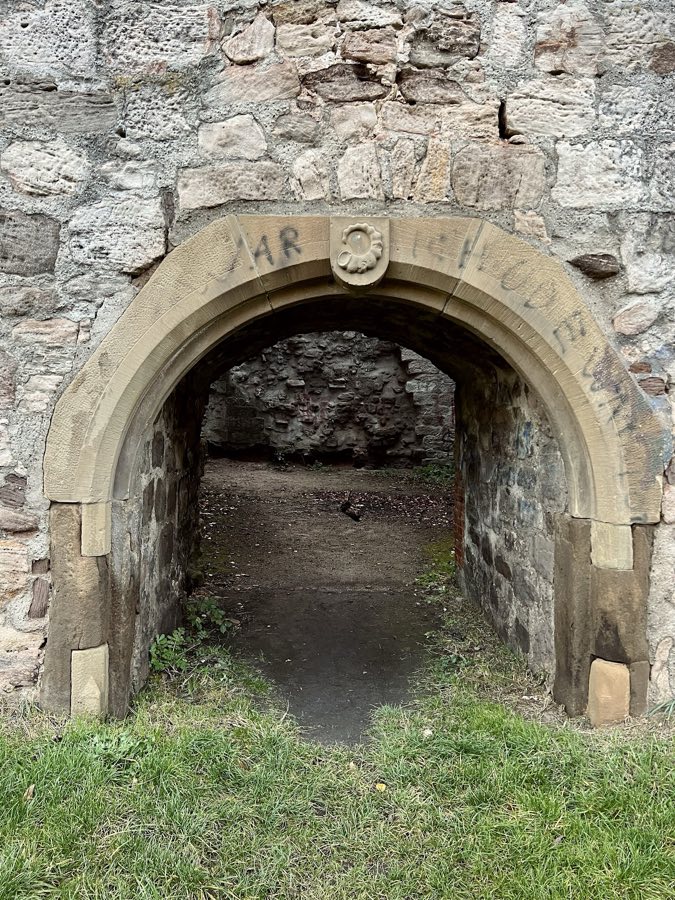
Helfenberg (Burgruine Helfenberg)
Germany
CastleRuin13th century
No. 98198
No. 98198 · 49.014 N, 9.327 E
Quick summary
Burg Lichtenberg is a castle in Germany with origins associated with the 12th century.
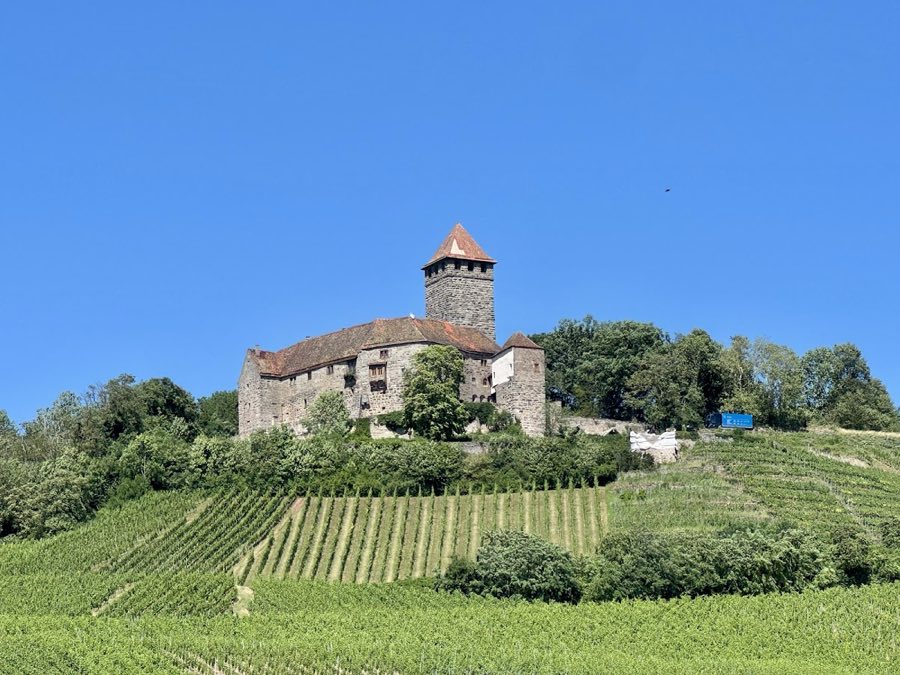
See all castles in GermanyBurg Lichtenberg is a medieval hilltop castle in Oberstenfeld, Germany, built by medieval German nobles.
Origins of the site appear in the late 12th century, with a documentary reference in 1197 that names the Hummel von Lichtenberg family as owners. During the 1200s the castle served as the center of a small neighboring territory near Großbottwar, and the local Lichtenberg family used the same coat of arms as the Herren von Heinriet and the Hacken zu Hoheneck. The chapel at the gate dates from the early 1200s and already contained painted decoration from its origins.
The 14th century linked the family and the castle to imperial politics. Hermann II Hummel von Lichtenberg served as chancellor to Emperor Louis IV and was Bishop of Würzburg from 1333 to 1335. Albrecht Hummel von Lichtenberg took part in the 1322 Battle of Mühldorf on the side of Louis IV. Financial pressure led Albrecht to sell the lordship and castle in 1357 to Count Eberhard of Württemberg.
From 1361 until 1805 the castle and village were held as a fief connected to Württemberg and, at times, the Bohemian crown. The Swabian line of the Lichtenberg family died out in 1407. In 1483 Count Eberhard V granted the site to Dietrich von Weiler; members of the von Weiler family, later styled as freiherren von und zu Weiler, continued to hold and live at the castle thereafter, with only minor interruptions. A major rebuilding under the von Weiler family during the 15th century produced much of the castle’s present appearance.
Throughout its long history the castle avoided serious sieges or extensive destruction. Near the end of the Second World War it suffered artillery damage in 1945. A comprehensive restoration followed in 1956. The site remains privately owned and inhabited; in recent years a planned municipal-supported purchase in 2019 did not proceed and the owner proposed forming a company with an investor instead.
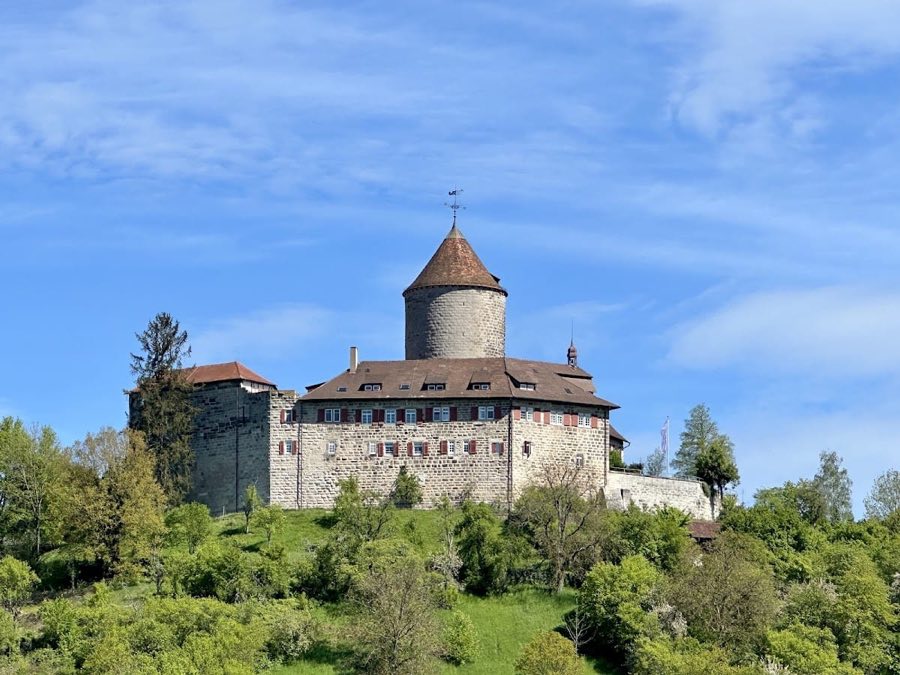
Burg Lichtenberg occupies a classic hilltop layout with an enclosing ring wall that surrounds the castle complex. The defensive circuit is largely medieval in date, reflecting building phases from around 1200 and substantial remodelling in the 1400s. The residential core grew up behind this wall and the arrangement concentrates buildings within a narrow inner court.
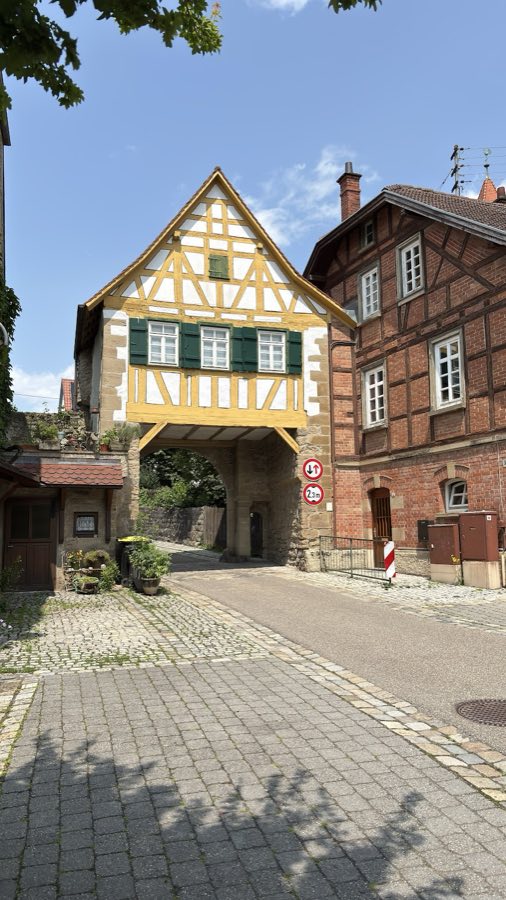
Approach to the castle is carried across a stone bridge spanning a deep ditch, arriving at a fortified gate complex. The gate forebuilding and the gate passage form a controlled entrance sequence; beyond the outer gate the inner gate sits beneath the chapel that crowns the gateway. The chapel itself was constructed about 1220 to 1230 and retains wall paintings from its original period together with additional paintings from around 1350, all preserved in situ.
A tall keep rises to roughly 30 metres and retains a roofed top. Its entrance is positioned about eight metres above ground level, a placement that originally required a removable ladder or a wooden walkway from the second floor of the residential hall. Inside the keep an internal stair of 112 steps climbs to an observation gallery, a feature that survived later alterations and remains accessible within the restored structure.
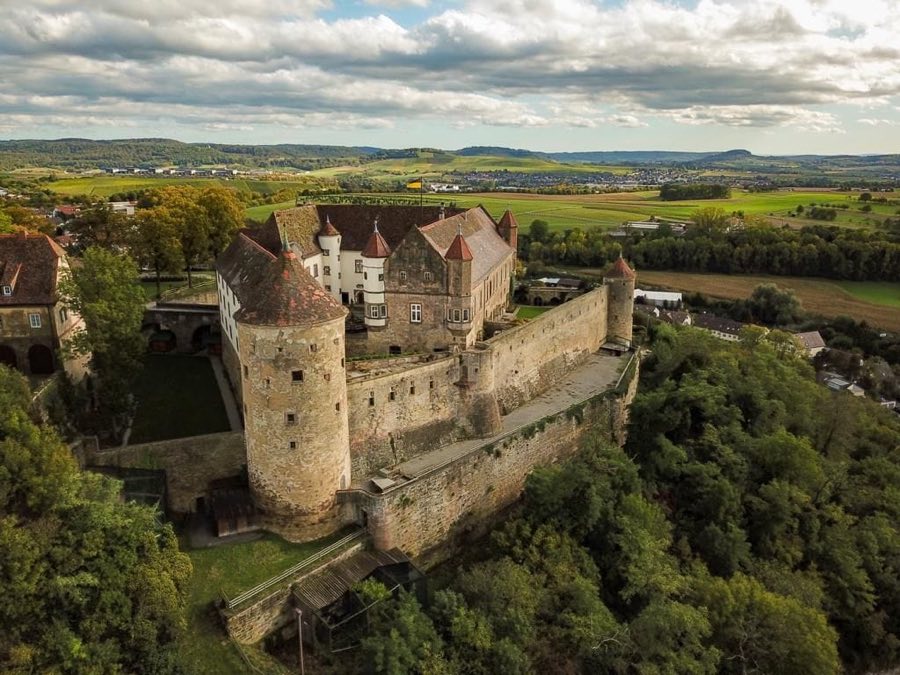
The inner courtyard runs between the gate and the main residential hall, which on the valley side is approached by a wooden bridge. The curtain wall to the north incorporates a substantial tower built into the wall and an adjoining small clock turret. A battlemented wallwalk links this section to a low rectangular corner tower on the northeast, and another rectangular tower stands on the southeast side of the complex. A small courtyard turret contains a clock face, while the bell tower accommodates two bells dated 1704 and 1731, cast by Johann Georg Rohr and Johann Daniel Rohr respectively.
Materially, the oldest parts date from the turn of the 13th century, including a late-Romanesque residential hall, while the gate building displays Gothic features added later. The castle presents today largely as the result of its 15th-century reconstruction, with careful repair after the 1945 artillery damage and a thorough renovation completed in 1956. Much of the ring wall, towers, chapel, keep and inner court survive intact and continue in use within the inhabited complex.
No. 56433
No. 97215
No. 99334
No. 27187
Comments
Comments for Burg Lichtenberg will require a verified account before posting.
We'll send a verification link before your first comment is published.