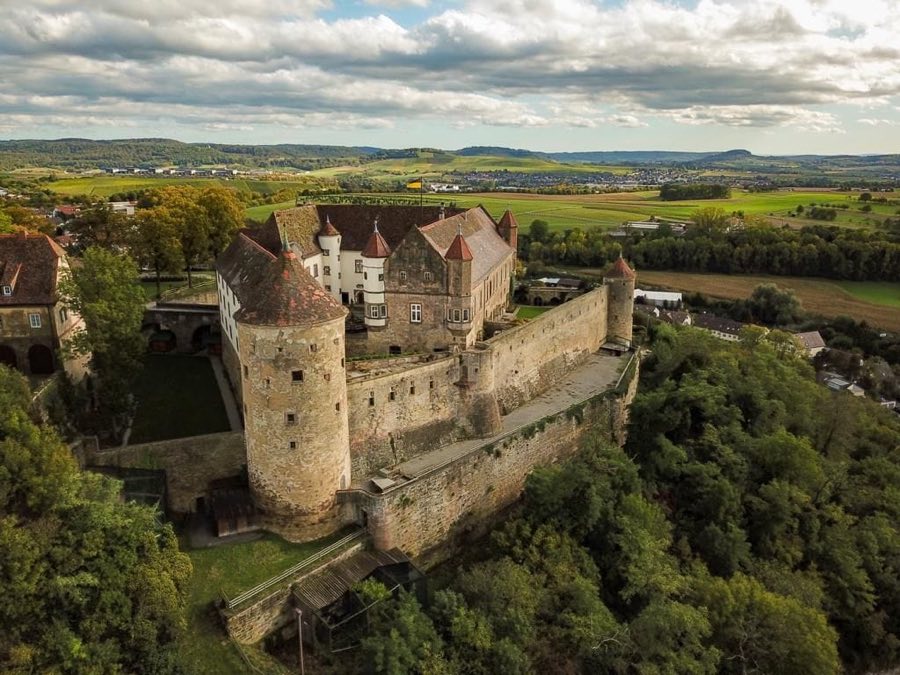
No. 99334
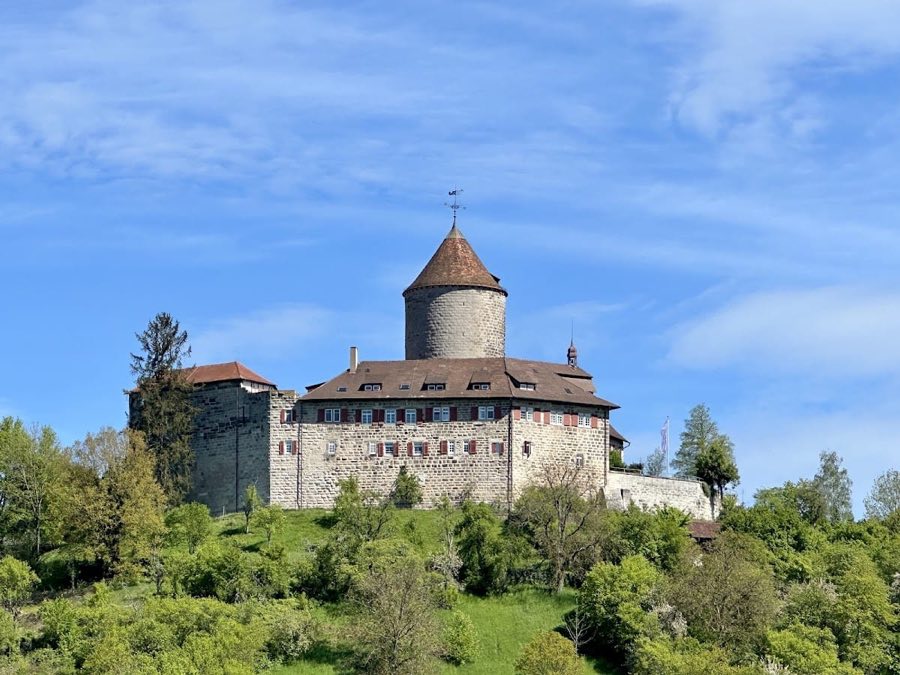
Stettenfels Castle
Germany
CastleRestoredFor events11th century
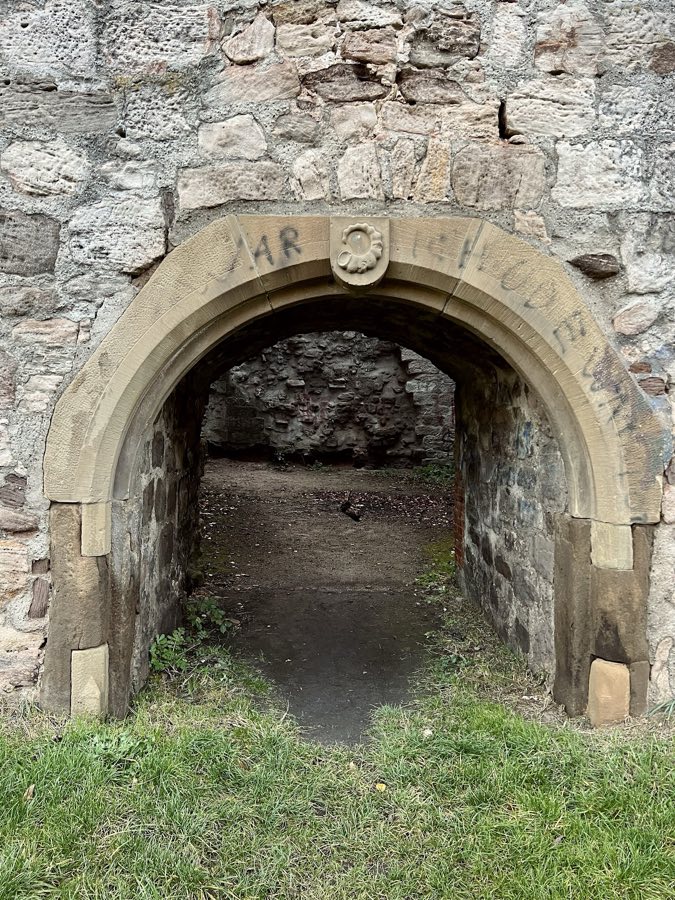
No. 56433
Castle · Germany
No. 56433 · 49.063 N, 9.312 E
Quick summary
Helfenberg (Burgruine Helfenberg) is a castle in Germany with origins associated with the 13th century.
See all castles in GermanyBurgruine Helfenberg stands in the municipality of Ilsfeld, Germany, and was constructed during the Staufer period around the mid-13th century.
The castle first appears in a written record in 1259, when a Baden vassal named Albertus de Helfenberg is associated with the place. Members of the Helfenberger family continue to appear in documents through the early 14th century, including Hartmann genannt Bruche de Helfenberg in 1293 and Albrecht von Helfenberg in 1310. During the first half of the 14th century the family transferred parts of its holdings, such as a property in Siglingen to the monastery at Schöntal, and in 1344 sold a share of forest in Talheim to the Herren von Neipperg. The last identified member of the line, Hans von Helfenberg, sold a tithe share in Lauffen am Neckar in 1354.
Ownership then divided and changed hands. Parts of the inheritance passed to the Herren von Sachsenheim and to the Sturmfeder family. Werner Sturmfeder is recorded as lord between 1339 and 1370, and a Hans Sturmfeder appears around 1400. The Sachsenheim portion passed to Heinrich von Hohenriet, and later Konrad von Hohenrieth acquired the entire site. In 1456 Konrad sold Schloss Helfenberg, the nearby Burgstall Alt Helfenberg and associated rights and properties to the territory of Württemberg. From 1457 the estate existed as a Württemberg fief and was granted to a succession of noble tenants. In 1464 Dieter von Weiler enfeoffed Hans von Talheim, and in 1482 Werner Notthafft took possession and ordered the deliberate demolition of the old rear tower at the eastern tip of the hill.
In 1521 part of the castle passed from Daniel Notthafft to Wolf Ruch von Winnenden, who carried out further building work. Wolf Ruch von Winnenden was killed in 1525 during the Peasants’ War, an episode known locally as the Weinsberger Bluttat. Two years later, in 1527, the property passed to Conrad von Wittstatt, and a later family member, Philipp von Wittstatt, undertook enlargement work in 1579. At an undated point a heraldic shield belonging to the family von Gaisberg was fixed above the portal of the surviving residential tower.
A separate manor house developed below the hill in the settlement of Finkenbach and was known as Unterhelfenberg until 1625; the hilltop fortress then became known as the Upper Castle or Oberhelfenberg. In 1625 Philipp Christoph von Hoheneck occupied the hill site while Johann Christoph von Buchholz held the lower manor. The hilltop stronghold suffered destruction during the Thirty Years’ War and was later rebuilt under Colonel and Württemberg councillor Peter von Pflummern, who had been enfeoffed by Duke Eberhard with the Hoheneck share and who also owned the nearby Burg Wildeck. The small chapel at the castle dates from that post-war rebuilding.
After Pflummern the estate passed by inheritance and marriage into the Böcklin and Horneck families. An inheritance inventory of 1702 records partial demolition of the Upper Castle and the conversion of part of the site to a vineyard. In 1746 the Herrschaft Helfenberg passed by marriage to the von Gaisberg family, who occupied the Lower Castle in the village; by that time the hilltop fortress was already a ruin and its stones had been taken for buildings in the settlement. The castle chapel was taken down in 1817. The Lower Castle within the village suffered destruction in a bombing attack in 1945 and its site is now the municipal building. The ruined hilltop remains in the possession of the von Gaisberg family, was later conserved with help from the monument office, the district administration of Heilbronn and the former municipality of Auenstein, and it is open to the public.
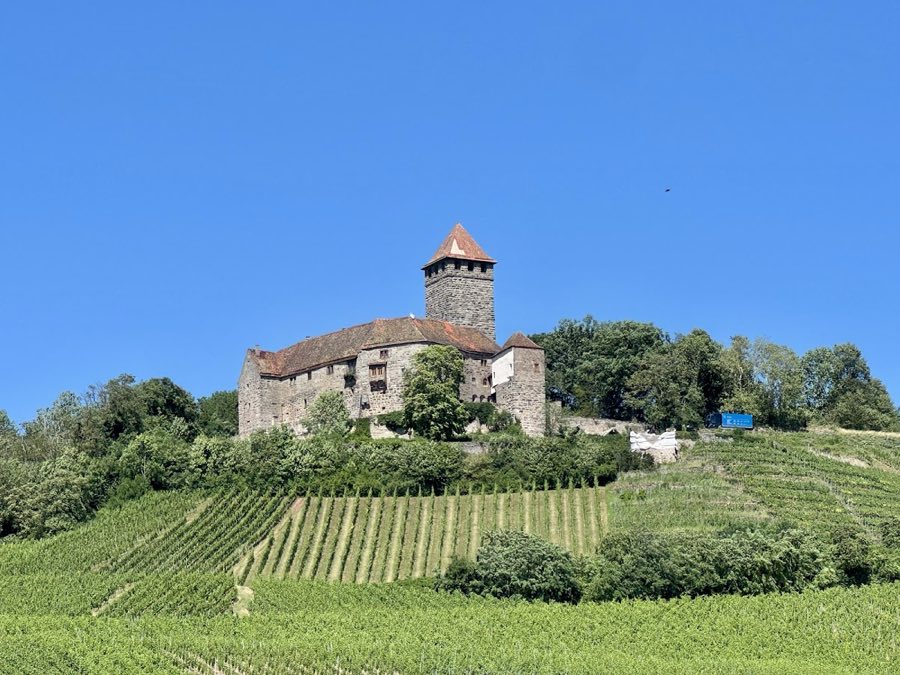
The castle occupies a ridge that runs roughly west to east at about 335 metres above sea level. The surviving structures represent a medieval hilltop stronghold confined to a compact plateau; the small hamlet of Helfenberg lies immediately below the south slope and historically belonged to the castle estate. Today a single residential tower remains as the principal visible fragment of the fortified complex, and this tower was built against what had been the site’s defensive wall.
This preserved residential tower is the clearest dated element on the hill and stands where living quarters once adjoined the fortification line. A later-added coat of arms belonging to the von Gaisberg family is set over the tower’s entrance, showing the tower’s continued use as a residence or symbol of ownership after medieval military use. The tower survives in situ and was part of later conservation efforts.
East of the standing tower the castle once extended over an area of about 40 by 25 metres. Documentary evidence indicates that this eastward space contained service buildings and a chapel. The chapel is associated with the post–Thirty Years’ War rebuilding conducted under Peter von Pflummern and it remained until its demolition in 1817. The eastward complex no longer survives intact above ground as a complete group, but its former footprint and function are recorded in the site’s historical record.
At the extreme eastern tip of the hill an older rear defensive tower, historically called the Öden Turm, was deliberately taken down by Werner Notthafft after his acquisition in 1482. The removal of that tower altered the eastern profile of the castle and is recorded as a deliberate act in the site’s later medieval history.
The hilltop retains a raised plateau and a small wooded hollow on the west side, features that reflect the castle’s original siting and immediate landscape. From the 18th century stone from the ruined upper castle was quarried for construction in the nearby village, a practice that contributed to the fragmentary condition seen today. The ruin, with its single extant residential tower, has since undergone conservation work undertaken with the assistance of regional heritage authorities and local municipal partners, and it remains accessible to the public.
No. 99334
No. 98198
No. 97215
No. 27187
Comments
Comments for Helfenberg (Burgruine Helfenberg) will require a verified account before posting.
We'll send a verification link before your first comment is published.