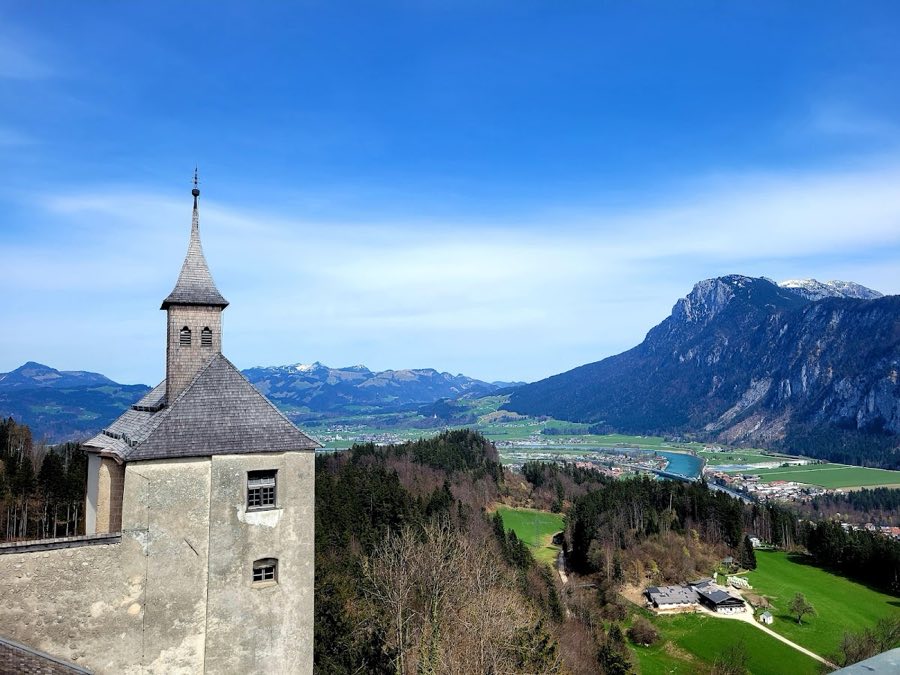
No. 42168
Thierberg Castle
Austria
CastleRuin13th century
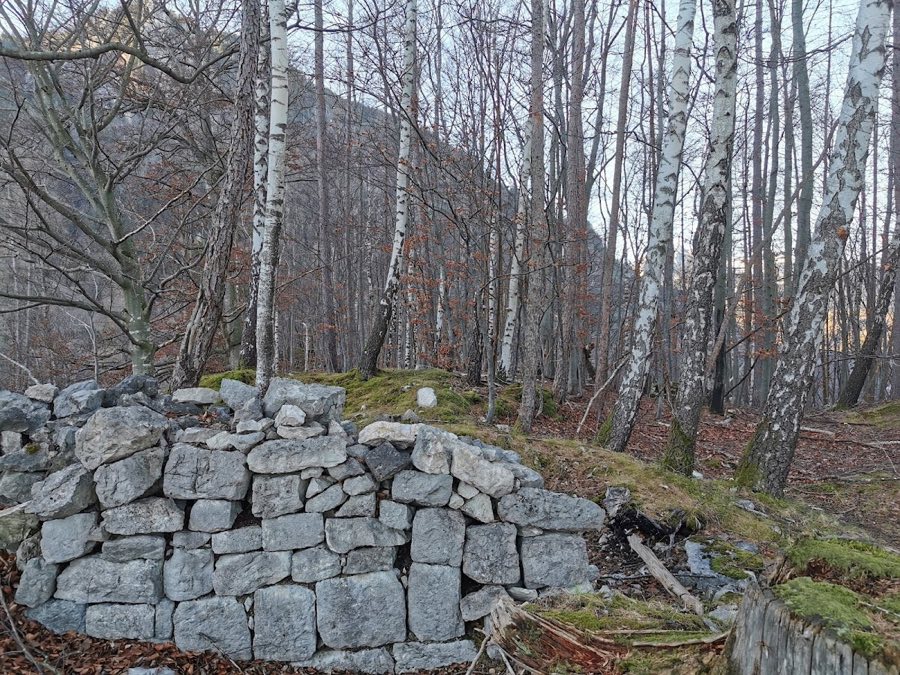
No. 18884
Castle · Germany
No. 18884 · 47.716 N, 12.125 E
Quick summary
Burg Ober-Falkenstein is a castle in Germany with origins associated with the 12th century.
See all castles in GermanyBurg Ober-Falkenstein is a medieval hill castle situated above the Inn River in the municipality of Flintsbach am Inn, Germany. It was established by medieval European builders aiming to secure control over nearby routes and lands.
The castle’s origins date back to around 1110, when it was likely constructed through the efforts of Bishop Albuin of Brixen along with members of the noble Aribonid family. It served as the ancestral residence of the Counts of Falkenstein, a family whose name also became associated with the castle over time. Early written references to the site appear indirectly in 1115, with more explicit medieval records labeling it as an “urbs” (a town or fortified settlement) in 1166, later described as a “castrum” (fort) in 1188, and eventually termed a “burg” (castle) by 1287. A significant visual source from this period is the 1166 Codex Falkensteinensis, which includes a schematic drawing providing insight into the castle’s structure during the 12th century.
In 1296, Burg Ober-Falkenstein was destroyed amid armed conflicts involving Duke Rudolf of Bavaria and the descendants of Count Meinhard II of Tyrol. This event marked the end of its active fortification role during the medieval period.
Archaeological investigations conducted in the 1990s uncovered deeper layers beneath the medieval ruins, revealing that the site had been occupied long before the castle was built. Evidence points to the middle Bronze Age, around the 16th century BCE, with the discovery of a notable necklace nearby, highlighting the location as a longstanding seat of regional importance. These finds demonstrate the continuity of human presence, showing that the site was important not only in medieval times but also during prehistoric periods.
Today, the remains of Burg Ober-Falkenstein along with its surroundings are protected as archaeological monuments under Bavarian heritage regulations. Excavations in the adjacent lower settlement area, known as Burgau, have further illustrated the complexity and longevity of habitation at this strategically important site.
The surviving ruins of Burg Ober-Falkenstein consist primarily of foundational structures that outline the castle’s original shape and defensive design. Situated atop the 692-meter-high Rachelfelsen, a rocky promontory towering roughly 200 meters above the Inn valley, the castle took advantage of natural topography to secure three sides with steep cliffs. On the remaining western side, a series of defensive walls provided protection against attackers approaching from that direction.
Among the stonework are fragments interpreted as parts of a curtain wall surrounding the castle precinct, which would have created a fortified enclosure. Within this perimeter, archaeologists have identified foundational remains likely belonging to a tower house, an elevated residential and defensive structure typical of medieval fortifications. The tower’s base was constructed from finely squared stones, enabling a strong and stable foundation. Above this stone base, as depicted in the 1166 Codex Falkensteinensis, the upper levels were made of timber framing, with an open elevated entrance and a parapet equipped with battlements for defense.
Investigations carried out through geomagnetic surveys and targeted excavations in the early 1990s further expanded understanding of the site. These explored the Burgau settlement area below the main castle rock, revealing archaeological and animal bone remains that point to a multifunctional complex extending beyond the hilltop fortification. This lower zone likely supported ancillary activities connected to the castle, such as habitation, resource processing, or economic functions.
Today, the castle remains are preserved as fragmentary ruins, offering a visible outline of its medieval form and defensive adaptations. Their placement on a commanding rock formation underscores the strategic considerations of their builders, and the combination of natural and constructed defenses illustrates a harmonious use of landscape and architecture in medieval fortification practice.
No. 42168
No. 73157
No. 22317
No. 88541
Comments
Comments for Burg Ober-Falkenstein will require a verified account before posting.
We'll send a verification link before your first comment is published.