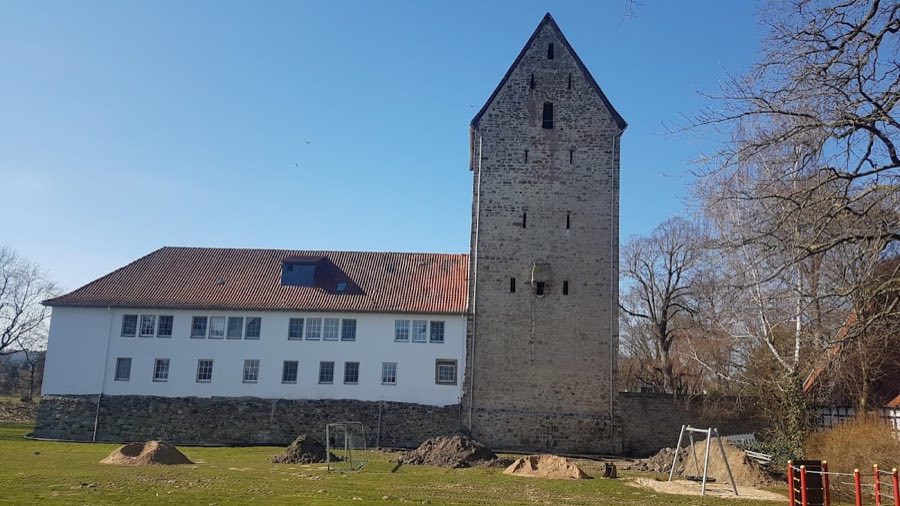
No. 32734
Burg Wittlage
Germany
CastleRestored15th century
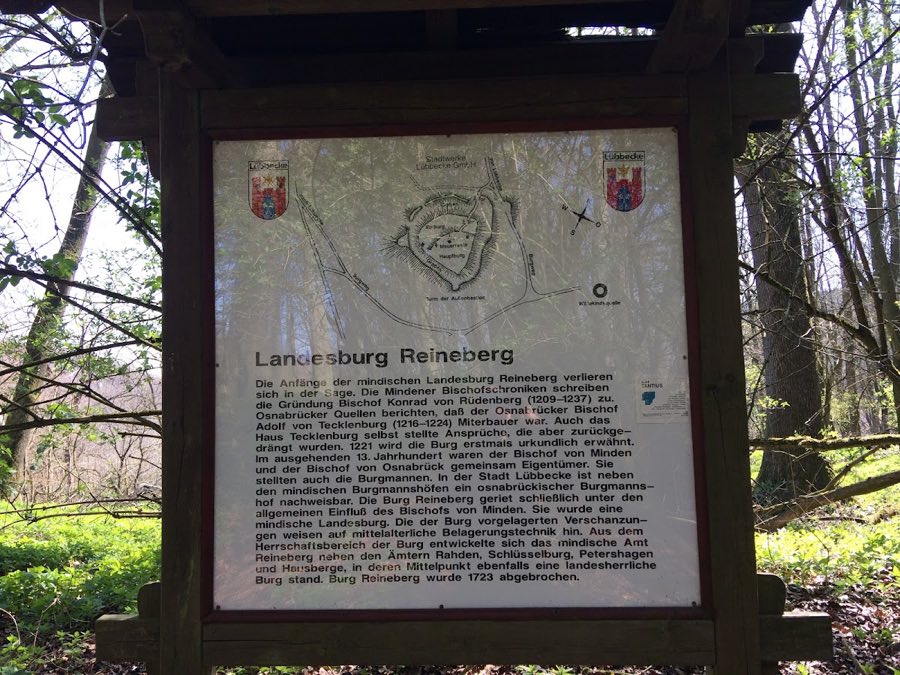
No. 98261
Castle · Germany
No. 98261 · 52.294 N, 8.628 E
Quick summary
Burg Reineberg is a castle in Germany with origins associated with the 13th century.
See all castles in GermanyBurg Reineberg is a former hill castle located near the town of Lübbecke in Germany. It was built during the Middle Ages, although the exact date and founder remain uncertain, with contemporary records attributing its origin either to Bishop Konrad I of Rüdenberg or Bishop Adolf of Tecklenburg.
The earliest written reference to the castle dates from 1221. By the late 13th century, ownership was shared between the bishops of Osnabrück and Minden, reflecting the castle’s strategic importance as a fortified seat of power in the region. This dual possession was formalized in 1306 through a treaty confirming the joint rule of the prince-bishoprics of Minden and Osnabrück. Burg Reineberg played a significant role as a frontier fortress, particularly for the bishops of Minden in their struggles against rival powers such as the bishop of Osnabrück, the counts of Tecklenburg, and the lords of Diepholz.
In 1362, the castle came under the control of Rabodo Schele as part of a political alliance involving the bishops and local towns. During the early 15th century, the knight Dietrich von Münchhausen held the castle as a pledged property but ignited conflict when he transferred it to Count Nikolaus II of Tecklenburg without official approval. This act led to a siege by Bishop Wulbrand of Hallermund and the intervention of local residents who repelled the Tecklenburg forces. Throughout the 15th century, the castle was noted for its strong defensive capabilities.
Financial difficulties plagued the castle’s governance, resulting in frequent pledges of ownership. Around 1525, Johann Tribbe served as steward, and in 1543, the castle was pledged to Clara von Hatzfeld and her sons. Upon Bishop Georg’s accession in 1554, efforts were made to redeem previously pledged castles, including Burg Reineberg. This led to confrontation with Hilmar von Quernheim, who held the castle at the time. The conflict culminated in 1564 with an assault on the fortress, followed by a compromise three years later, which restored the castle to Quernheim’s control for a twelve-year period.
The Thirty Years’ War (1618–1648) brought significant damage to Burg Reineberg. The castle experienced plundering multiple times in 1636, 1638, and 1640, including the destruction of important administrative records by imperial troops in 1636. Later, during the Franco-Dutch War in 1673, forces from Münster captured Lübbecke and the castle due to Brandenburg’s alliance with the Netherlands.
After the Peace of Westphalia in 1648, the region encompassing Burg Reineberg, including the principality of Minden, came under Brandenburg’s domain. From 1723 to 1808, the castle served as a local administrative center known as the Amt Reineberg, managed by the war and domain chamber in Minden following a political union decreed by Frederick William I.
As the castle fell into disrepair, royal orders led to its demolition in 1723. The removed building materials were reused to construct government buildings in Minden and a new administrative house in the nearby Reineberger Felde, marking the end of Burg Reineberg as a functioning fortress. The surrounding region continued under the influence of the former bishopric of Minden, with the castle’s defensive earthworks standing as reminders of its medieval role.
The site of Burg Reineberg occupies the summit of the Reineberg hill, which rises to 275.9 meters within the Wiehengebirge mountain range. Originally constructed as a hilltop fortress, the castle featured a complex defensive arrangement suited to its elevated position.
The most prominent surviving element of the medieval fortifications is a substantial castle moat encircling the summit. This earthwork extends roughly 310 meters in length and varies between 15 to 22 meters in width, illustrating the scale of defensive efforts employed to protect the stronghold. The substantial size of this moat reflects medieval siege defense strategies, aiming to hinder attackers from approaching the walls or inner baileys.
Historical research and archaeological surveys have identified five former outer baileys, or Vorburgen, around the main site. These outlying enclosures likely served to provide layered protection and control access to the castle, underscoring the fortress’s strategic significance in the region.
The castle’s construction materials were predominantly removed following its demolition in 1723. Stones and other building components were transported to nearby towns and reused in the erection of official buildings in Minden as well as an administrative house known as the Amtshaus in the Reineberger Felde. This recycling of materials reflects 18th-century practices regarding the reuse of masonry from obsolete fortifications.
A detailed survey conducted in 1951 documented the remaining ruins visible above ground. These records, along with the work of local historian Friedrich Langewiesche, have helped map the castle’s extensive defensive system and the arrangement of its multiple baileys.
Today, the site’s remaining earthworks serve as physical testimonies to the castle’s medieval past and its role in local power struggles. The image of Burg Reineberg continues to hold cultural significance in the region, symbolized notably in the coat of arms of the municipality of Hüllhorst, which features a representation of the castle.
No. 32734
No. 77476
No. 99686
No. 30831
Comments
Comments for Burg Reineberg will require a verified account before posting.
We'll send a verification link before your first comment is published.