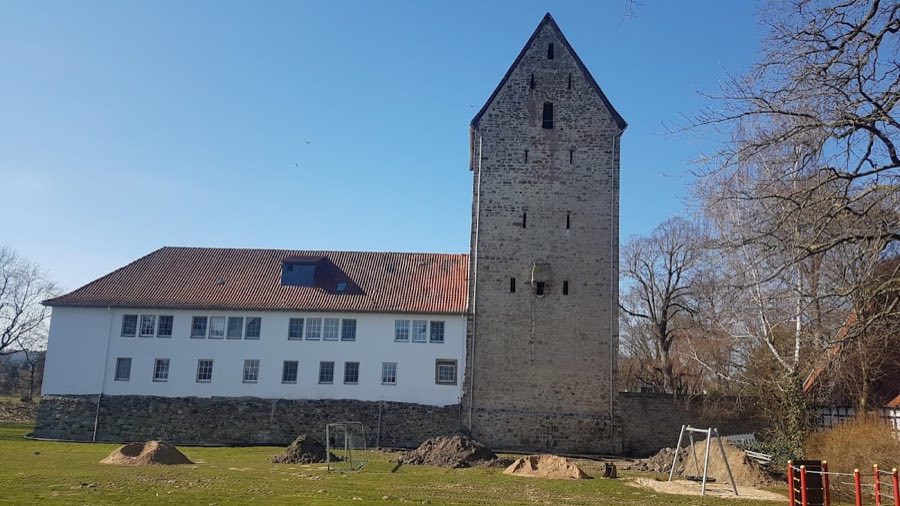
No. 32734
Burg Wittlage
Germany
CastleRestored15th century
No. 77476
Manor house · Germany
No. 77476 · 52.243 N, 8.346 E
Quick summary
Gut Ostenwalde is a manor house in Germany with origins associated with the 18th century.
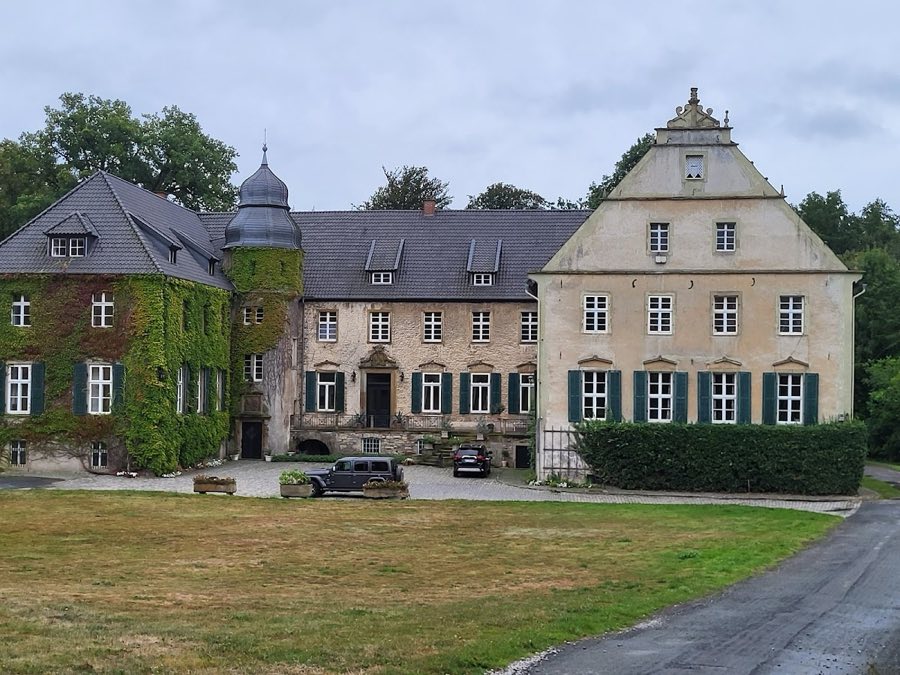
See all castles in GermanyGut Ostenwalde in Melle, Germany, is a historic moated manor and former knight’s seat that grew out of medieval service to the Bishop of Osnabrück and the local feudal order. The estate’s origins lie in the Middle Ages, when members of the von Vincke family served as ministeriales (unfree knights in service to a bishop) and established a fortified residence that probably began as a bulwark placed to guard an older hillfort on the hill. The family is recorded from 1223 and the house itself is named in 1343 as the seat of Omer Vincke, establishing Gut Ostenwalde as the long-standing ancestral home of the von Vincke line.
Early modern building activity reshaped the manor over centuries. A two-storey west wing dates to 1698 and became the principal living block. The central section of the main building was finished in 1780, reflecting continued investment in the house across the 18th century. During the 19th century the estate park acquired a new orangery and, in 1839, a Gothic-style fountain house that had stood on the Herford marketplace was re-erected behind the manor.
Major restoration work took place between 1906 and 1908. The east wing was rebuilt and a tower placed into the angle of the building, consciously echoing regional Renaissance forms. Excavation during this campaign revealed the foundations of an earlier predecessor building together with an adjoining tower, confirming deeper medieval construction beneath the standing house.
In the final months of the Second World War and the early postwar period the manor served an administrative role at the highest level. From the summer of 1945 until 1949 Gut Ostenwalde was used as the official residence of the military governor of the British occupation zone. Field Marshal Bernard Montgomery lived at the house until May 1946, and beginning in November 1947 the residence was occupied for about two years by General Brian Robertson. The family archive lost a significant portion of its holdings during the period of British occupation. One day after the German Basic Law came into effect, on 9 May 1949, British Foreign Secretary Ernest Bevin met at Gut Ostenwalde with Konrad Adenauer, Kurt Schumacher, and Karl Arnold.
The estate survives as a moated complex centered on a square main castle with a southern adjoining outer courtyard. Water defenses once formed a double ring of moats around the main island; today only parts of that concentric moat system remain. The arrangement of island, moats, and outer courtyard preserves the site’s character as a defended residential compound.
The main house stands as a three-wing building with clearly dated sections. The west wing, built in 1698, is two storeys high and functions as the principal living range. Its gable is finished with pyramid-shaped ornaments that recall the regional Weser Renaissance decoration. The central block was completed in 1780 and connects the wings to form the present U-shaped plan. The east wing was reconstructed in the restoration of 1906–1908, when a tower was inserted into the building’s angle; that tower was designed as an architectural reference to the same Renaissance vocabulary. During those works masonry foundations of an earlier house and an attached tower were uncovered and remain part of the site’s stratified record.
Interior and park features reflect the estate’s long domestic use. The manor holds a private reference library of more than 15,000 volumes collected by Idel Jobst II von Vincke, preserved within the house. Behind the manor the garden contains a 19th-century orangery, and since 1839 a Gothic fountain house that came from the Herford marketplace stands in the park, where it has been integrated into the landscape.
Close to the manor, on the Oldendorfer Mühlenbach, the estate oil mill dates from the 15th century. The mill is powered by water and underwent full restoration in 1988. It survives as a working historic mill and is operated on special mill days, demonstrating both its original function and its conserved condition.
No. 32734
No. 98261
No. 92163
No. 28462
Comments
Comments for Gut Ostenwalde will require a verified account before posting.
We'll send a verification link before your first comment is published.