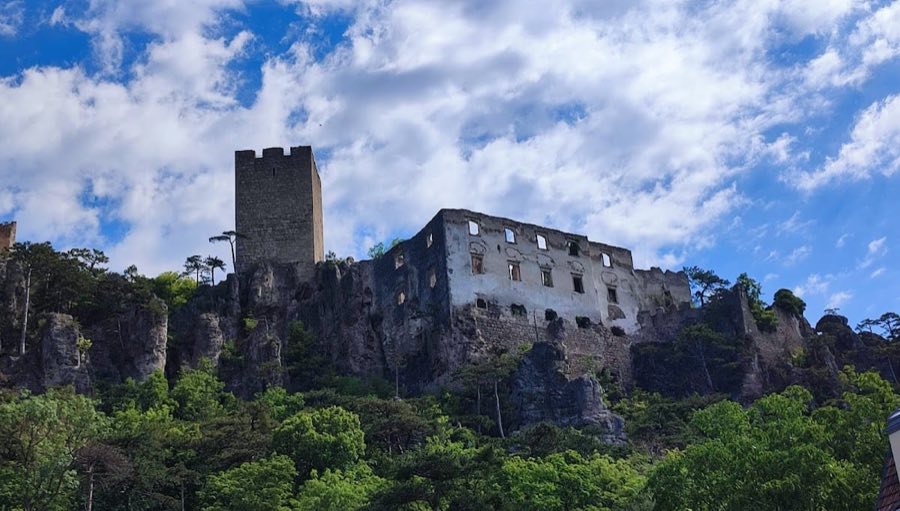
No. 49899
Burgruine Rauhenstein
Austria
CastleRuin12th century
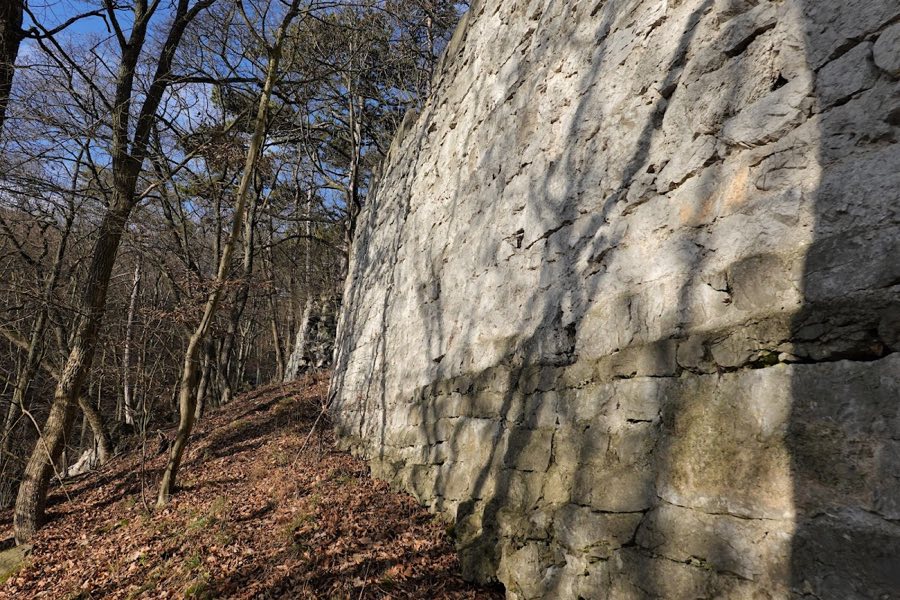
No. 89506
Castle · Austria
No. 89506 · 48.014 N, 16.197 E
Quick summary
Burg Scharfeneck is a castle in Austria with origins associated with the 11th century.
See all castles in AustriaBurg Scharfeneck is a historic fortress located in the municipality of Baden, Austria. It was originally built by medieval European settlers, with its earliest fortifications dating back to around the 11th century.
Archaeological research shows that the site was inhabited around the year 1100, possibly starting as a wooden fortification. Over time, the wooden structure was replaced by stone construction, likely after 1386, when records mention local nobles Johann von Scharpeneck and later Hermann and Friedrich von Scharfeneck. Under Hungarian royal ownership, the castle was presumably rebuilt in masonry, reflecting a shift to more durable defensive measures.
Situated close to the Schwechat River and near the borderlands between Hungary and Austria, Burg Scharfeneck occupied a strategically sensitive position. Ownership changed hands several times over the centuries. In 1442, it belonged to Georg von Pottendorf, and by 1469 it was granted by King Matthias Corvinus of Hungary to Ulrich von Grafeneck, who enhanced its defensive capabilities. Interestingly, Ulrich later allied with Emperor Frederick III of the Habsburg dynasty, integrating the castle into Austria’s network of border defenses.
During the 16th century, the fortress began to lose its prominence. It was often used as collateral in financial arrangements and suffered damage from a lightning strike in 1555, which seriously affected the keep—a central tower designed for defense and observation. Max von Polheim made some expansions following this event, but the castle had already begun to decline in military importance.
Eventually, Burg Scharfeneck was abandoned as a primary residence and fell into ruin. A several-meter-wide breach in one of its side walls points to deliberate destruction at some point. By the late 20th century, its ruins came under the care of Austrian federal forestry authorities and were protected as a cultural heritage site.
The castle’s name “Scharfeneck” first appeared around 1470, associated with Ulrich Kamper, who elevated the defunct fortress’s profile even though it was not inhabited at the time. By 1517, ownership had reverted to the nearby Rauhenstein estate. Throughout its history, Burg Scharfeneck could not sustain itself economically alongside the more dominant Rauhenstein fortress, partly due to its location just above former trade routes traversing the Helenental valley.
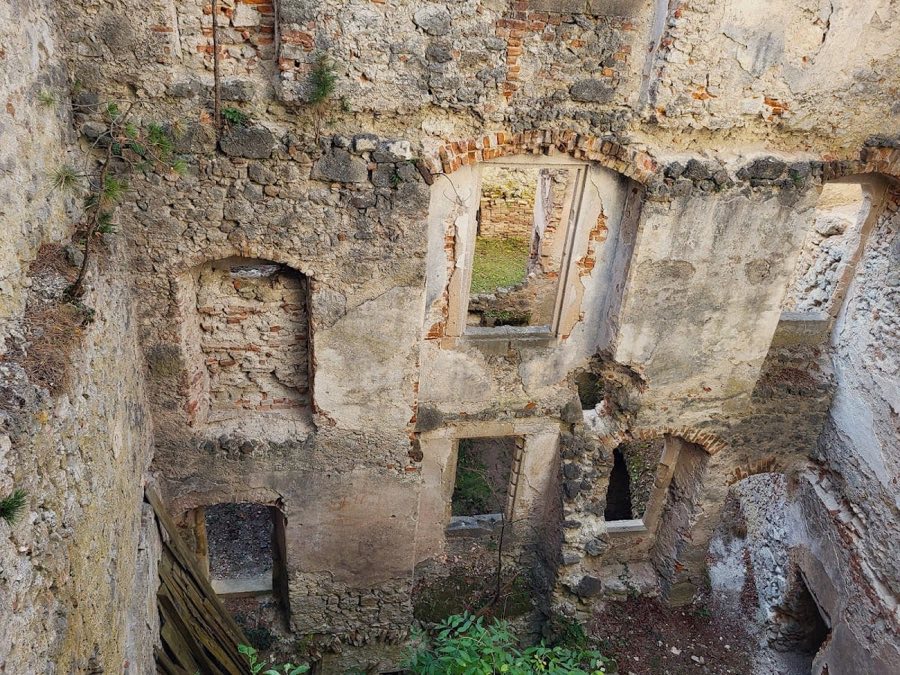
The ruins of Burg Scharfeneck reveal the layout and construction typical of a medieval border fortress, with stone masonry replacing the earlier wooden fortifications. The best-preserved section is located in the northeast, where a bastioned round tower stands. This tower’s lower walls are decorated with numerous notches, which may have been related to defensive fittings. Originally taller than it appears today, only its base remains after the upper floors collapsed long ago.
At the southwest corner of the site is a strong elliptical tower, notable for walls three to four meters thick. This tower was built to support a defensive platform equipped with battlements, as well as narrow openings known as arrow slits that allowed defenders to shoot while remaining protected. Along the castle’s continuous walls, similar notches and vaulted chambers for firing arrows or small arms are visible, indicating well-planned defensive architecture.
Window frames dating from the 15th century remain on some parts of the castle, displaying the late Gothic style popular at the time. The inner courtyard has largely filled with debris from fallen structures, obscuring much of what once stood there. Inside, the ground floor includes a large hall distinguished by a significant hole in the upper part of its barrel vault—a curved ceiling shaped like a half-cylinder. Beneath this hall is a preserved cistern, a water storage chamber essential for withstanding long sieges.
One of the towers still preserves fragments of a stone spiral staircase, which connected floors and facilitated movement within the fortress. Other original components of the castle’s fortress complex have been lost over time. The notable wide breach in a side wall indicates that part of the castle underwent intentional demolition, rather than simply falling to natural decay. These remaining features together offer insight into the castle’s defensive role during its active centuries on the border between Austria and Hungary.
No. 49899
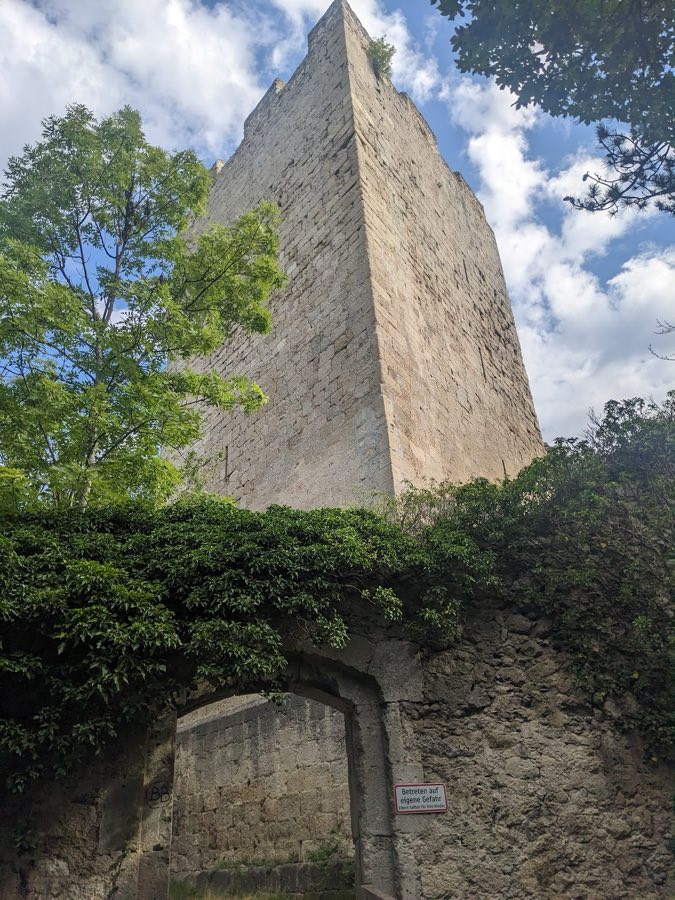
No. 85590
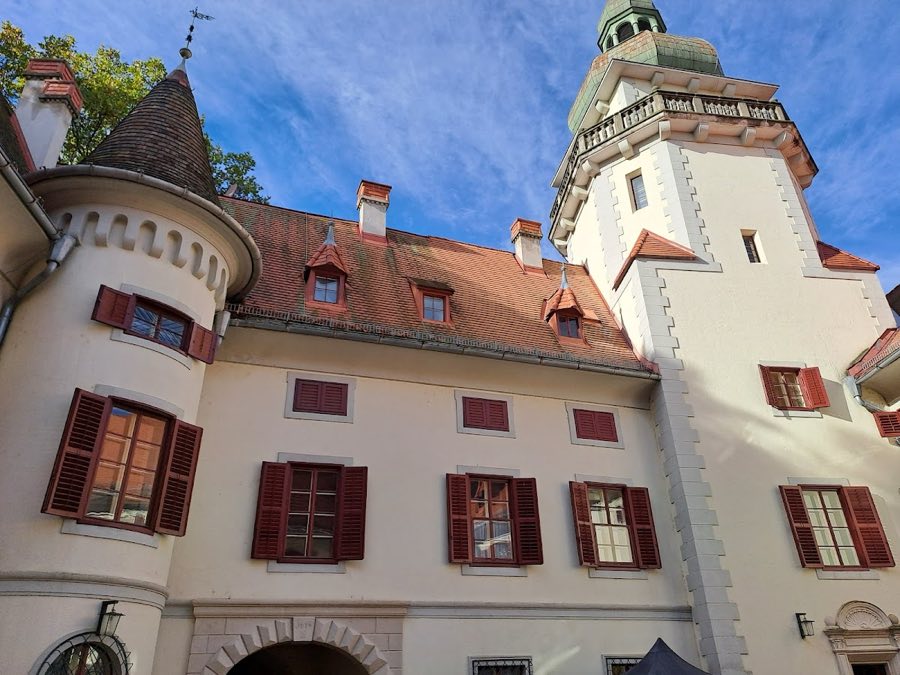
No. 94722
No. 27966
Comments
Comments for Burg Scharfeneck will require a verified account before posting.
We'll send a verification link before your first comment is published.