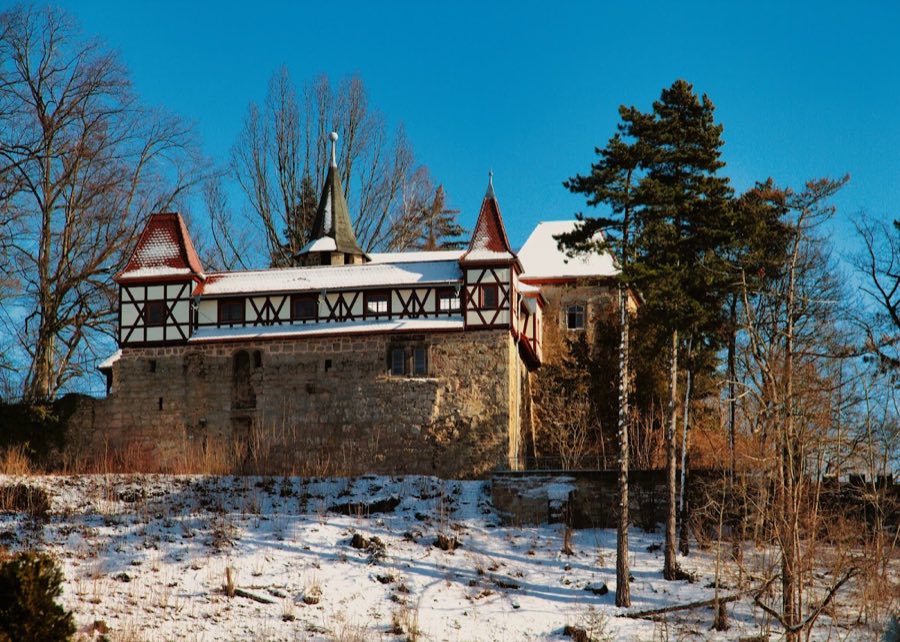
No. 54171
Burg Neuhaus
Germany
CastleRuinFor events13th century
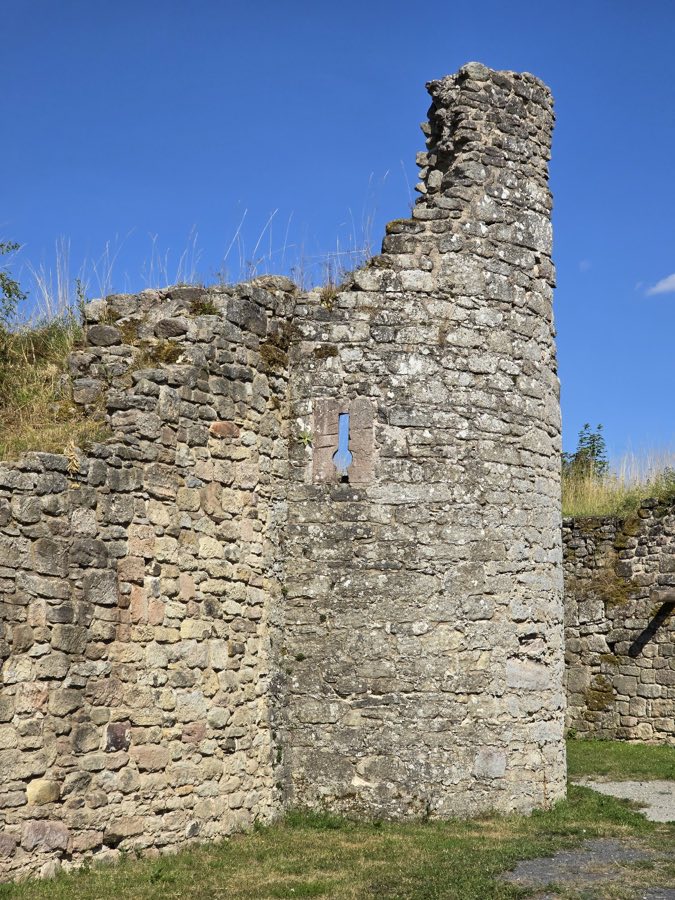
No. 16460
Castle · Germany
No. 16460 · 50.394 N, 10.990 E
Quick summary
Burg Schaumberg is a castle in Germany with origins associated with the 12th century.
See all castles in GermanyBurg Schaumberg is located in Schalkau, Germany, and it was probably constructed by the burgraves of Meissen.
The hilltop site appears in records from 1147 and became the ancestral seat of the von Schaumberg family, who governed the surrounding lands from the twelfth through the fourteenth centuries. The castle likely passed into von Schaumberg hands around the turn of the thirteenth century, and members of that family are explicitly named at the site in a 1216 document.
Many of the castle’s mounted servants and armed retainers made their homes at the foot of the hill. Contemporary terminology for such horse- and war-servants is the probable source of the settlement name Schalkau, reflecting the close link between the garrison and the village below.
In the mid-fourteenth century the von Schaumberg line were forced out by the Henneberg family and withdrew to Rauenstein. On 6 December 1362 Margrave Friedrich III of Meissen, husband of Henneberg princess Katharina, granted Schalkau both town status and market rights, changing the site’s administrative standing.
Around 1500 Wilwolt von Schaumberg regained control of the castle. Between 1501 and 1503 he had the stronghold enlarged and refashioned into a modern fortress. That upgraded form endured through later conflicts until the mid-seventeenth century.
During the Thirty Years’ War the fortress suffered decisive destruction. In early July 1635 it was heavily plundered and set on fire. Five years later, in 1640, another assault left the surviving structures and the outer bailey to collapse into ruin. Only fragmentary remains have survived since then. In the early 1990s the town of Schalkau carried out extensive securing and partial dismantling measures to preserve the site as an archaeological monument.
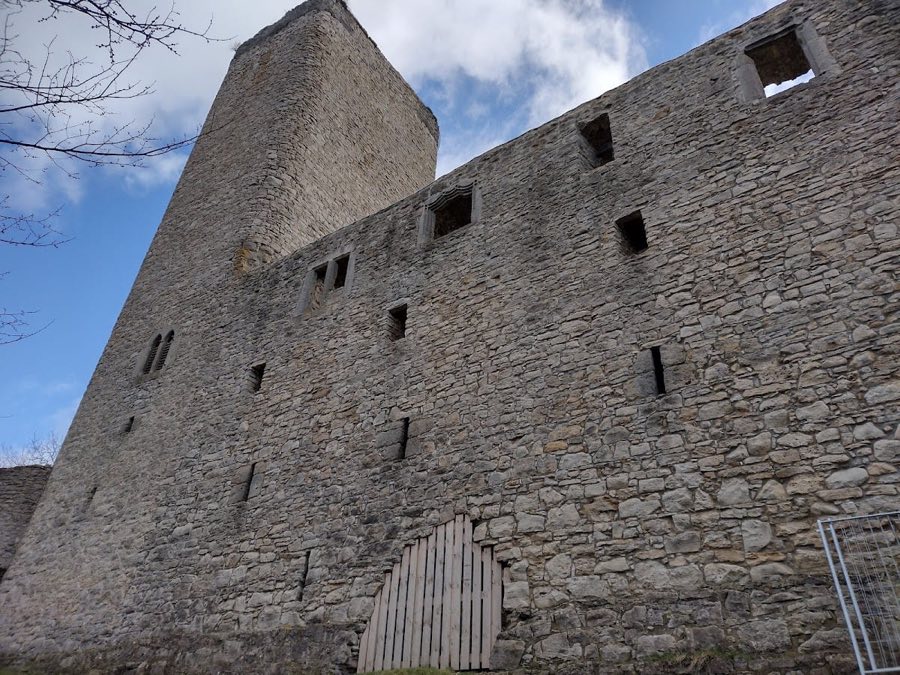
The ruins occupy a hilltop position at 492 meters above sea level to the west of Schalkau and consist of a main castle complex and an outer bailey below it. The site reflects successive phases of medieval occupation followed by a substantial early-sixteenth-century program of conversion into a fortress, after which it remained a fortified stronghold until seventeenth-century destruction.
The principal enclosure and the outer bailey are the two confirmed components of the complex. The main castle was adapted into a fortress during 1501–1503 under Wilwolt von Schaumberg, representing a documented phase of remodelling. Both the castle remains and the outer bailey later fell into rubble as a result of the attacks of the 1630s and 1640s; those collapses are part of the site’s archaeological record.
The slopes below the hill are historically associated with settlement by the castle’s horsemen and armed servants, a pattern that connects the fortified summit with the nearby village and explains the town name Schalkau. Today the site exists as ruinous masonry and earthworks; it is recognized as the largest archaeological monument in the Sonneberg district. During the early 1990s municipal teams undertook substantial securing and controlled dismantling work to stabilise the ruins and preserve what remains of the medieval and early-modern phases.
No. 54171
No. 51861
No. 36771
No. 75616
Comments
Comments for Burg Schaumberg will require a verified account before posting.
We'll send a verification link before your first comment is published.