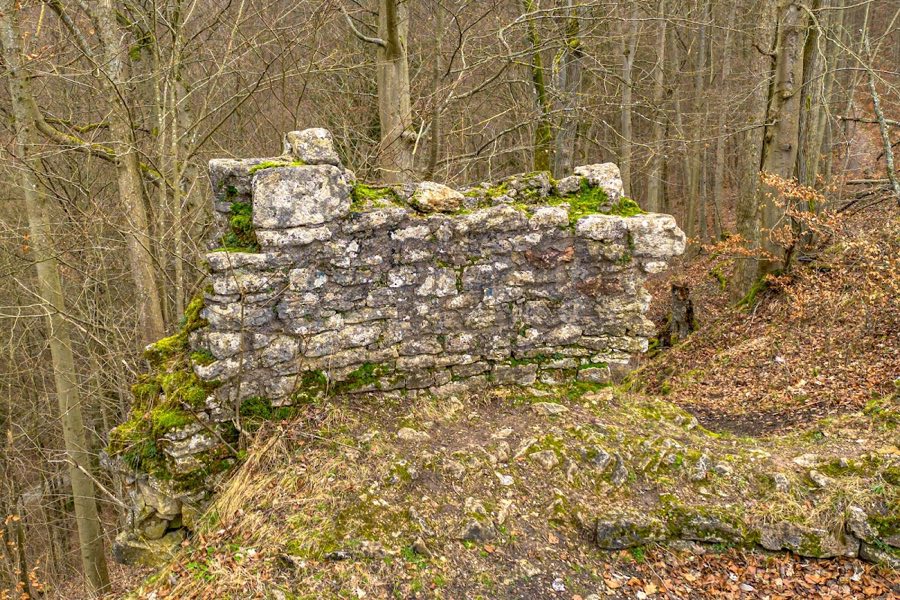
No. 65544
Habichtsburg, Meiningen
Meiningen, Germany
CastleRuin11th century
No. 51861
No. 51861 · 50.363 N, 10.469 E
Quick summary
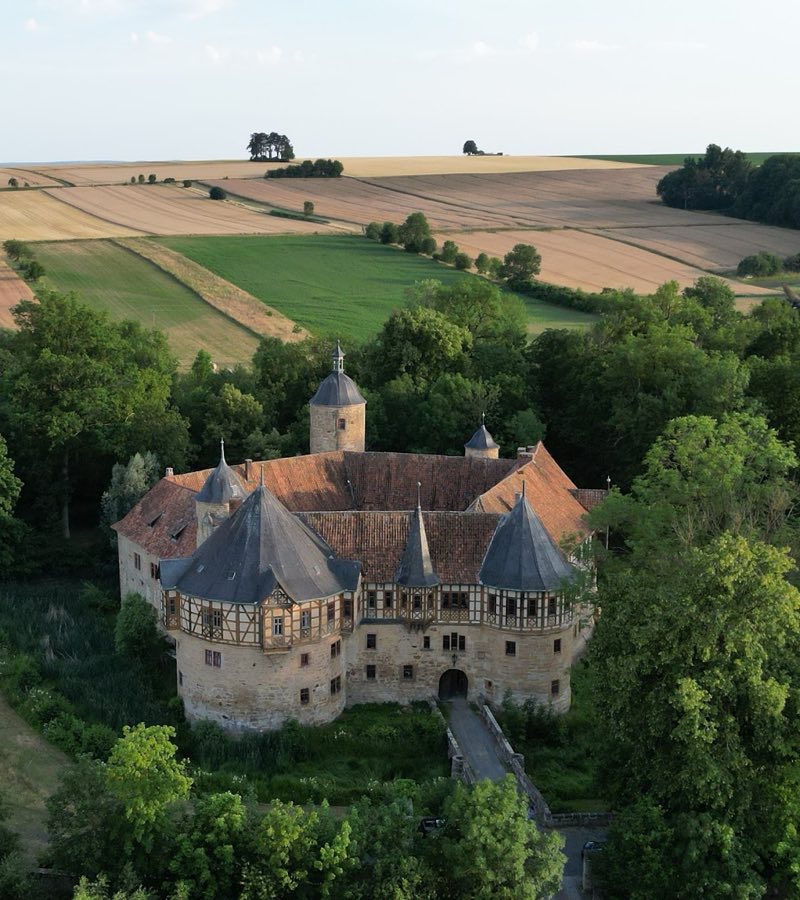
Irmelshausen Castle is a castle in Germany with origins associated with the 12th century.
See all castles in GermanyIrmelshausen Castle is located in the municipality of Höchheim, Germany. It was originally established by medieval German nobility as a fortified residence.
The castle’s origins trace back to the 12th century when Poppo III., a member of the Counts of Henneberg, adopted the name Irmelshausen from the site, marking the beginning of the Lords of Irmelshausen, a junior branch of the Henneberg family. During this early period, the castle served as the ancestral seat for this lineage. In the mid-13th century, ownership returned to the main Henneberg-Schleusingen line, reflecting the shifting control within the noble family.
In 1354, the castle was sold to the Prince-Bishopric of Würzburg, a significant ecclesiastical territory within the Holy Roman Empire. Shortly after, in 1376, the influential von Bibra family acquired Irmelshausen Castle. The von Bibras were prominent figures in Franconia, South Thuringia, and the wider empire, and they maintained possession of the castle for centuries.
The current castle structure dates primarily from the 15th century, constructed under the von Bibra family’s direction. Between 1556 and 1561, Hans von Bibra undertook a major expansion, adding three new wings collectively known as the Hansenbau. This development reflected the family’s growing status and the need for a more extensive residence.
By the late 18th century, the castle was divided between two von Bibra brothers, creating what is known as a Ganerbenburg—a castle jointly owned by multiple family lines. Each brother’s descendants retained ownership of their respective halves. In the 20th century, the older line’s portion passed through inheritance and marriage into the Stauffenberg family. Since 2014, Karl Schenk Graf von Stauffenberg has been the occupant of this half, managing event services and holiday accommodations. The younger line’s half remains with Hans Freiherr von Bibra and his family. Today, the castle remains privately owned and is not open for interior public access.
Irmelshausen Castle is a water castle, meaning it is surrounded by water for defensive purposes. It stands on an artificial island created by damming the Milz river, forming a pond that encircles the fortress. This location in the swampy Milzgrund area of Lower Franconia’s Grabfeld region provided natural protection and strategic advantage.
The castle’s layout is an irregular pentagon, enclosed by a five-sided ring wall. This wall features corner turrets and a gatehouse, which originally could be reached by a drawbridge on the side facing the village. Around 1700, the drawbridge was replaced by a stone bridge, reflecting changes in defensive needs and architectural style. On the landward side, remnants of a small outer bailey, or barbican—a fortified outwork protecting the main gate—are still visible.
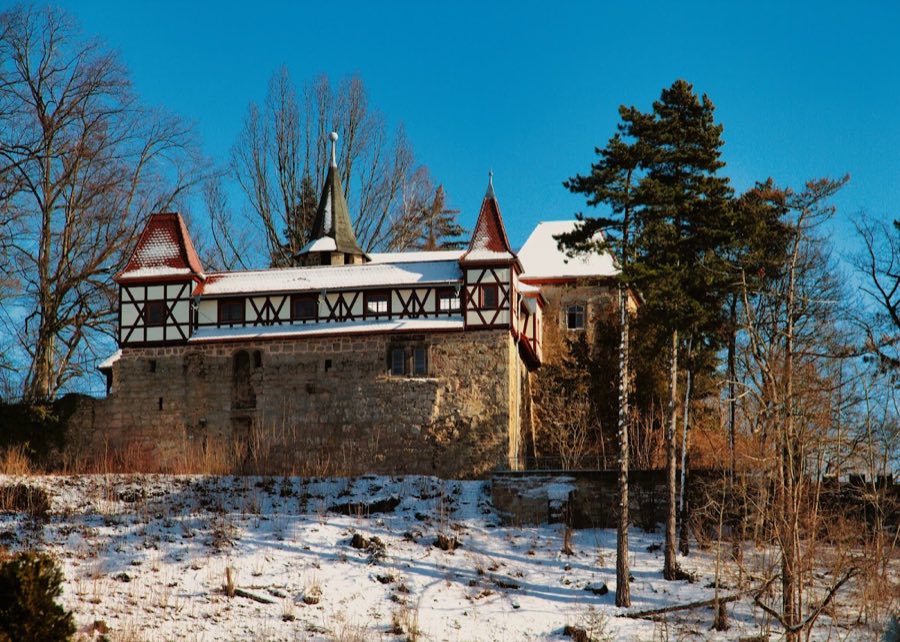
The castle’s construction combines stone on the ground floors with timber-framed upper stories, creating a distinctive and picturesque appearance. This combination was typical for noble residences of the period, balancing durability with aesthetic appeal. The castle underwent enlargement in 1514, and the significant addition of the Hansenbau wings between 1556 and 1561 further expanded its footprint.
Inside, the castle preserves furnishings, interior designs, and art treasures that reflect the lifestyle of a landed noble family. These elements contribute to the castle’s well-preserved character, which has also made it a suitable location for film productions seeking authentic medieval water castle settings.
No. 65544
No. 16460
No. 47328
No. 54171
Comments
Comments for Irmelshausen Castle will require a verified account before posting.
We'll send a verification link before your first comment is published.