No. 97529
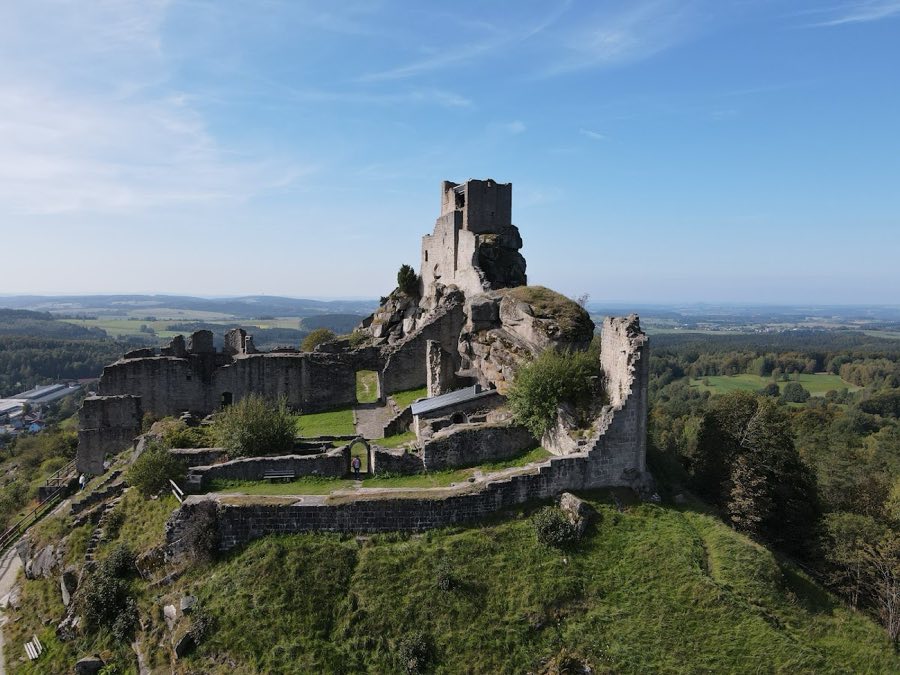
Burgruine Flossenbürg
Germany
CastleRuin14th century
No. 80504
Castle · Germany
No. 80504 · 49.637 N, 12.308 E
Quick summary
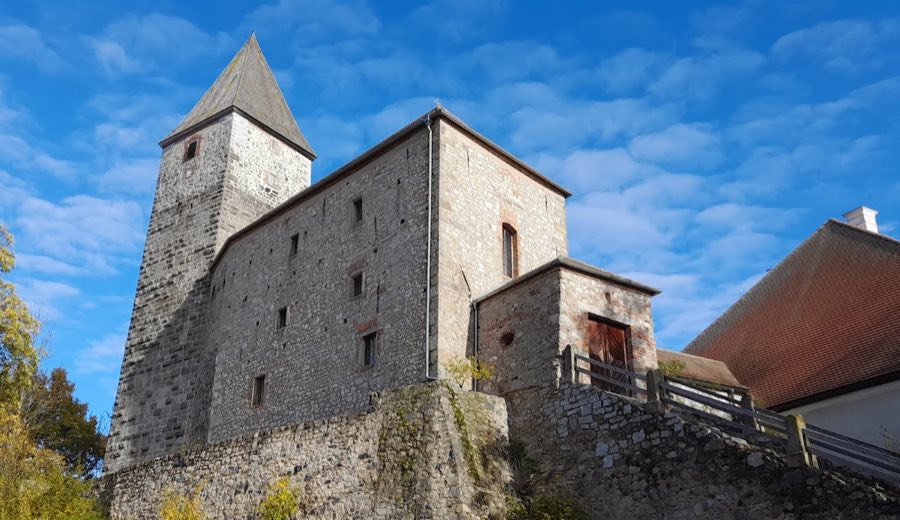
Burg Waldau is a castle in Germany with origins associated with the 14th century.
See all castles in GermanyBurg Waldau stands in Vohenstra , Germany, and was built by the medieval German ministerial family von Waldau. The site’s earliest phase began in the early 1200s when the von Waldau household erected the keep. In 1350 they added a great hall and raised existing buildings, changing the castle’s silhouette during the mid-14th century. By the 1400s the two main building groups were joined by an intermediate structure, forming the core layout that survives in part today.
In the early 1300s half of the estate passed by marriage into the hands of the Nothafft family after Albert von Nothafft married a member of the von Waldau line. That share of the property transferred to King Ludwig IV in 1326 and, under the House Treaty of Pavia, was assigned to the authority of the Palatinate. In 1394 Elector Rupprecht III granted Tobias and Heinrich von Waldau the castle as a fief, together with the local high court and exclusive hunting rights.
The late medieval and early modern centuries saw several ownership changes. In 1545 Jf6rg von Waldau sold the property to Willibald von Wirsberg, and the Kf6ckritz family held it briefly between 1560 and 1562. After the Wirsberg line ended, Elector Ferdinand Maria awarded the estate to Field Marshal Adrian Freiherr von Enkevort; the Enkevort family retained it until 1681, when Ferdinand Franz Leopold von Enkevort sold the property to Franz Ferdinand von Rummel.
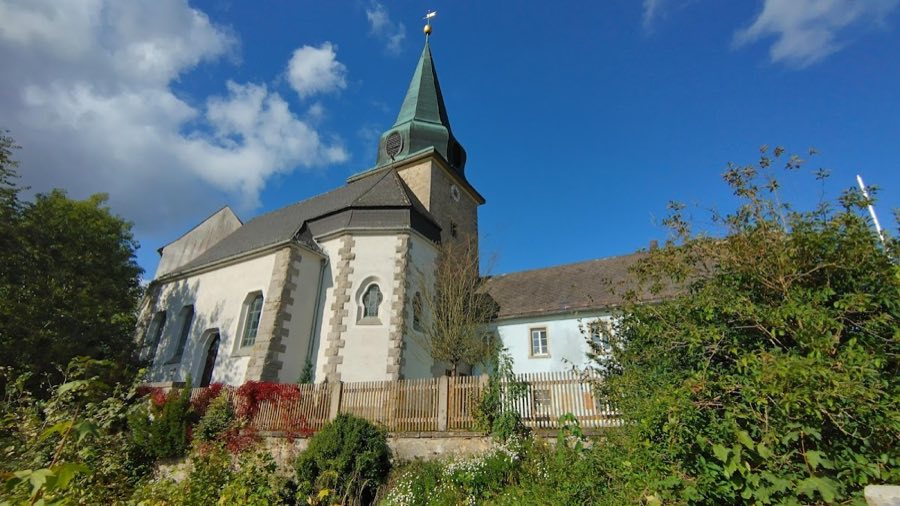
By the second half of the 1600s sections of the complex had become dilapidated, and a New Palace was built on the site to replace or supplement worn structures. In the 1700s the keep and nearby buildings were converted to serve as the village church, a use that continued until a new church was constructed for the community in 1912. The property remains in private ownership today.
Perched on the Schlossberg at about 524 metres above sea level, Burg Waldau occupies a compact, layered plan that reflects construction from the 1200s through the 1600s. The complex sits on a ridge of serpentinite rock that contains bronzite; the bedrock outcrops are only visible in places and are mostly covered by vegetation. This geological setting is recognised as a geotope of local importance.
The oldest surviving element is the keep, built in the early 13th century. The keep was a defensive tower that formed the original strongpoint of the site. In 1350 the owners added a great hall and raised the heights of other buildings, work that altered the castle’s profile and provided more enclosed space. During the 15th century an intermediate building was inserted to connect the two principal construction units, producing a more continuous group of structures.
In the later 17th century a New Palace was erected after parts of the medieval complex had fallen into disrepair; this building represents the earliest-modern phase of construction on the hill. During the 18th century the keep and adjacent rooms were adapted for religious use and served the village as a church until 1912, a period in which interior and access arrangements were altered to suit worship. Evidence of these successive uses remains visible in the arrangement and fabric of the standing structures.
Today the site is recorded in the Bayernatlas as an archaeological monument under file number D-3-6339-0018, listed specifically for medieval and early-modern remains in the castle and palace area, and it is also entered as a protected historic building under file number D-3-74-162-122. The castle stands amid a landscape where other medieval strongholds and ruins are noted nearby, including Flossenbfcrg, Haselstein and Schellenberg to the northeast, Burg Treswitz and the Friedrichsburg to the southeast, and the ruin of Leuchtenberg to the southwest. The property remains privately owned and is accessible to visitors on selected days.
No. 97529
No. 87592
No. 96263

No. 17115
Comments
Comments for Burg Waldau will require a verified account before posting.
We'll send a verification link before your first comment is published.