No. 87592
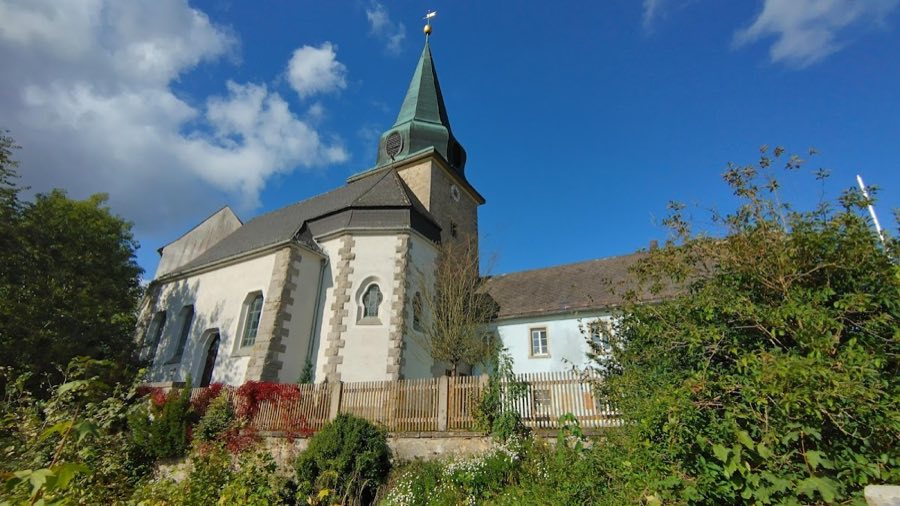
Burg Wildenau
Germany
CastleRuin12th century
No. 97529
No. 97529 · 49.734 N, 12.345 E
Quick summary
Burgruine Flossenbürg is a castle in Germany with origins associated with the 14th century.
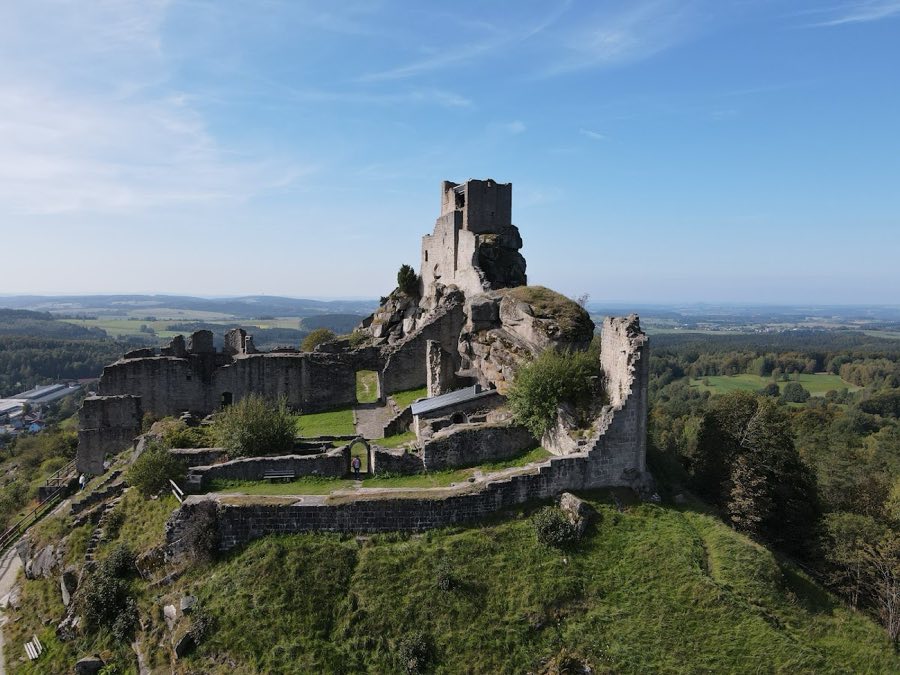
See all castles in GermanyBurgruine Flossenbürg stands above the village of Flossenbürg in Germany. It was founded around 1100 by Count Berengar of Sulzbach as a high-medieval noble stronghold and long served as the private residence of a local lordly family before becoming entangled in regional politics.
Known holders include Emperor Frederick Barbarossa, the Wittelsbach dukes of Bavaria, the Bohemian kings and the Leuchtenberg family. After the execution of the last Hohenstaufen, Conradin, in 1268 control passed to Lower Bavaria; in 1314 the future Emperor Ludwig the Bavarian pawned the site to King John of Bohemia. In 1366 Charles IV created an administrative office and placed eight men as a garrison, and in 1379 Floss and the castle returned to the Wittelsbachs, later shifting between Bavarian lines.
By the late 14th century the fortress had lost much military value. In 1634 troops under Bernhard von Sachsen-Weimar burned the complex while withdrawing, after which the site declined. Stone was robbed for local building and granite was quarried beneath and around the castle for many years. Between 1938 and 1945 a concentration camp lay east of the ruin in an area of granite quarrying; a memorial now marks that ground. Systematic conservation and excavation began in the 1980s and uncovered features such as a cellar vault and a baking oven. Only ruins survive today, and the summit ruin remains accessible.
The castle crowns the bare granite crest of the Schlossberg Flossenbürg at about 732 metres above sea level. It is arranged as a summit castle with a large outer bailey set downhill to the southeast; the masonry follows the contours of the outcrop and the surrounding rock shows pronounced onion-skin-like layers, especially on the summit and west face of the hill.
The earliest elements include a residential tower and a tall encircling wall around the core; a projecting main tower was added in the 1200s to strengthen the summit. Gateworks were altered in the 1500s and the complex later included a courtyard-facing strong house, a battery tower for artillery, a forward defensive tower before the main entrance and a gatehouse with multiple successive arches. These features survive only as fragmentary masonry on the rock and in the courtyard area.
Construction depended on local granite quarried beneath and around the castle; quarrying continued into the 1960s. Excavation and restoration from the 1980s revealed a vaulted cellar and the remains of a baking oven, evidence of domestic and service activity. The structures are roofless and ruinous but have been partly conserved, and the summit ruin is freely accessible.
The site is formally protected: the castle is listed as an architectural monument under file number D-3-74-122-5 and archaeological finds are registered as a ground monument under D-3-6240-0003. Surrounding slopes lie within nature reserves: the 21.2-hectare Schlosshänge forest reserve, designated in 1992 to protect beech and other deciduous trees, and the roughly 16.5-hectare Schlossberg Flossenbürg nature reserve, protected by decrees of 1939, 1952 and 1976. The hill is registered as geotope 374A009 and has been awarded a seal among Bavaria’s most beautiful geotopes; the onion-skin banding of the granite is interpreted as resulting from pressure release.
No. 87592
No. 80504
No. 96263

No. 17115
Comments
Comments for Burgruine Flossenbürg will require a verified account before posting.
We'll send a verification link before your first comment is published.