No. 97529
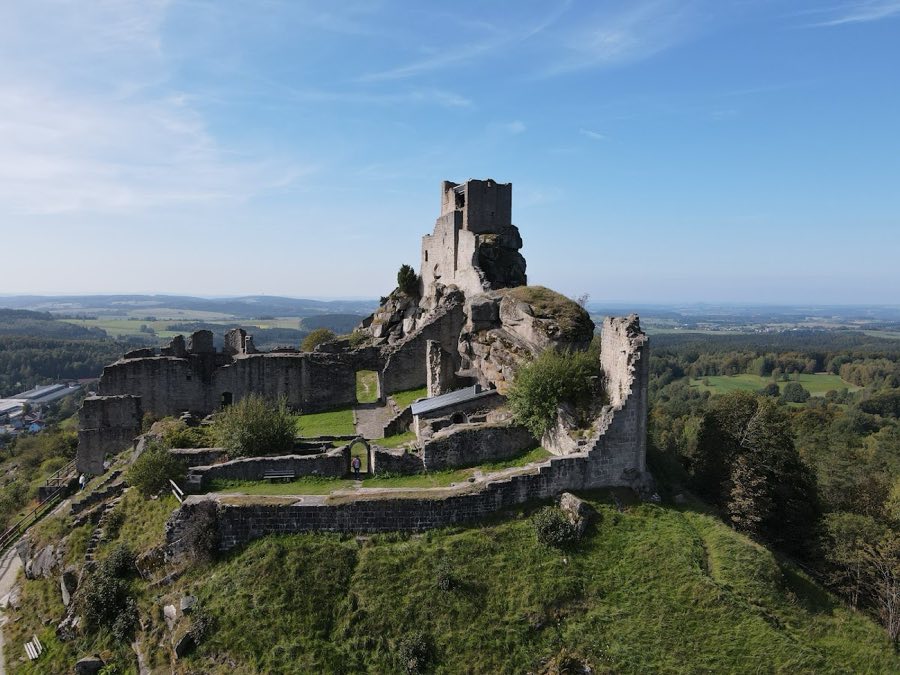
Burgruine Flossenbürg
Germany
CastleRuin14th century
No. 87592
Castle · Germany
No. 87592 · 49.776 N, 12.258 E
Quick summary
Burg Wildenau is a castle in Germany with origins associated with the 12th century.
See all castles in GermanyBurg Wildenau is located in the municipality of Plößberg, Germany. This hilltop fortress was originally erected around the year 1100 by the Counts of Sulzbach, a noble family of the Holy Roman Empire. Its first recorded mention appears in 1125, firmly establishing its early medieval origin.
During the 12th century, control of the castle shifted from its founding family to the powerful Staufer dynasty, a ruling house known for their influence in southern Germany and beyond. The fortress eventually faced destruction around 1430 amid the turmoil of the Hussite Wars, a series of conflicts arising from religious and political tensions in Bohemia. Despite this setback, the castle was rebuilt soon after. By 1432, Konrad Ermesreuther was granted Wildenau as a fief, and by 1443, the estate fell under the jurisdiction of the ecclesiastical legal district of Beidl, indicating its connection to church administration.
The following centuries saw Burg Wildenau pass through the hands of numerous owners, notably the Reitzenstein family during the 16th and 17th centuries. Throughout this period, the castle received formal enfeoffment—that is, a grant of feudal tenure—from several emperors, including Ferdinand, Maximilian II, and Rudolf III. In the mid-1600s, the site became a Bohemian crown fief, linking it politically to the Kingdom of Bohemia. Subsequently, the von Sazenhofen family held the fief until their lineage ended in 1782.
With the extinction of the von Sazenhofen line, Burg Wildenau reverted to the Kingdom of Bavaria. A 1783 inventory recorded the castle as partially in ruins but still housing a chapel dedicated to St. Erhard. This chapel served both Protestant and Catholic congregations, highlighting a period of religious coexistence. Over the centuries, the castle fell into greater disrepair before being acquired by Konrad and Ricarda Ackermann in 1992, who undertook a restoration effort lasting around ten years. Today, although privately owned, the site preserves its medieval heritage.
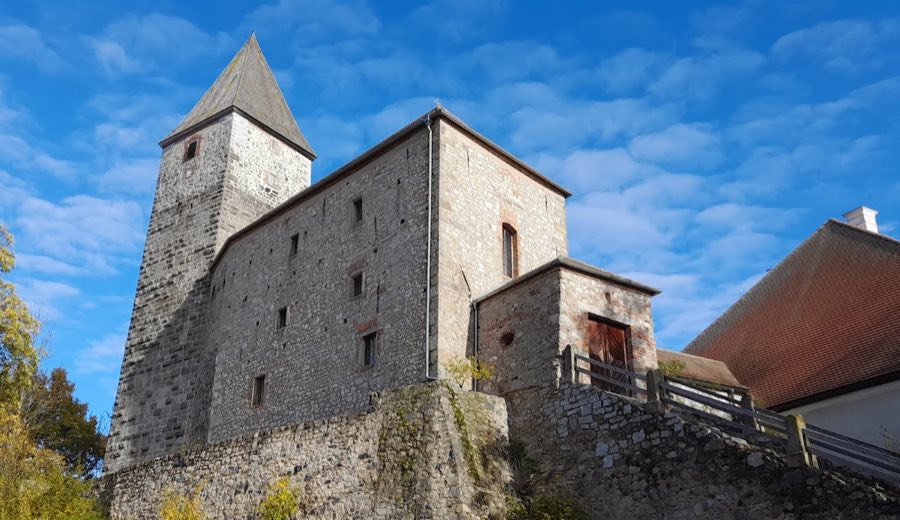
Burg Wildenau occupies a strategic hilltop position and features a distinctive U-shaped layout arranged around a small inner courtyard. The fortress includes several multi-story wings constructed during the 12th and 14th centuries, identifiable by their traditional saddle and half-hipped roofs, architectural terms describing roof shapes with sloping sides and partial hipped ends.
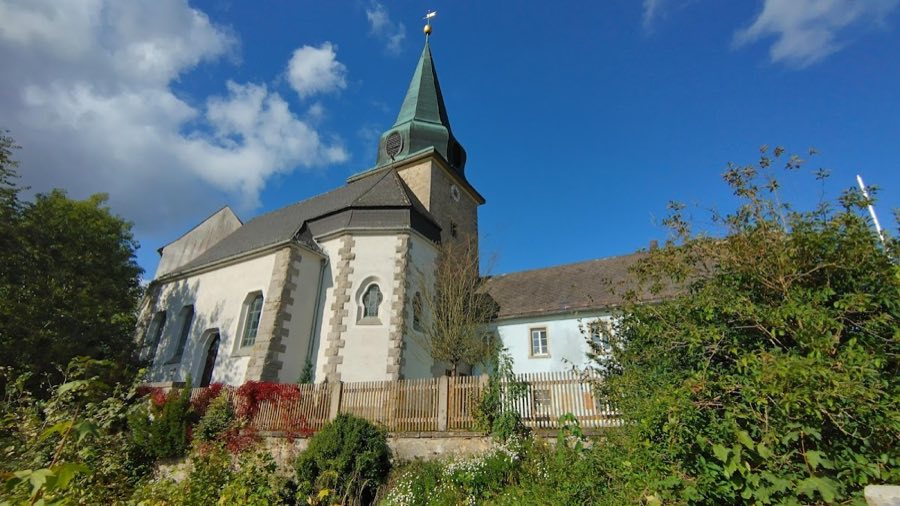
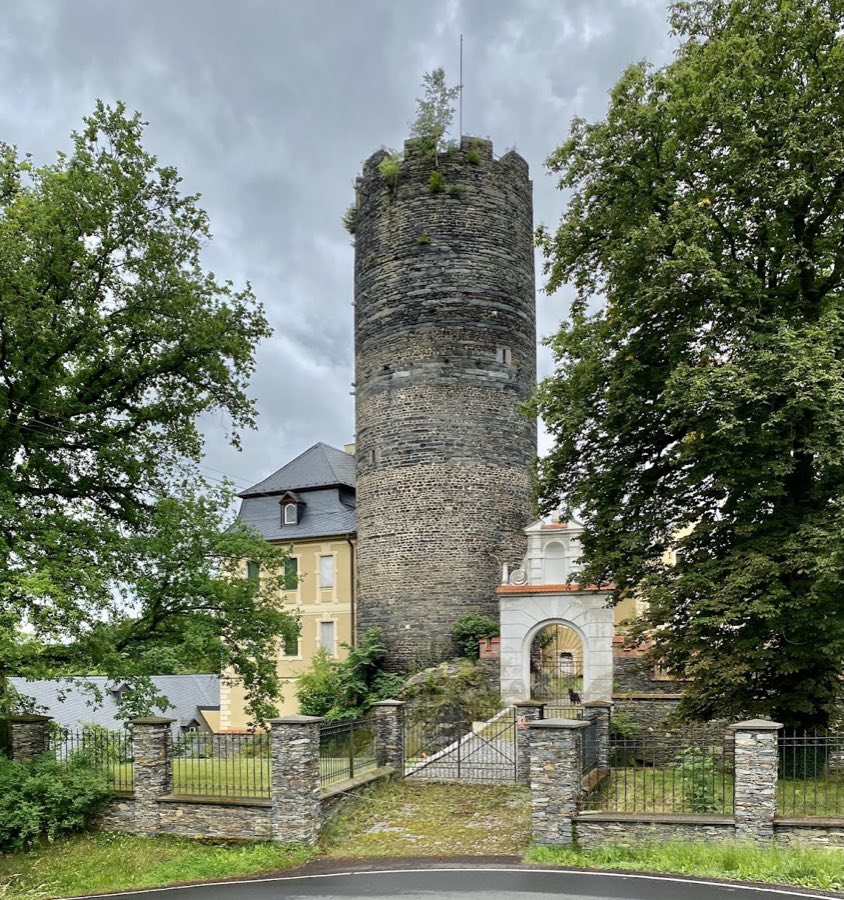
One of the castle’s central features is the Bergfried, or keep, dating back to the Staufer period. This tower was erected using rusticated ashlar masonry, known in German as Buckelquader, characterized by rough-cut stones with protruding surfaces. The quadrangular Bergfried was later adapted by adding a flared pointed helmet roof, transforming it into a bell tower topped with a distinctive pointed cap.
The west wing contained the Schlosskapelle St. Erhard, a chapel built over remnants of the former palas, the main residential building of a medieval castle. This chapel served the evangelical Lutheran community until 1912 and is designed as a flat-roofed hall featuring a three-sided choir recess—a space at the east end for clergy or choir members. Attached directly to the Bergfried, the chapel highlights the fusion of military and religious architecture on site.
Additional additions include buildings on the northwest side from the late 17th century, constructed using a combination of rubble stone and ashlar masonry, reflecting continued occupation and modification during this period. A notable inscription dated 1559 appears on a retaining wall, marking a phase of construction or renovation during the Renaissance era.
A one-story solid building with a gable roof, dating to the second half of the 19th century, stands as an ancillary structure, illustrating later use of the site. According to descriptions from 1783, much of the castle was then mostly collapsed; however, the lower floors included vaulted rooms and stables, while the tower contained a prison and several vaulted chambers, crowned by a small bell. The overall remains thus provide a layered record of defensive, residential, religious, and judicial functions spanning nearly a millennium.
No. 97529
No. 96263
No. 80504
No. 29617
Comments
Comments for Burg Wildenau will require a verified account before posting.
We'll send a verification link before your first comment is published.