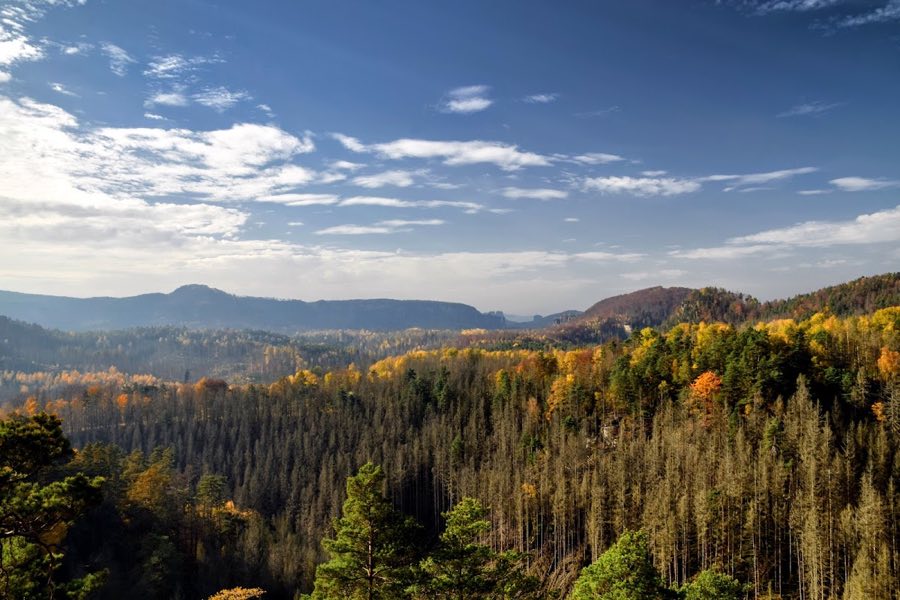
No. 30559
Burg Arnstein
Germany
CastleRestored14th century
No. 22960
Castle · Germany
No. 22960 · 50.958 N, 14.034 E
Quick summary
Burg Wehlen is a castle in Germany with origins associated with the 12th century.
See all castles in GermanyBurg Wehlen is a medieval fortress situated on a rocky outcrop overlooking the Elbe River in the town of Wehlen, Germany. It was built by Germanic settlers during the early 12th century, reflecting the expanding territorial control of regional nobility in the area.
The castle first appears in documents in 1269, although earlier records from 1245 highlight its importance when Bohemian King Wenceslaus I included it as part of his daughter Agnes’s dowry upon her marriage to Margrave Henry the Illustrious of Meissen. This connection places the castle within the complex network of dynastic alliances between Bohemia and the Meissen margraviate. Burg Wehlen was subsequently enfeoffed to local noble families, initially to the von Saalhausen lineage and later to the von Köckritz family. In 1484, Nickel von Köckritz sold the castle and its lands, marking a shift in ownership that continued into the 16th century.
Between 1523 and 1543, the estate came under the control of the Schönburg lords. They eventually exchanged Burg Wehlen with Duke Moritz of Saxony in return for other properties. By the mid-16th century, specifically after 1547, the castle was no longer used as a residence. Over time, its military and residential functions ceased, and parts of the structure deteriorated into ruin. In 1550, Elector August authorized the dismantling of remaining building materials, which were repurposed by nearby towns, signaling the end of its active life as a stronghold.
The castle’s walls suffered significant collapses during the late 18th century, with major falls recorded in 1787 and 1788. This destruction led to the systematic removal of all upper parts of the castle. Subsequently, from 1789 onward, the flat area atop the promontory was leased for use as gardens over several decades, reflecting a change from military purposes to more peaceful civilian use.
In 1883, the Saxon Mountain Club obtained the ruins from the Kingdom of Saxony and began transforming the site into a viewpoint. They constructed an observation tower atop where the castle’s main residential tower once stood, installed stairways on the southern and northern sides of the plateau, and partially uncovered cellar vaults that had been buried. Thirteen years later, in 1896, a memorial obelisk was erected on the castle plateau to commemorate the 26th anniversary of the Battle of Sedan, a notable event in Franco-Prussian history.
Local heritage groups continued excavation and clearing efforts at the site until World War II. During the period of the German Democratic Republic (GDR), some restoration was undertaken, including structural repairs to a collapsed south wall in the 1960s. However, the observation tower from the 19th century was dismantled against community opposition, the cellars were filled in again, and the Sedan memorial was removed and concealed in a cellar, reflecting a shifting political climate and attitudes toward historical commemoration.
From 2017 onward, a local interest group began clearing away overgrowth and partially restoring the ruins. This included reopening the cellars for public access in 2020. In 2021, the parts of the Sedan memorial that had been lost were rediscovered and re-erected on the plateau. Additionally, the original tower base was reconstructed, and starting in spring 2024, construction began on a new observation tower measuring approximately seven meters in height. Designed with a contemporary style distinct from the original castle’s medieval form, this tower was partially financed through funds seized from the Socialist Unity Party (SED). It aimed to evoke the silhouette of the historic castle and was officially inaugurated on June 21, 2025.
The layout of Burg Wehlen originally extended about 85 meters long and 16 meters wide, including two outer baileys—enclosed courtyards typical of medieval fortress design that served both defensive and domestic purposes. The castle occupied a strategic promontory positioned 25 meters above the Elbe River, bordered by the river on one side and the Grundbach stream on the other, taking full advantage of this natural defensive setting.
Present-day remnants include the foundations of a single tower and an adjacent cellar, both preserved under the ownership of the town of Wehlen. These surviving structures offer insight into the castle’s internal arrangement. One cellar contains cross vaults—arched ceilings formed by the intersection of two barrel vaults—and barrel vaults themselves, which are continuous curved ceilings typical of medieval stone construction. These vaulted cellars were uncovered in the late 19th century by the local Mountain Club but were subsequently refilled in the 1960s with debris from the demolished tower ruins, reflecting changing conservation approaches.
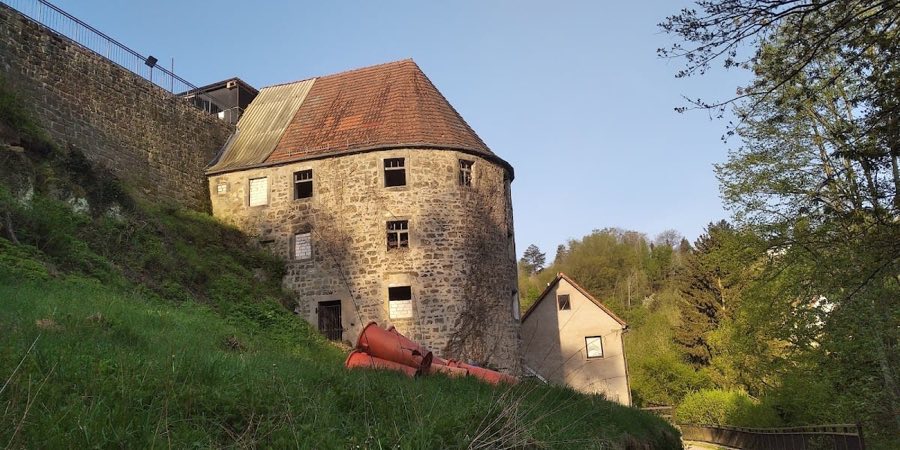
A distinctive round building known locally as the “Trommel,” likely serving as a bastion or fortified outwork, remains in private hands. Remarkably, this structure was occupied up until the 1980s, illustrating its longevity and adaptation beyond the castle’s operational period. Its function as a bastion would have contributed to the castle’s defensive perimeter, projecting outward to resist attackers.
The Saxon Mountain Club’s 1883 intervention transformed the castle’s former residential tower site into a viewing platform. They erected an observation tower here, accessible via staircases on both the southern and northern sides of the plateau, allowing visitors to ascend safely to the elevated vantage point. Though this original observation tower was later dismantled during the GDR era, the new tower constructed in 2024 rises roughly seven meters above the rebuilt tower stump, serving a similar purpose of providing panoramic views while marking the site’s historic footprint. This modern structure embraces a distinctive contemporary architectural language, deliberately contrasting with the medieval origins.
On the castle plateau, the memorial obelisk commemorating the Battle of Sedan was first installed in 1896 and, after being hidden for much of the 20th century, was rediscovered and restored to its original site in 2021. This stone monument adds a layer of 19th-century historical memory to the medieval ruins and highlights the site’s ongoing cultural significance.
Together, the remaining foundations, cellars, the Trommel bastion, and commemorative features provide a tangible connection to Burg Wehlen’s long and varied past, preserving its role as a defensive stronghold, noble residence, and later as a location of remembrance and community engagement.
No. 30559
No. 97944

No. 28534
No. 64659
Comments
Comments for Burg Wehlen will require a verified account before posting.
We'll send a verification link before your first comment is published.