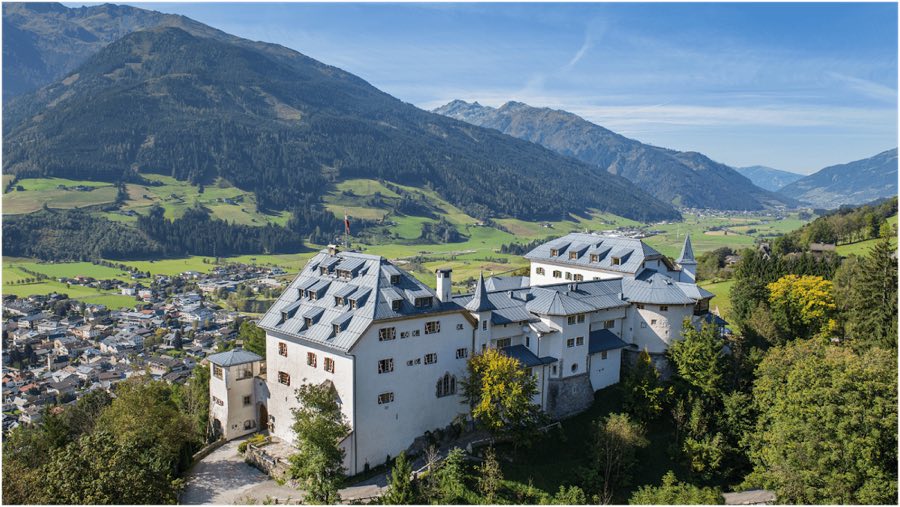
No. 67970
Mittersill Castle
Austria
CastleRestoredFor rent12th century
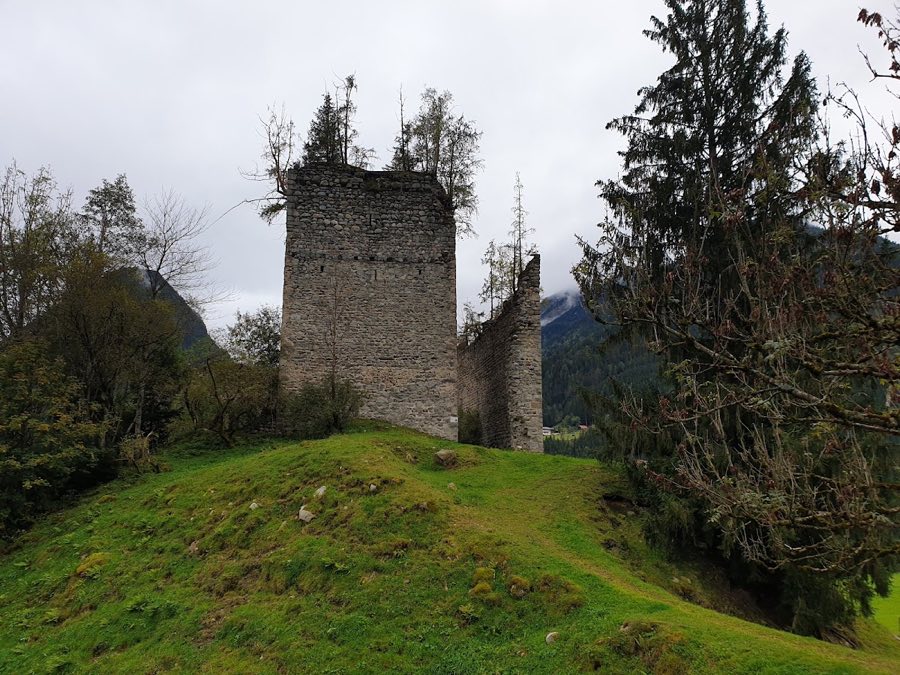
No. 65617
No. 65617 · 47.247 N, 12.244 E
For events
Burgruine Hieburg is marked as a château or castle venue lead. Capacity, indoor/outdoor spaces, catering rules, and accommodation options are published only after public verification.
Event types: Private events, Cultural gatherings, Filming and photography
Quick summary
Burgruine Hieburg is a castle in Austria with origins associated with the 13th century.
See all castles in AustriaBurgruine Hieburg is a medieval castle ruin situated in the municipality of Rosental, Austria. The original fortress was constructed by local European settlers near the end of the 13th century, during a period marked by the establishment of feudal strongholds in the region.
The earliest known record of the site, originally called Mairhofen, dates back to 1290 when Walter von Neukirchen was its owner. It is believed that the castle’s first proprietors were likely vassals, serving under either the Counts of Frontenhausen or the Counts of Falkenstein at Kaprun. This connection indicates its place within local feudal hierarchies in the late Middle Ages.
By 1297, Friedrich von Velben took ownership and undertook significant expansions. Under his direction, the site was transformed into a fortified stronghold, including the construction of wooden ancillary buildings and a protective high ring wall. These improvements enhanced the castle’s defensive capabilities, reflecting the turbulent political climate of the time.
In 1544, the fortress suffered damage when struck by lightning, causing partial destruction. Repairs were made, allowing the castle to remain functional. However, following further fires and two subsequent transfers of ownership, the castle’s importance declined. In 1620, Christoph von Küenberg officially declared the structure abandoned, marking the end of its active use.
The ruin’s deterioration accelerated after a major fire in 1661, which led to extensive neglect and decay over the following centuries. During World War II, additional damage occurred when an American bomb struck the site in 1944, destroying its southwest wall. Later, in 1958, the east wall collapsed, further contributing to the castle’s ruined state. Due to concerns over structural instability, access to the site has been prohibited since March 2009.
The castle ruin occupies a hillside near the ascent to the Gerlos Pass and is surrounded by forested terrain. Its surviving structures suggest a complex that once combined residential, defensive, and religious functions typical of medieval fortifications.
Among the visible remains is part of a residential building known as the Palas, which would have served as the main living quarters within the castle. Adjacent to it lies the probable site of a castle chapel, reflecting the religious practices of its medieval inhabitants. Both structures were integral to the daily functions of the fortress.
Encircling the core buildings is the ring wall, a high defensive barrier constructed during the castle’s expansion by Friedrich von Velben in the late 13th century. This protective wall helped secure the site against attacks. The ruins also include the bergfried, or main tower, which is square in shape with a footprint measuring roughly 11 by 11 meters. The bergfried served as a stronghold and lookout point, typically built of stone to provide both defense and refuge.
Traces of the former moat, a water-filled ditch designed to hinder attackers, remain visible around the castle grounds, illustrating the medieval emphasis on layered defense systems. Despite centuries of damage caused by fire, bombing in World War II, and natural collapse, the site’s essential layout can still be discerned.
Currently, the preservation of the ruin is poor. The surviving elements stand mostly as fragmented remains rather than intact structures and are vulnerable to further decay. No inscriptions, decorative details, or archaeological finds such as tools or pottery have been documented within the present sources. The castle’s remnants offer insight into its historical function through their form and location, even as time and events have reduced it to a ruinous state.
No. 67970
No. 88541
No. 12135
No. 22317
Comments
Comments for Burgruine Hieburg will require a verified account before posting.
We'll send a verification link before your first comment is published.