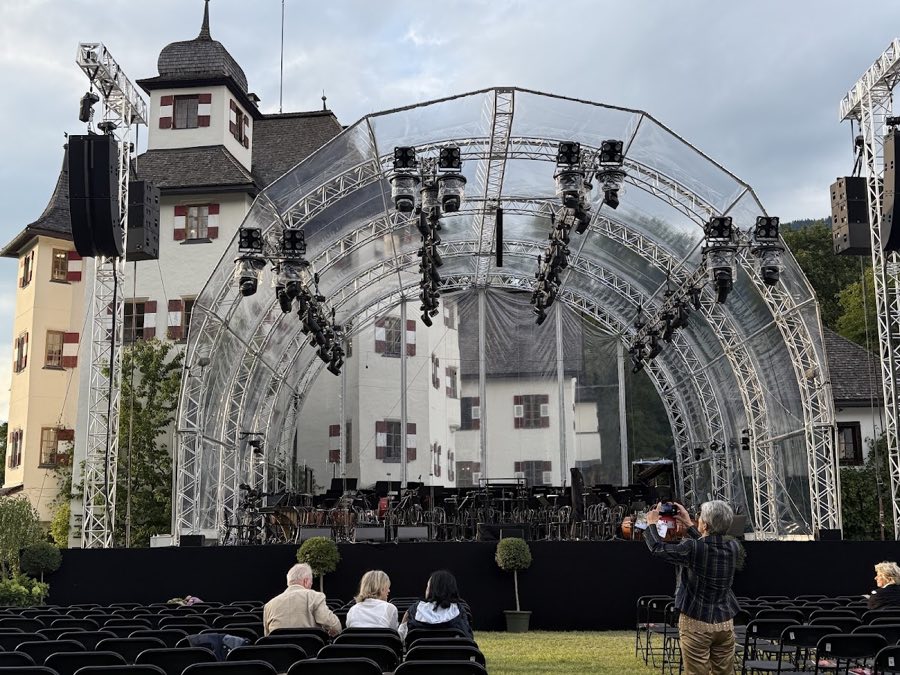
No. 88541
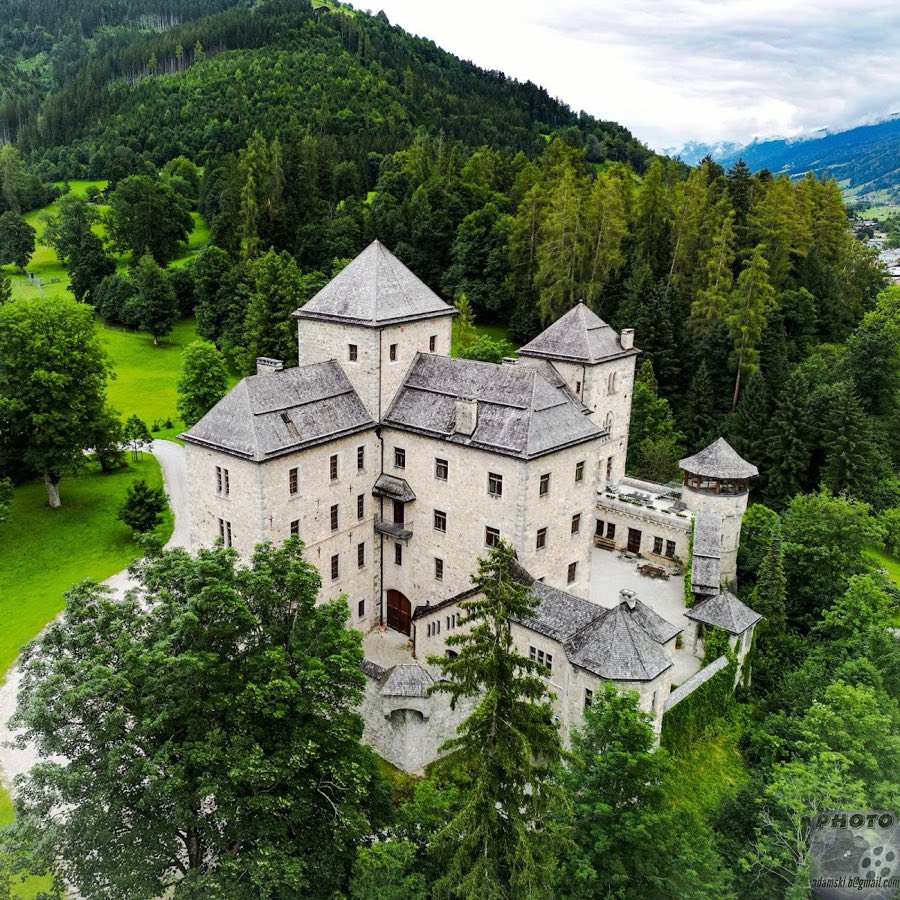
Schloss Kaps
Austria
CastleRestoredFor rent16th century
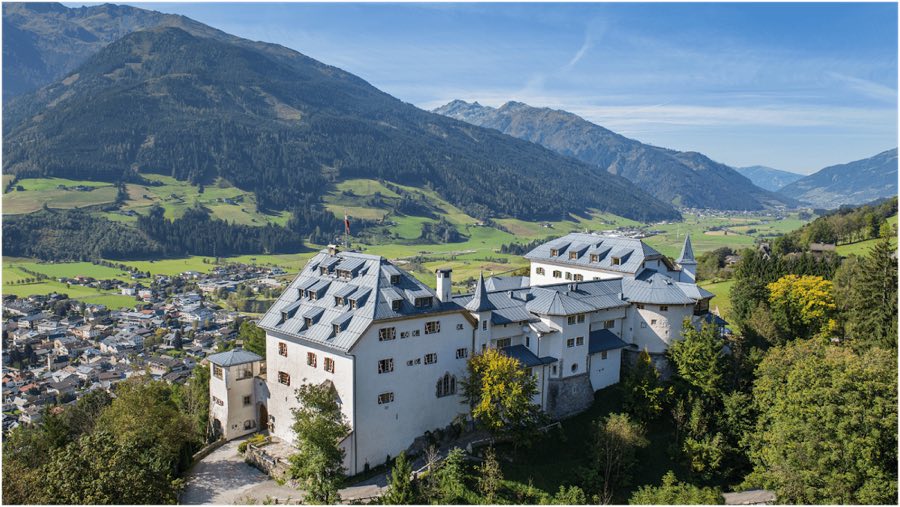
No. 67970
Castle · Austria
No. 67970 · 47.287 N, 12.485 E
For rent
Mittersill Castle is marked for bookable castle accommodation. Nightly pricing, sleeps count, stay rules, and amenities are displayed only when public operator data is available.
Rental type: Hotel / bookable stay, Short-stay rental
Short-term availability: Bookable accommodation signal
For events
Mittersill Castle is marked as a château or castle venue lead. Capacity, indoor/outdoor spaces, catering rules, and accommodation options are published only after public verification.
Event types: Private events, Cultural gatherings, Filming and photography
Accommodation: Accommodation signal present
Quick summary
Mittersill Castle is a castle in Austria with origins associated with the 12th century.
See all castles in AustriaMittersill Castle is situated near the town of Mittersill in present-day Austria. The fortress was originally constructed around the mid-12th century by medieval European builders to serve as a stronghold and administrative center in the region.
The area’s ownership began with the Counts of Matrei around the year 1000, before control passed to the Dukes of Bavaria about two hundred years later. In the 12th century, the castle changed hands through an exchange to the Archbishopric of Salzburg. Around 1180, the castle’s founders, the Counts of Lechsgemünd—who held the Oberpinzgau territory as vassals of the Bavarian dukes—took residence and began identifying themselves as the Counts of Mitersele.
By 1228, Mittersill Castle became part of the Prince-Archbishopric of Salzburg and served prominently as the home of the episcopal administrators, known as Pfleger, overseeing Oberpinzgau. Several members of the Felben family held this office, with documented officials active between 1292 and 1363. In 1388, the castle was used as a residence by Archbishop Pilgrim II of Puchheim, highlighting its importance as an ecclesiastical seat.
The early 16th century was turbulent for the castle. During peasant uprisings in 1526, rebels captured, plundered, and set fire to the fortress. Following this, Archbishop Matthäus Lang quashed the rebellion and imposed the cost of reconstruction on the peasants themselves. The castle was rebuilt and fortified by 1528, incorporating stronger defenses and a courtyard well designed to withstand sieges. A chapel was added shortly afterward in 1533, bearing the archbishop’s heraldic emblem and date on its ceiling.
Repeated fires in 1555 and 1597 necessitated further repairs and enhancements. By the early 17th century, additions such as stables, bathing facilities, tiled stoves for heating, and even a fish pond within the moat area were completed. The castle’s drawbridge was removed around 1800, reflecting changes in military technology and defensive needs.
After the secularization of the Archbishopric in 1803, Mittersill Castle saw frequent changes in ownership. From 1816, it housed the imperial-royal district court but continued to be used by former episcopal administrators until 1850. The castle chapel was closed in 1845 as part of this transitional phase. In 1881, the Austrian government sold the property to Anton Hahn, who soon transferred it to Countess Marie Larisch-Moenich. She commissioned architect Gangolf Kaiser for extensive renovations that altered much of the castle’s medieval character, though financial difficulties led to the property passing to Kaiser’s son within a few years.
Throughout the following decades, the castle changed hands among industrialists, nobility, and artists, including painter Hugo von Grundherr, who remodeled it in a romantic style and established an art collection there. By the 1930s, Baron Hubert von Pantz owned Mittersill, operating it as a private hotel and sports club favored by aristocrats and well-known guests.
In July 1938, a lightning strike caused a severe fire that heavily damaged the castle, with complete restoration delayed until after World War II. During the Nazi era, the castle was seized and repurposed by the SS-affiliated Reichsinstitut Sven Hedin for plant research. It also functioned as a subcamp of the Mauthausen concentration camp, where female Jehovah’s Witnesses forced laborers were detained from 1944 until American liberators arrived on May 8, 1945.
Following the war, Mittersill Castle welcomed a variety of notable figures, including royals and celebrities. In 1967, it was acquired by the International Fellowship of Evangelical Students, who used it as a Christian conference center. Local families purchased and restored the castle beginning in 2009, reopening it in 2011 as a hotel. Since 1993, the castle has been officially protected as an important cultural heritage monument in Austria.
Mittersill Castle presents a distinctive horseshoe-shaped arrangement of buildings encircling a nearly flat central courtyard. This courtyard is enclosed within a defensive walkway called a wehrgang, a protected path used historically for patrol and defense. The main entrance lies on the eastern side, accessed through a gatehouse that projects southward, built in 1537 to strengthen the castle’s defenses.
Dominating the western side are two massive round towers that provided defensive advantage and visibility over the surrounding landscape. At the southwestern corner stands the Hexenturm, or “Witches’ Tower,” a notable feature whose upper floor contains the chapel dedicated to the Holy Trinity. The chapel’s ceiling bears the coat of arms of the archbishop and the date 1533, marking its completion and ecclesiastical significance.
The original medieval keep, or mastio, once a towering part of the fortress, was lowered and integrated into other buildings during later renovations, effectively concealing it from outside view. The castle’s residential palace, known as the Palas, features a roof oriented along the north-south axis with small hipped ends, providing a traditional northern European design.
On the courtyard’s eastern side, a two-story residential wing overlooks the central space, where economic buildings replaced an older defensive corridor on the ground floor during the 19th and 20th centuries. Visitors would approach the courtyard by passing through the Gerichtshaus, or “courthouse,” indicating the castle’s role as a seat of local jurisdiction.
Functional structures such as stables for horses and cattle, bathing facilities, tiled stoves designed to provide heating, and a fish pond within the former moat area were all added or improved during the late 16th and early 17th centuries. These elements reflect the castle’s transition from pure fortress to a noble residence with comforts adapted to its era.
By around 1800, the drawbridge was removed, reflecting a shift toward more modern architectural needs and decreased military threat. Inside the chapel is a late Gothic winged altar dating to around 1450, attributed to the Master of the Aussee Altar, serving as an important artistic and religious artifact. The chapel’s roof gained a bell turret in 1562, adding both practical and symbolic value.
Mittersill Castle has endured several significant fires—in 1526, 1555, 1597, and again in 1938—which led to various rebuilding and modernization efforts. Despite these events and numerous modifications over the centuries, the castle has retained much of its 16th-century architectural character. Most recent restorations, especially during its conversion into a hotel, have preserved the exterior appearance, maintaining the fortress’s historical integrity while adapting it for contemporary use.
No. 88541
No. 65617
No. 21268
No. 68030
Comments
Comments for Mittersill Castle will require a verified account before posting.
We'll send a verification link before your first comment is published.