No. 54480
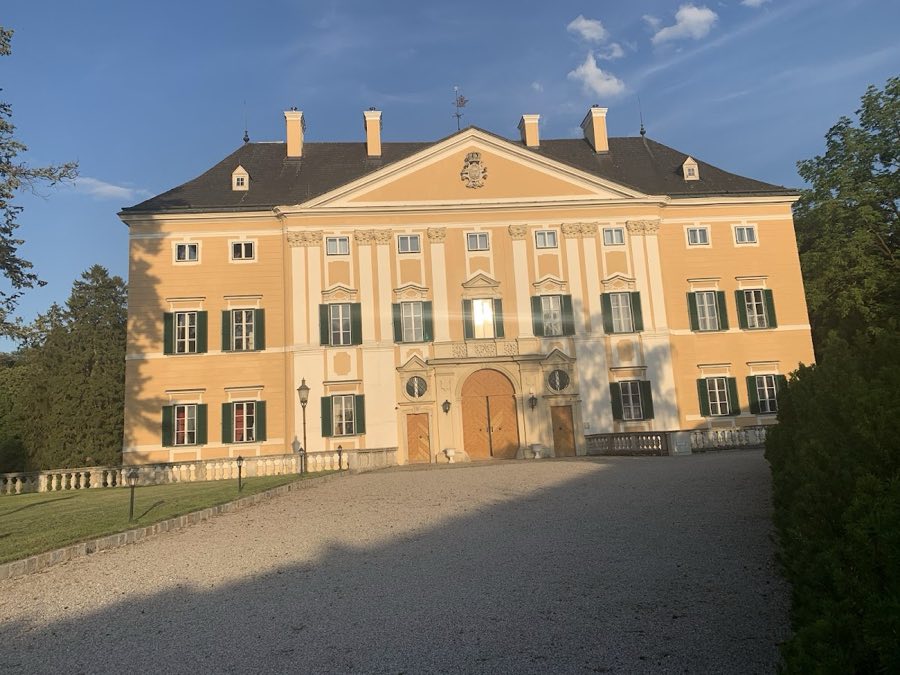
Kobersdorf Castle
Austria
CastleRuinFor events13th century
No. 37143
Castle · Austria
No. 37143 · 47.639 N, 16.340 E
Quick summary
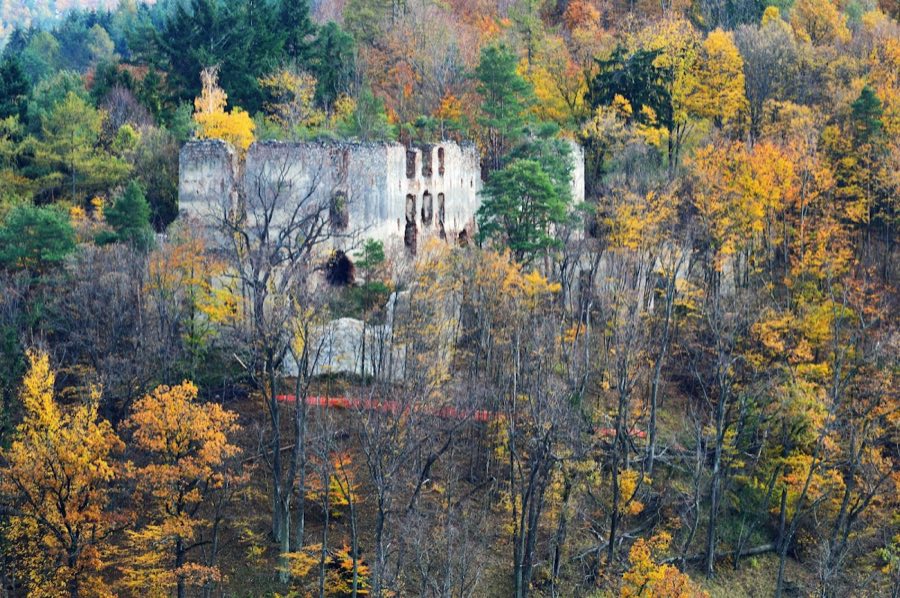
Burgruine Schwarzenbach is a castle in Austria with origins associated with the 13th century.
See all castles in AustriaBurgruine Schwarzenbach stands above the Schwarzenbach valley in the municipality of Schwarzenbach, Austria. The site was established in the medieval period, likely about the turn of the 13th century, and first appears in documents of 1254 as castrum Suarchumpah when the place was granted to the Kingdom of Hungary in a settlement between King Béla IV and King Ottokar II of Bohemia.
In September 1337 a Hungarian force under Leustachius, ispán of Eisenburg and Ödenburg, besieged the castle and had taken it by 4 October 1337; Leustachius was named castellan. The 1337 Peace of Pressburg envisaged an exchange of Schwarzenbach for Anchenstein, but the castle remained outside Austrian control until a later treaty, commonly dated to 1362 as the Peace of Ofen, transferred it to Austria.
In the early 1500s a chapel was built in the courtyard. Before the end of that century the complex was substantially rebuilt into a residential palace, a programme that retained the medieval foundation walls. The estate was purchased in 1680 by Count Pál I Esterházy de Galántha (created prince in 1687) and thereafter remained with the princely Forchtenstein branch. Around 1800 the site ceased to function as the Esterházy administrative seat and fell into decay.
Concerns about falling masonry led the local municipality to seek refurbishment in 2014; the Federal Monuments Office authorised a partial demolition after stones began to fall toward the valley. The Esterházy Foundation proposed a land swap that the municipality declined, and in 2016 a wall with a failing arch was removed. The ruin is recorded as a protected historical monument.
The castle crowns a hilltop at the head of the Schwarzenbach valley about one kilometre northwest of the market settlement. Its plan reflects a medieval hill castle that was later adapted for residential use; the late 16th-century rebuilding preserved the older foundation walls, which remain a defining feature. Surviving masonry stands at varying heights and the courtyard contains collapsed material and fallen wall fragments; a partial demolition in 2016 removed a dilapidated wall and arch.
The most archaeologically distinctive element in the courtyard is the chapel, erected in the first third of the 16th century. The courtyard-facing wall preserves pointed-arch window openings, some subsequently blocked, which were shaped to receive tracery-style glazing. Inside the chapel the initial courses for a cross-ribbed vault are visible, indicating an intention to roof the space with intersecting ribs. A stair turret provided access to an upper gallery; the turret survives as a vertical masonry shaft of roughly twelve metres.
Today the ruins are overgrown and the courtyard is filled with rubble and loose masonry; a warning sign at the entrance cautions against collapse. The site remains protected as a historical monument and visibly records phases of medieval origin, early modern conversion and later decline.
No. 54480
No. 98651
No. 29734
No. 27395
Comments
Comments for Burgruine Schwarzenbach will require a verified account before posting.
We'll send a verification link before your first comment is published.