No. 59741
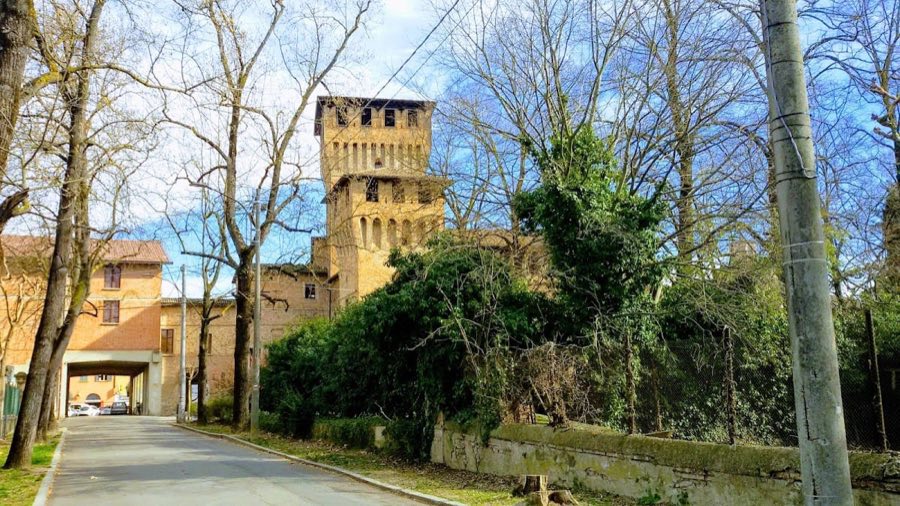
Castello di Montecchio Emilia
Italy
CastleIntact13th century
No. 25807
Castle · Italy
No. 25807 · 44.576 N, 10.456 E
Quick summary
Canossa Castle is a castle in Italy with origins associated with the 10th century.
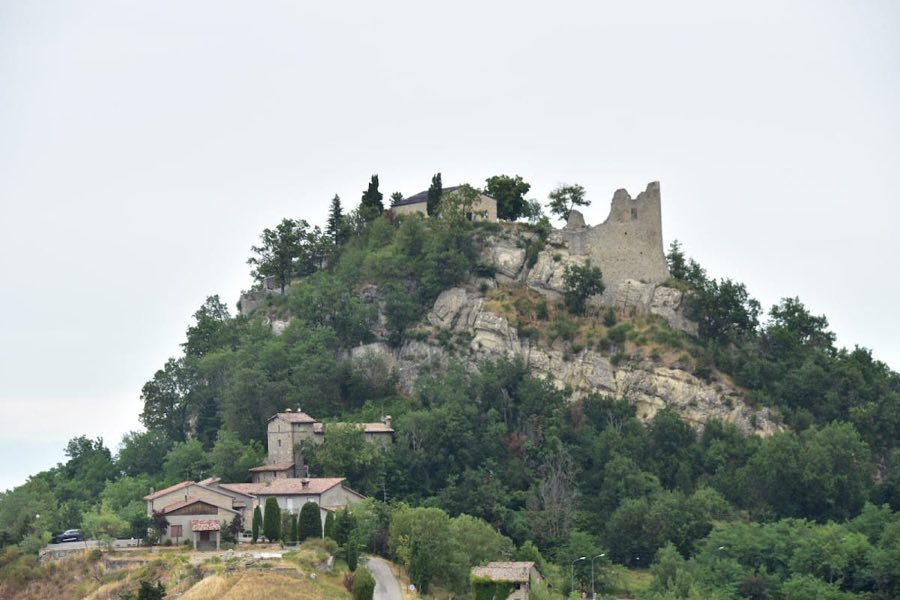
See all castles in ItalyCanossa Castle is located in the municipality of Canossa, Italy, and was originally built by the Lombard civilization. Its foundation dates back to around the year 940 when Adalberto Atto, the son of Sigifredo of Lucca, established the fortress as a fortified residence atop a rocky summit in the Apennine mountains. The strategic position of the castle, perched 576 meters above sea level, allowed control over a vital corridor between Bologna and Parma, making it a significant military and administrative site in the region.
In the mid-10th century, the castle served as a refuge for Queen Adelaide, who withstood a three-year siege led by Margrave Berengar II of Ivrea around 950, an event that ended unsuccessfully for the besiegers. This early period also saw the foundation of a Benedictine monastery with twelve Cluniac monks and the church of Sant’Apollonio on the site, adding a strong religious presence to the fortress.
The castle reached its peak historical prominence in 1077 during the dramatic reconciliation known as the “Walk to Canossa.” Emperor Henry IV journeyed to the castle to obtain absolution from Pope Gregory VII after being excommunicated, a pivotal moment in the struggle between secular and religious powers in medieval Europe. This event earned Canossa Castle a lasting place in history and memory.
Following the death of Matilda of Canossa in 1115, the castle became the focus of a long and complex dispute over inheritance. Throughout the centuries, control shifted among various powers including the Canossa family descendants, the city of Reggio, the Visconti family, the Este dynasty, and the counts Valentini. This turbulent period reflected the broader political and military conflicts characteristic of medieval Northern Italy.
In 1255, the castle suffered heavy destruction during fierce battles between the Ghibelline and Guelph factions, which represented opposing loyalties to the Holy Roman Emperor and the Papacy. Despite being reduced to its foundations, the fortress was subsequently restored and fortified with innovations such as firearms defenses in the 14th century under the guidance of Giberto da Correggio.
The Renaissance era brought further changes, notably when the poet and soldier Ludovico Ariosto was appointed as captain of the castle in 1502. He resided there for nearly half a year, marking an intersection between cultural and military history. The Este family maintained control of Canossa until the late 18th century, interrupted briefly in 1557 by an occupation from Ottavio Farnese.
By the 19th century, the castle had fallen into ruin, suffering additional damage from a landslide caused by a falling rock in 1846. In 1878, the Italian government acquired the site, designating it a national monument. Archaeologist Naborre Campanini led excavations and in 1913 established a museum nearby to preserve and display finds from the castle, initiating ongoing efforts to conserve and study this emblematic site.
The remains of Canossa Castle reveal a once extensive fortified complex characterized by a triple ring of defensive walls. This layered system provided multiple lines of protection, with the space between the first and second, lower walls occupied by buildings that housed armed guards, servants, and supported the nearby small villages known as borghi. Constructed mainly from locally sourced materials typical of the Apennine region, the walls and structures demonstrate the defensive and residential functions of the site.
Central to the castle was a lordly residence accompanied by a monastery that housed twelve Benedictine Cluniac monks and the church of Sant’Apollonio. Though the original 10th-century buildings underwent considerable alteration and partial destruction through successive expansions, damage from warfare, and renovations in the 14th century, archaeological investigations have identified the church as a focal spiritual center. Historical records confirm that in 1392 the Visconti-appointed castellano, Pisanello de’ Pisi, removed relics from the church, indicating the presence of significant religious artifacts.
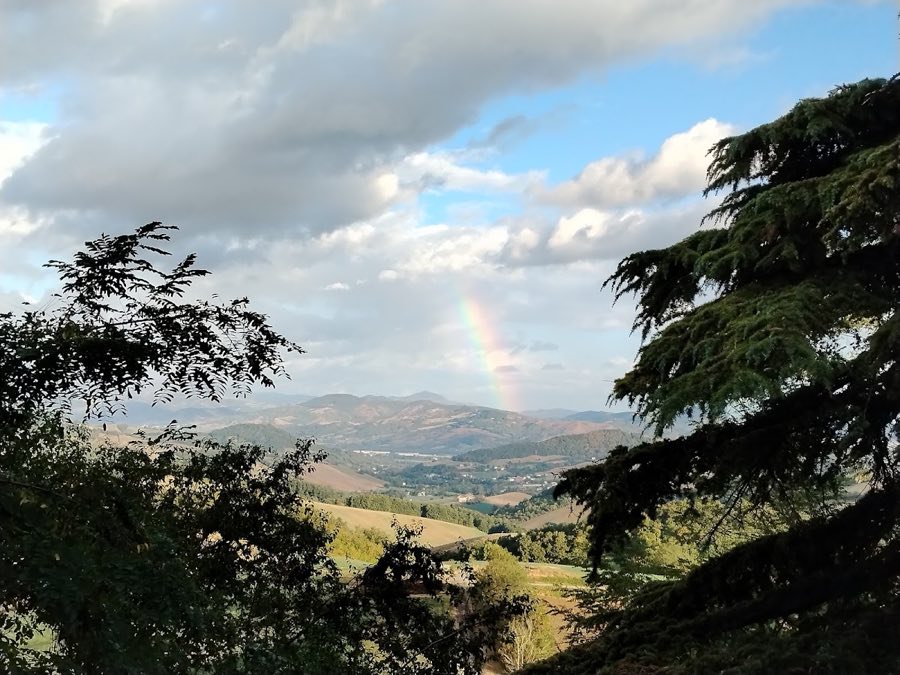
Despite centuries of degradation, including the further collapse caused by a rockslide in 1846, conservation efforts have prevented the ruins from deteriorating beyond recognition. The site offers panoramic views that highlight its strategic placement and its spatial relationship with nearby fortifications such as the castles of Rossena and Rossenella.
Excavations carried out by Campanini and subsequent archaeologists have unearthed architectural elements and artifacts now exhibited in the small museum adjacent to the ruins, which serves to contextualize the site’s historical development. Although later modifications have erased many original construction details, the surviving walls, foundations, and evidence of the defensive rings allow visitors and scholars alike to appreciate the fortress’s evolving role from a medieval stronghold to a symbol of historical memory.
No. 59741
No. 91559
No. 54031
No. 90829
Comments
Comments for Canossa Castle will require a verified account before posting.
We'll send a verification link before your first comment is published.