No. 10884
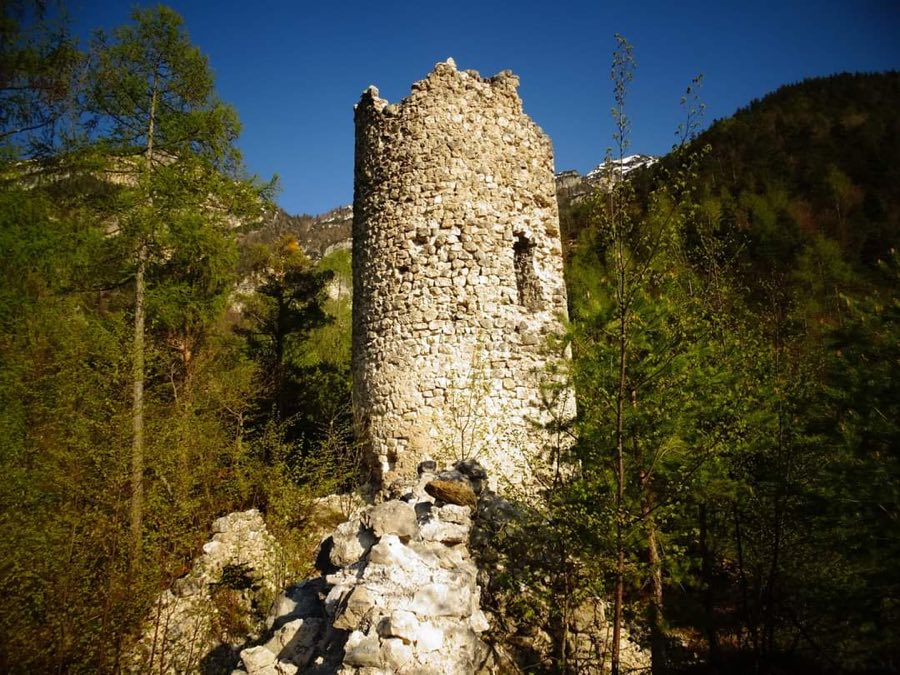
Castel San Pietro (Ton)
Italy
CastleRuin14th century
No. 23741
No. 23741 · 46.228 N, 11.028 E
Quick summary
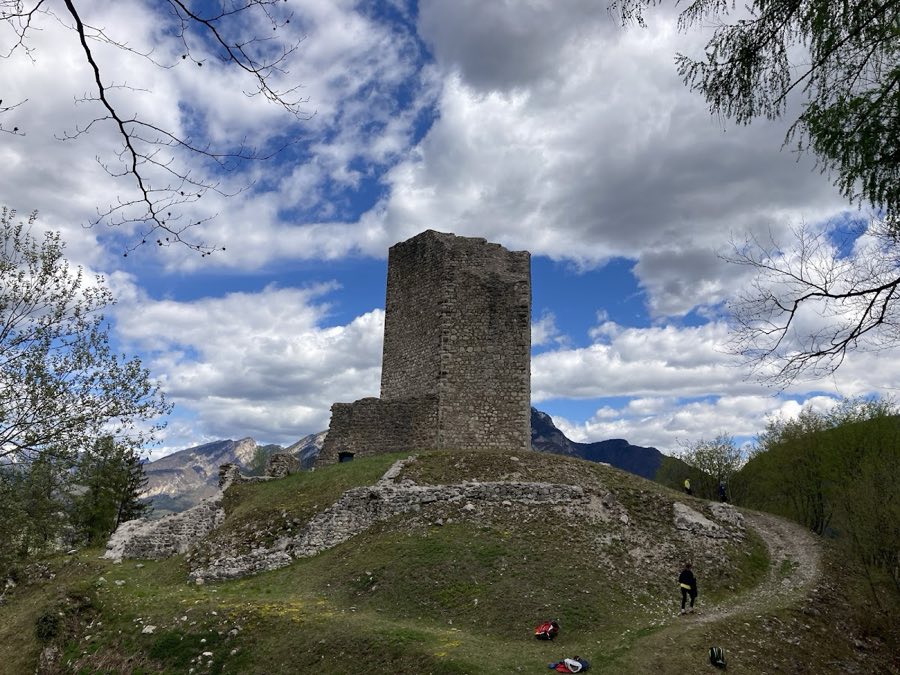
Castel Sporo is a castle in Italy with origins associated with the 13th century.
See all castles in ItalyCastel Sporo stands in the municipality of Sporminore, Italy, a medieval fortress erected during the Middle Ages.
The local family linked to the site appears in documents from the 12th and early 13th centuries, with Antonio di Sporo recorded in 1165. In 1190 a household identified as Mamelini de Spur is listed among the supporters of Bishop Corrado of Beseno, and in 1231 Olurandino di Sporo is described as a knight in the service of the Counts of Appiano. By 1236 the counts of Tyrol were expanding into the area: Alberto III took possession of the stronghold during armed conflict between the Tyrolean line and the prince-bishopric, and Mainardo I and his son Mainardo II continued that expansion through the mid 13th century.
The fortress itself appears by name in 1276, when Emperor Rudolf I ordered Mainardo II to restore certain properties, including the castle called Castrum de Spur, to the bishop of Trento Enrico II. Mainardo II did not comply and the site remained under Tyrolean control. Local officers at the castle are recorded in the late 13th and early 14th centuries, including Svicherio, termed a steward of Sporo in 1289, and Randolfo, named as captain in 1304.
In 1312 Volcmaro di Burgstall took on the captaincy of Sporo and his family later adopted the surname Spaur. After an exchange, the original Sporo kin renounced claims in return for a different castle at Parcines. During the 1330s Volcmaro (Spaur) extended his authority by bringing Castel Visione and Castel Flavon under his control in 1334 and acquiring territories such as Nave San Rocco, Fai della Paganella in 1338 and Zambana. He was besieged at Castel Sporo in the summer of 1342, captured there and died the following year while imprisoned at Strassberg. After his fall, control of Castel Sporo, Castel Flavon and the Rocchetta passed to Corrado di Scena.
In 1346 Paolo, Baldassarre, Matteo and Giovanni received reconfirmation of their possession of Flavon and the jurisdictions around Sporminore; descendants of Baldassarre, including Matteo and Pietro Spaur (active 1345–1424), came to inherit the castle. Pietro Spaur supported the prince-bishop Giorgio di Liechtenstein in his dispute with the County of Tyrol. Giorgio died at the fortress in August 1419, and contemporary reports record that he may have been poisoned, possibly on the orders of the castle’s owner. After Pietro’s death in 1424 his sons Giorgio and Giovanni reached terms with Frederick IV of Habsburg and regained Sporo, Castel Valer, Castel Flavon and the tower of Mezzocorona, together with the hereditary office of grand cup-bearer of Tyrol.
The castle was involved in the unrest of the Peasant War of 1525. Subjects from Flavon, Castel Sporo and Castel Belfort attacked the local strongholds and the bishop Bernardo Clesio abandoned Trento. On 6 June 1525 Archduke Ferdinand I ordered inhabitants of Flavon and Sporo to evacuate and to hand over the castles to the Spaur family as his fiefs. Imperial forces recovered the insurgent-held sites that September. On 21 September 1525 Ludovico Lodron and Francesco Castellalto publicly read the archduke’s sentence at Sporminore; excepting those identified as ringleaders, the men serving on committees for Flavon, Sporo and Belfort swore loyalty to Ferdinand I. The people of Sporminore were fined 500 florins and a garrison of 25 soldiers was left to occupy the castle.
Work carried out by Giorgio Federico, baron Spaur and Valer in 1643 is recorded as repair activity within the upper rooms of the castle, and that campaign is taken as the start of a decline in the fortress’s fortunes. Official land registers show the site still inhabited in 1727, and in 1736 Giovanni Battista Spaur petitioned for funds to carry out further repairs. From the 18th century the Spaur family favored urban residences over their hilltop manor. In May 1787 Count Carlo proposed that the castle be demolished as unfit for habitation because of water shortages and poor access, and that the seat of jurisdiction be transferred to the family’s palaces. The ruined site was conserved and made accessible again after restoration work completed in 2009.
Throughout its history the castle appears under variant names, including Castel Sant’Anna and Castel Sporo-Rovina, reflecting the chapel dedication and local usage; the fortress also stood to guard the road known as the Imperiale or Traversara, which linked the Burgraviato region with the Giudicarie and the lower Sarca valley across the Sporeggio pass.
The castle sits as a compact medieval enclosure centered on a large pentagonal keep that once dominated the complex. The keep dates to the medieval period and served as the principal defensive and residential tower; at present only the lowest 14 metres of that tower remain standing, preserved as a conspicuous fragment of the original mastio.
Surrounding the keep, a curtain wall with four towers formed a closed circuit around the living quarters and the small chapel dedicated to Saint Anne. These elements also belong to the medieval phase of the site and enclosed the domestic buildings that housed the garrison and the lords’ household. Documentary records show work undertaken within the upper rooms in 1643 and later repair requests in 1736, indicating periods of maintenance and modification after the main medieval building phase.
The chapel functioned as the estate’s place of worship and its dedication gave rise to the alternative name Castel Sant’Anna. The defensive ring, towers and inner domestic range are recorded as surviving in ruined form; the chapel and residential areas are preserved only as traces within the enclosure. From the hilltop position of the castle it was historically possible to maintain sightlines to neighboring strongholds, including Castel Belfort, the tower called the Visione, Castel San Pietro, Castel Thun and Castel Belasi, a factor that influenced the castle’s role in local military networks.
Today the ensemble exists as conserved ruins following restoration completed in 2009, with the partial keep, stretches of the enclosing wall and the tower bases visible in situ and interpreted as the remains of a once imposing medieval manor.
No. 10884
No. 58382
No. 72862
No. 90209
Comments
Comments for Castel Sporo will require a verified account before posting.
We'll send a verification link before your first comment is published.