No. 10884
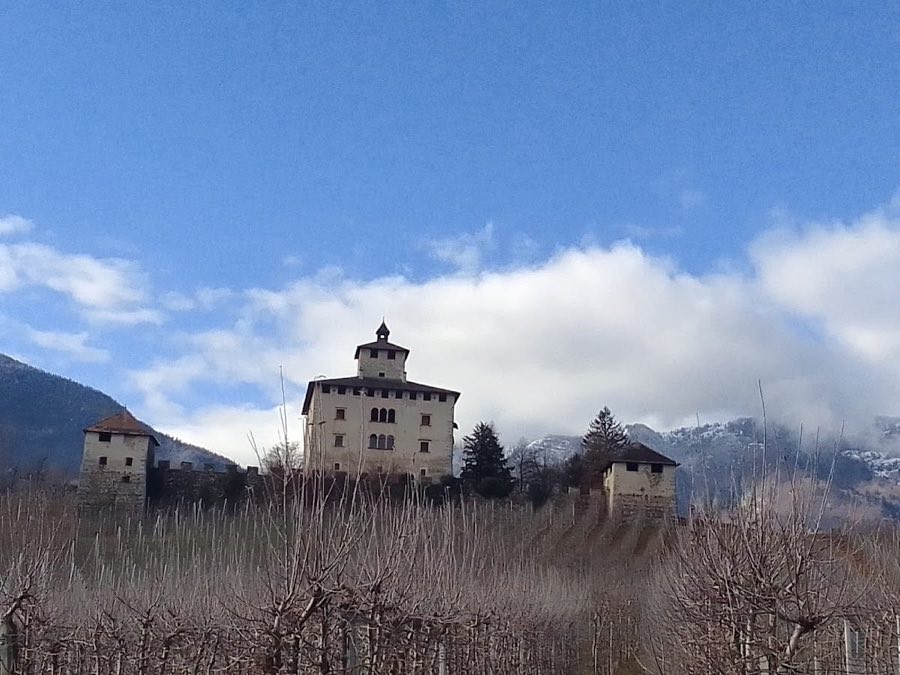
Castel San Pietro (Ton)
Italy
CastleRuin14th century
No. 90209
Castle · Italy
No. 90209 · 46.236 N, 11.206 E
Quick summary
Haderburg Castle is a castle in Italy with origins associated with the 16th century.
See all castles in ItalyHaderburg, also known as Schloss Salurn, is a medieval castle ruin situated above the town of Salurn in present-day Italy. Built during the High Middle Ages, its origins date back to between 1100 and 1150, constructed by local noble families within the context of medieval European feudal society.
Initially, the castle belonged to the Counts of Eppan, an influential noble line in the region. Its primary role was to oversee and control the Salurner Klause, a strategically important mountain pass that served as both a linguistic and political boundary between the German-speaking population of South Tyrol and the Italian-speaking inhabitants of Trentino. Around the year 1200, control of Haderburg passed to the Counts of Tyrol, preceding the formal political unification of the Tyrol area in 1248. Later, in 1284, the castle came under the authority of Meinhard II of Gorizia-Tyrol, a figure central to the region’s feudal network.
The castle’s military importance is marked by notable conflicts. In 1158, knights based at Haderburg ambushed envoys sent by Pope Hadrian IV to Emperor Frederick Barbarossa. This act provoked Duke Henry the Lion to launch a punitive campaign that led to the destruction of the nearby Hocheppan Castle, reflecting the turbulent power struggles of the period. Several centuries later, in 1349, Ludwig of Brandenburg led a siege that resulted in the castle’s capture, demonstrating its continued strategic relevance during the late Middle Ages.
During the late 14th and throughout the 15th centuries, the property was held by the Botsch family, who administered both the castle and its surrounding court, indicating the site’s role in regional governance and justice. In 1514, under Emperor Maximilian I, the castle underwent significant expansion and modernization. The fortifications were enhanced with bastions and defensive walls specifically designed to counter advances in warfare, particularly the use of firearms, showing adaptation to early modern military technology.
By the late 16th century, the military significance of Haderburg declined, leading to its abandonment and gradual decay. Despite this, the castle continued to be linked to local nobility, as it was granted as a fief to the Venetian Zenobio family in 1648. This transfer sparked controversy among Tyrolean nobles due to the increasing Venetian presence in the area. The Zenobio were later elevated to Counts Albrizzi.
Beyond its historical and military roles, Haderburg is connected to cultural tradition through a German legend collected by the Brothers Grimm. The saga “Der alte Weinkeller bei Salurn” tells of a secret, underground wine cellar discovered within the castle ruins in 1688, intertwining the site with regional folklore.
Restoration efforts in the early 21st century aimed to stabilize the ruin and preserve this heritage, although these developments fall outside the castle’s historical timeline.
Haderburg occupies a commanding position atop a steep, isolated limestone rock approximately 125 meters above the town of Salurn. The castle complex is notable for its integration with the natural landscape, built upon two rocky pinnacles connected by a drawbridge, creating a striking architectural ensemble. This layout takes full advantage of the rock formations for defensive purposes.
The core of the castle dates back to the 12th century and comprises three main components: a bergfried (a tall defensive tower typical in medieval castles), a palas (the main residential building), and an enclosing wall that delineated the castle’s boundary. The bergfried is particularly remarkable for its construction from porphyry stone, transported to the summit despite the surrounding geology primarily consisting of limestone. This use of porphyry highlights the builders’ intent to create a sturdy and distinguishing fortification.
In the 14th century, an additional forecourt structure known as the vorburg was added on the same rock outcrop. This outer courtyard served to reinforce the castle’s defensive capacity and to accommodate administrative or domestic activities before entering the main enclosure.
During the early modern period, significant fortifications were introduced following Emperor Maximilian I’s 1514 mandate to update the castle’s defenses. These modifications include bastions—protruding defensive structures designed to offer better coverage against attackers—and extensive walls adapted to withstand firearms, which had become prevalent in warfare. These features are situated largely on the opposite rock face of the Geier cliffs, extending the castle’s protective reach over a broader area than the medieval core.
Present-day remains include the stabilized ruins of the original buildings and the fortified bastions. The castle courtyard has been made accessible and contains amenities such as tables and benches. There are also viewing platforms that offer panoramic views of the surrounding landscape. Access to the site is facilitated by a gently sloping, well-marked path called the “Weg der Visionen” (Path of Visions), emphasizing the castle’s interplay with its natural environment.
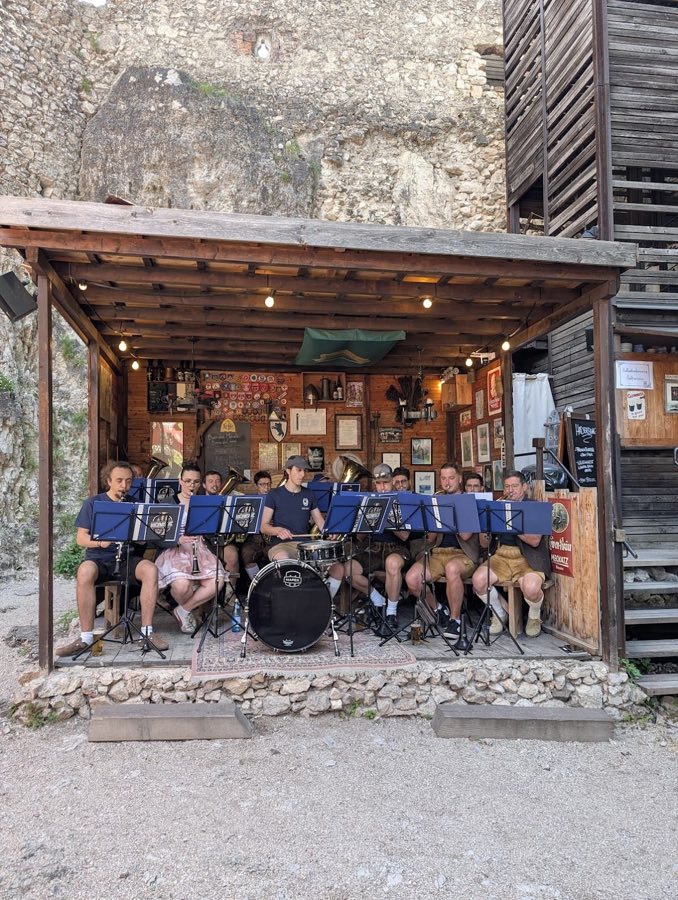
Since 2011, parts of the castle, including the courtyard and the former knight’s hall, have been adapted for gastronomic use, demonstrating a modern reuse of the medieval structure. Although the castle stands in ruins, the preservation of its defensive walls, the distinctive bergfried, and the connection between the twin rocky pinnacles provide a tangible link to its centuries-old history. Notably, the site’s renowned legend about the underground wine cellar adds a layer of cultural significance that remains part of its identity.
No. 10884
No. 72862
No. 23741
No. 58382
Comments
Comments for Haderburg Castle will require a verified account before posting.
We'll send a verification link before your first comment is published.