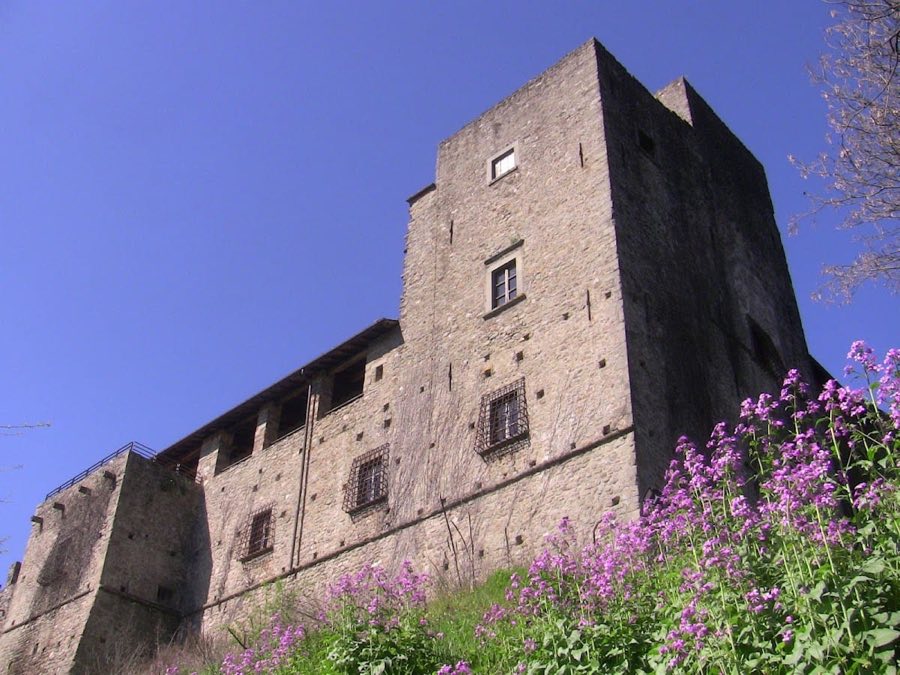
No. 46194
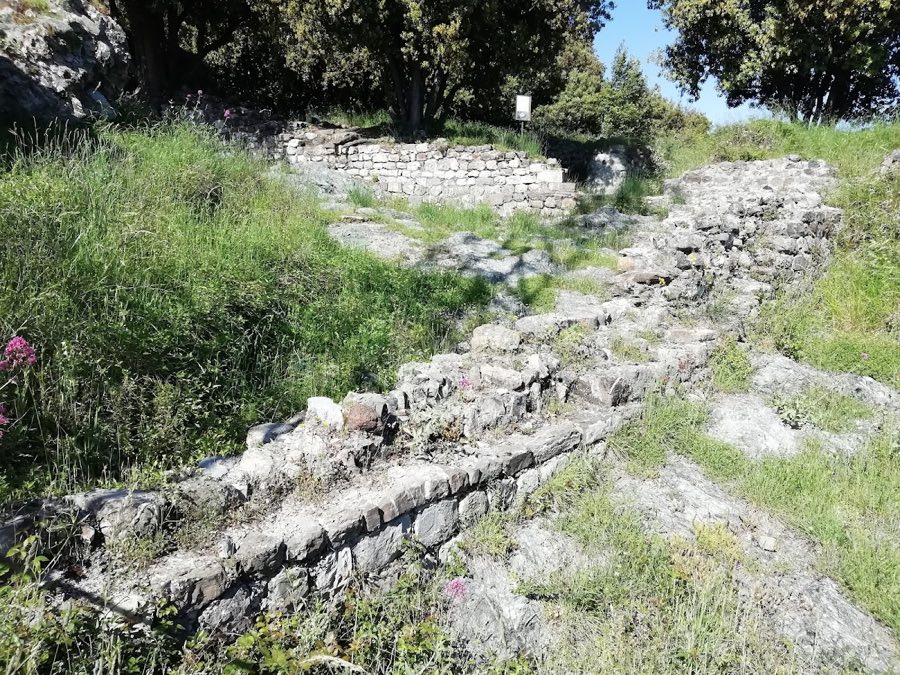
Castello di Lusuolo
Italy
CastleRuin12th century
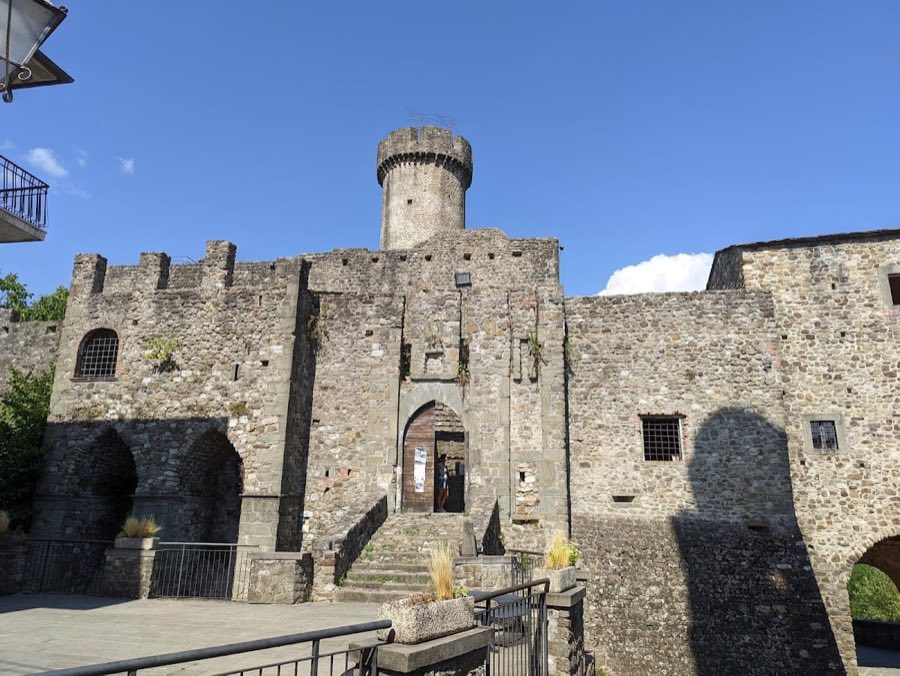
No. 82753
Castle · Italy
No. 82753 · 44.314 N, 9.971 E
Quick summary
Castello di Malgrate is a castle in Italy with origins associated with the 12th century.
See all castles in ItalyThe Castello di Malgrate is a medieval fortress situated in the municipality of Villafranca in Lunigiana, Italy. The site has origins dating back to the medieval period and was built by the Malaspina family, a prominent noble dynasty in the Lunigiana region.
Significant fortifications were established on this strategic location above the Bagnone valley as early as the 12th century. The first written record of the castle appears in 1351 during the division of Niccolò I Malaspina’s lands among his five sons, marking its importance as the center of a feudal district. This fief included not only Malgrate and nearby Filetto but also several surrounding villages and hamlets. The section of the fief comprising Malgrate was granted to the four children of Bernabò Malaspina, who maintained control over the territory for roughly two and a half centuries.
Throughout this period, the Malaspina family navigated shifting political alliances amidst growing tensions between the powerful city-states of Florence and Milan. In the 15th century, the castle played a role in the regional conflicts between Duke Filippo Maria Visconti of Milan and the Florentine Republic. After changing allegiance from Florence to Milan, the Malaspina briefly hosted Milanese forces and local rebels, who occupied the castle for three years. Following the Peace of Ferrara in 1433, the family once again pledged loyalty to Florence. This change provoked Milan’s animosity, leading Milanese troops to assault and largely destroy the castle’s defenses in 1445.
In the early 17th century, Cesare II Malaspina, burdened by debt and lacking male heirs, sold the fief to the Ducal Chamber of Milan in 1615. The Milanese administration held the property for twenty-six years before transferring ownership in 1641 to the Ariberti family, a noble house from Cremona. The Ariberti governed the estate with a more peaceful and civil approach, repurposing the medieval stronghold into a residence reflecting bourgeois tastes rather than military needs.
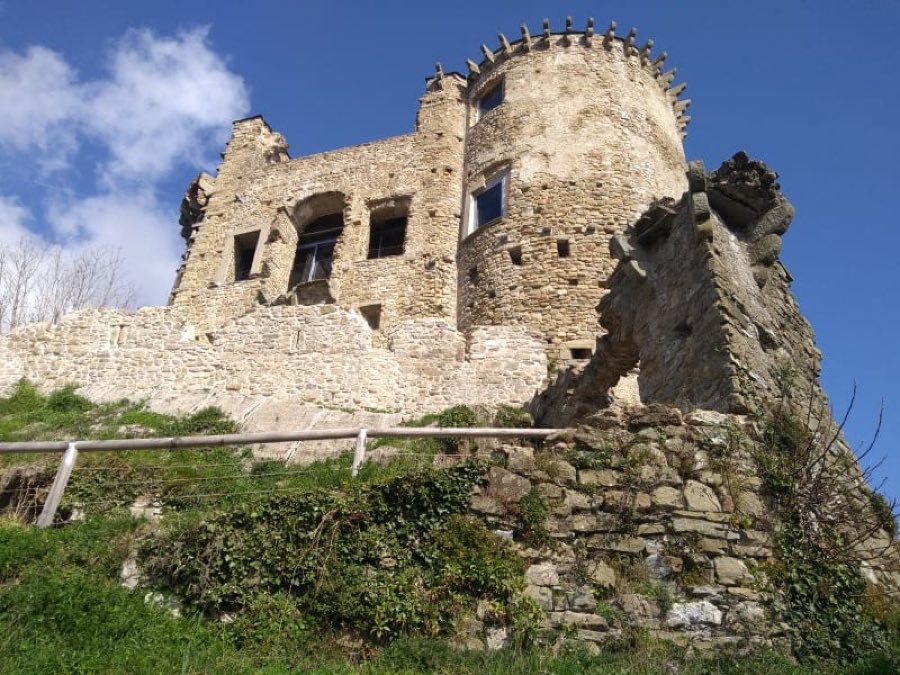
After the Ariberti lineage ended, the estate passed to the Milanese Freganeschi family in 1745, who were related through marriage. They maintained control until the upheavals of the French Revolution. During the 19th century, the castle fell into decline as its fortifications were dismantled and many structural elements were stripped, leaving much of the site in ruin. In modern times, the Castello di Malgrate has been secured under state ownership and restored through European Union funding and heritage conservation initiatives focused on the castles of Lunigiana.
The Castello di Malgrate presents the layout of a classic medieval fortress. Its main components include a defensive tower, a central keep known as a mastio, and encircling curtain walls equipped with battlements and a raised walkway called a chemin de ronde, designed for patrolling defenders. The castle’s entrance, once protected by a drawbridge, now features a small bridge crossing over the moat that still surrounds the main access.
The outer walls are trapezoidal in shape and date from a later, post-medieval phase of construction. They fully enclose the core rectangular medieval section and incorporate guard passages along with buttresses supported by arches, which run continuously around the perimeter of the castle. This enhancement reflects adaptations made after the medieval period to reinforce the site’s defenses.
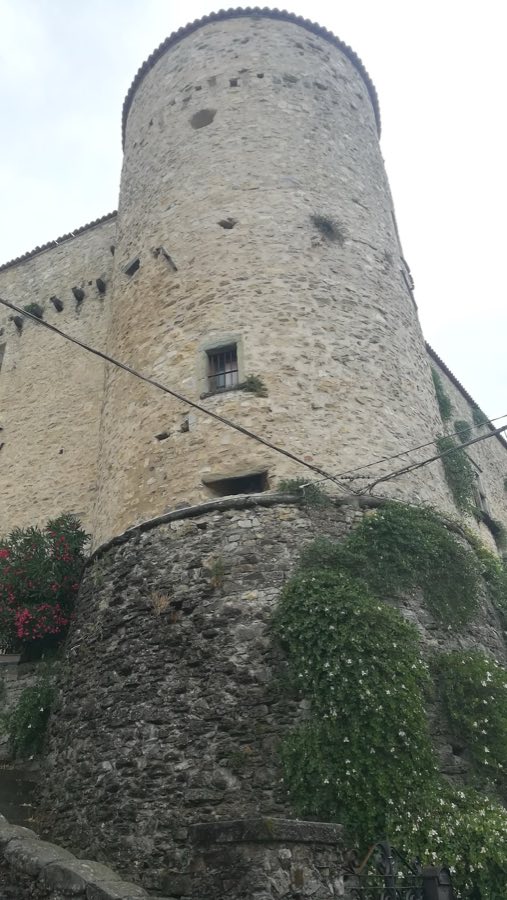
The most ancient part of the fortress is the tall circular tower on the west side, believed to have been erected in the 12th century. Rising more than 25 meters, the tower is attached to a fortified rectangular building and houses six vertically stacked vaulted rooms. These chambers are connected by trapdoors and retractable stairs, a defensive design that allowed occupants to control access between floors easily. The upper section of the tower projects outward, supported underneath by stone corbels, a feature that would have enabled defenders to better protect the base of the walls.
Adjacent to the tower are the remains of the central keep, which likely rose three stories and contained an internal courtyard. This keep served as the residence of the feudal lord, indicating the dual military and domestic function of the castle’s core. The defensive character of the site is further emphasized by large arrow slits dating from the 15th century, adapted for both bows and crossbows during periods of heightened conflict.
On the eastern side of the castle walls stands a gate constructed in 1566 by Giuseppe Malaspina. This gate provided the main entrance to the village and illustrates the continued development of the fortress and its surroundings during the Renaissance. Today, the site has undergone thorough restoration, preserving these key architectural elements and enabling a coherent understanding of the castle’s evolving role from fortified stronghold to noble residence.
No. 46194
No. 51483
No. 21507
No. 92102
Comments
Comments for Castello di Malgrate will require a verified account before posting.
We'll send a verification link before your first comment is published.