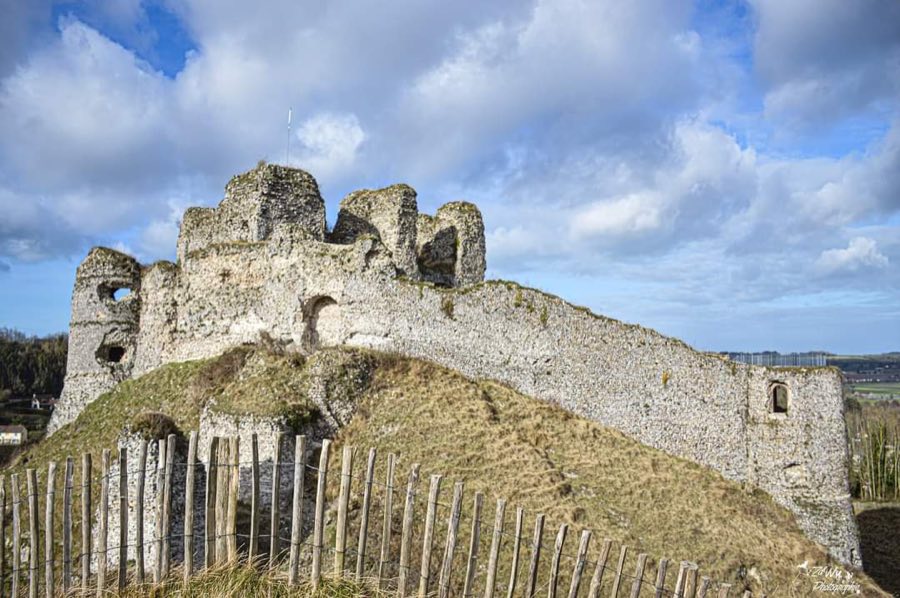
No. 80612
Château d'Arques-la-Bataille
France
ChâteauRuinFor events11th century
No. 72098
Castle · France
No. 72098 · 49.924 N, 1.070 E
Quick summary
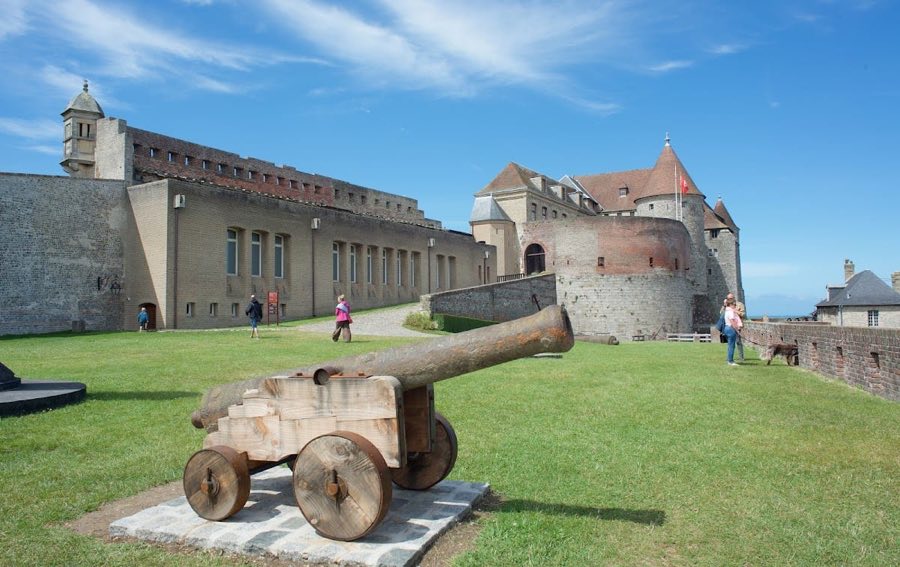
Castle of Dieppe is a castle in France with origins associated with the 14th century.
See all castles in FranceThe Castle of Dieppe is located in the municipality of Dieppe, in modern-day France. It was originally constructed by the Plantagenet dynasty, under the joint auspices of King Henry II of England and his son Richard the Lionheart in 1188, marking its origins during the medieval period.
The initial fortress, however, was short-lived. In 1195, it was destroyed by King Philip II of France, known as Philippe Auguste, as part of the ongoing struggle between the French Capetian dynasty and the English Plantagenets for control over territories in northern France. Following this destruction, the site remained unfortified until the mid-14th century.
Around 1360, amid increasing threats from Flemish and English forces, Dieppe’s defenses were renewed. Significant reconstruction took place, including the erection of town walls and a large west tower that served as the keep, providing a sturdy military stronghold commanding views over the English Channel.
In the early 15th century, specifically between 1433 and 1435, the castle underwent a major transformation under the direction of Charles des Marets. After liberating Dieppe from English occupation during the latter phases of the Hundred Years’ War, he was authorized to rebuild and enlarge the fortress. The design was adapted into a quadrangular layout, featuring four towers surrounding an adjacent courtyard. This expansion helped the castle withstand a siege by Burgundian forces in 1472.
Throughout the late medieval and early modern periods, the Castle of Dieppe was involved in several regional conflicts. During the Wars of Religion in 1562, it was seized by Huguenot forces. Later, in 1650, the castle became a meeting place for rebellious nobles aligned with Anne-Geneviève de Bourbon-Condé during the Fronde, a series of civil wars weakening royal authority in France.
After the 17th century, the fortress’s military significance waned. It transitioned into use as a residence and barracks, housing soldiers continuously until 1923. Despite this decline, the castle returned to military use during both World War I and World War II. In the Second World War, German forces fortified the site, integrating it into the Atlantic Wall coastal defenses.
Dieppe itself suffered heavy damage in 1694 during a naval bombardment by Anglo-Dutch forces, but the castle survived with only partial damage. Recognizing its historical importance, the castle was officially classified as a monument historique in the early 1860s, and later received further protective status during the 1990s.
Since its decommissioning as a military facility, from 1923 onward, the Castle of Dieppe has functioned as the town’s municipal museum. It now houses collections that include ivory carvings, maritime artifacts, and documents associated with the composer Camille Saint-Saëns.
The Castle of Dieppe is situated on a terrace approximately 30 meters above sea level, perched on the Caude-Côte cliff, offering commanding views over the town and the English Channel coast. The structure is organized around an irregularly shaped quadrilateral courtyard, once enclosed by four towers at each corner. Of these, three round towers survive today, while the fourth, likely square in plan and located on the east side, no longer remains.
Dominating the complex is the large west tower, or keep, constructed around 1360. This cylindrical tower measures about 11 meters in diameter and has walls two meters thick, designed for defense. Its features include narrow vertical openings called arrow slits or “archères,” which allowed archers to fire while remaining protected. This tower was connected to the defensive walls that encircled the town, integrating the castle within Dieppe’s broader fortifications.
The castle’s perimeter walls showcase a distinct construction technique, built in alternating horizontal layers of flint, sandstone, and brick. Portions of the walls were topped with machicolations—stone openings used to drop defensive materials—and a covered walkway known as a “chemin de ronde,” enabling soldiers to patrol safely along the battlements.
Two drawbridges secured the main gates: one at the “porte des champs,” controlling access from the countryside, and the other situated facing the town. These drawbridges could be raised to prevent enemy entry.
To the south of the medieval castle lies a 17th-century citadel, fashioned as a semicircular defensive boulevard with a fortified esplanade. This citadel incorporates remnants of the 14th-century tower of Saint-Rémy church, which was absorbed into the later fortifications. Additional defensive features include a barbican—a fortified outwork—guarding the southeast façade, and a detached tower connected to the main walls, further strengthening the castle’s perimeter.
Inside, some rooms retain elegant gilded wood paneling, reflecting the castle’s later use as a residence and administrative center. Surrounding the castle were deep moats filled with water, serving as a barrier to attackers. Essential military infrastructure remains evident, such as rainwater cisterns, wood-fired kitchens, and secure storage spaces for arms and munitions.
A barracks building, constructed in 1630 on the southwest side of the castle, symbolizes the site’s shift toward housing troops. Today, this building serves as a temporary exhibition space within the museum complex.
During the Second World War, the castle’s defenses were strengthened with new walls and bunkers, known as blockhaus, as part of the German Atlantic Wall coastal defense system. These additions represent the castle’s continued military relevance well into the 20th century.
Together, these features provide an extensive record of Dieppe’s evolving strategic, military, and residential functions through the centuries, preserved in a site that overlooks the town and surrounding coast to this day.
No. 80612
No. 39328
No. 62973
No. 22267
Comments
Comments for Castle of Dieppe will require a verified account before posting.
We'll send a verification link before your first comment is published.