
No. 72098
Castle of Dieppe
France
CastleRestored14th century
No. 39328
Château · France
No. 39328 · 49.812 N, 0.783 E
Quick summary
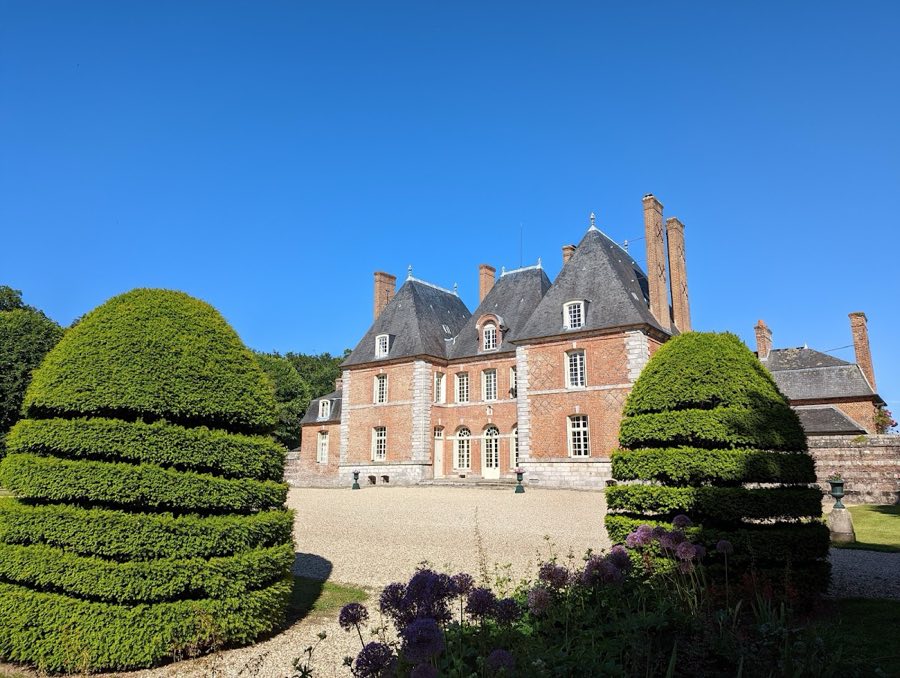
Château du Mesnil-Geoffroy is a château in France with origins associated with the 17th century.
See all castles in FranceThe Château du Mesnil-Geoffroy in Ermenouville, France, is a country residence erected in the early 17th century by the French noble Guillaume Le Seigneur, sieur de la Heuze. Built on a site that previously hosted an older dwelling attributed either to the Pinneville family in the 14th century or to the Bréaulté family in the 16th century, the present house belongs to the architectural and social world of 17th- and 18th-century Normandy and preserves features that illustrate noble life in that period.
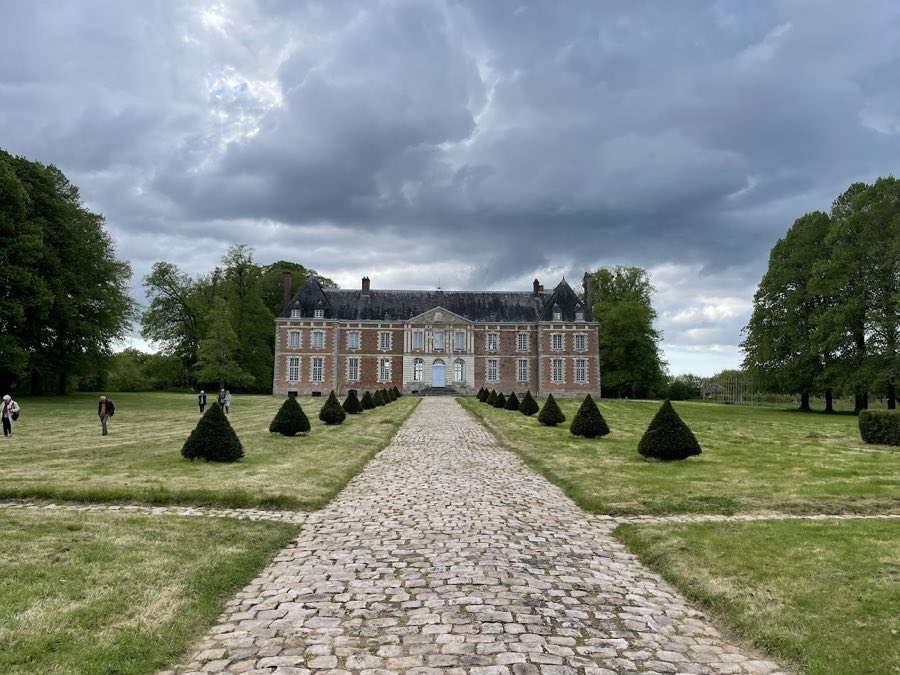
During the mid-18th century the estate passed by marriage into the Lannoy de Bellegarde family. Around 1740 the new owners enlarged and remade the small seventeenth-century house, and they laid out formal garden beds and long, tree-lined alleys. These mid-eighteenth-century changes reshaped both the house’s setting and its approach, producing the ensemble of residence and grounds that survives today.
In 1781 Jacques de Lannoy de Bellegarde, who served as counsellor to the Parliament of Rouen, gave the property to the marquis de Cany. Later ownership included the princes of Montmorency-Luxembourg, a line connected by marriage to the royal household. From the late eighteenth century onward the château’s external appearance and its interior fittings were left essentially intact; the ground-floor rooms retain original wood panelling and period decoration that reflect the living environment of Norman nobility. Visitors of note have included Victor Hugo and Antoine de Saint-Exupéry, and later proprietors named include the diplomat Louis de Robien and, from 1987, Daniel Paterne. Official protections were applied in the twentieth and twenty-first centuries: the façades, roofs and ground-floor rooms with wood panelling were classified on 28 June 1945, the surrounding park was declared a protected natural site on 25 May 1946, and the remainder of the estate, including the built ensemble, enclosure, gardens and statuary together with the soil of their plots, was registered on 21 July 2015. The château stands about ten kilometres inland from the coastal cliffs near Saint-Valery-en-Caux, Fécamp and Étretat.
The château presents as a compact 17th- and 18th-century country house whose exterior elevations and roofline remain as they were shaped in the eighteenth century. Ground-floor reception rooms keep their original wood panelling, and decorative schemes in the dining room and principal bedrooms survive from the same period. These interior spaces are furnished with period furniture and objects, so the principal rooms combine original fixed finishes with historic movable items. The listed status of façades, roofs and the wood-panelled ground-floor rooms ensures those elements are maintained in situ.
The pleasure grounds and park form an integral part of the site’s fabric. A ten-hectare garden follows the eighteenth-century layout created under the Lannoy de Bellegarde family, with formal ornamental beds (parterres) and long alleys planted as lines of trees. The broader park covers 23.19 hectares and is designated as a protected natural site. Within the garden there is Normandy’s largest private rose collection, exceeding 2,500 bushes and containing varieties such as Abraham Darby, Adélaïde d’Orléans, Cardinal de Richelieu, Henri Foucquier, Honorine de Brabant, Jules Barigny, Lady Waterlow, Madame Alfred Carrière, Madame Ernest Calvat, Paul Noël and Victor Parmentier. A romantically styled kitchen garden grows heirloom vegetables. Sculptural elements in the grounds form part of the protected ensemble, their placements recorded together with the soil of their plots. Together, house and gardens survive as a coherent eighteenth-century residential landscape, conserved and legally protected.
No. 72098
No. 80612
No. 62973
No. 22267
Comments
Comments for Château du Mesnil-Geoffroy will require a verified account before posting.
We'll send a verification link before your first comment is published.