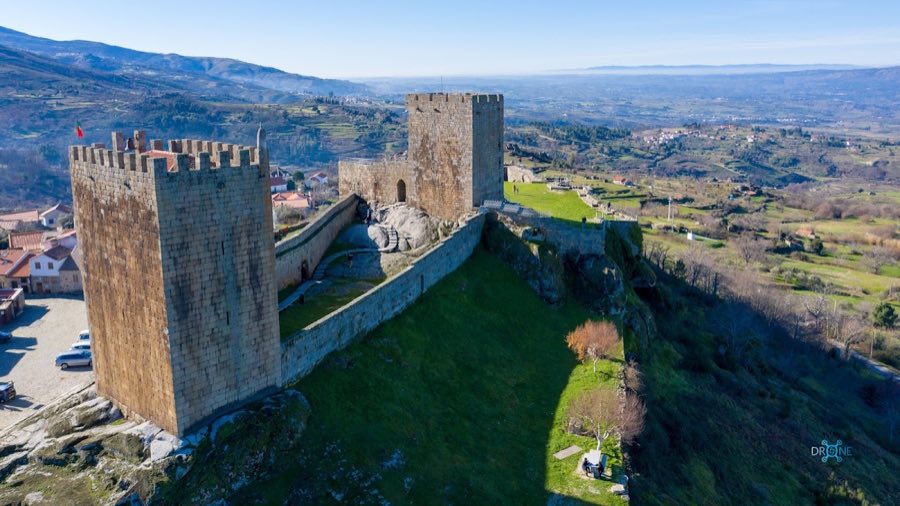
No. 74321
Linhares Castle, Celorico da Beira
Celorico da Beira, Portugal
CastleRuin9th century
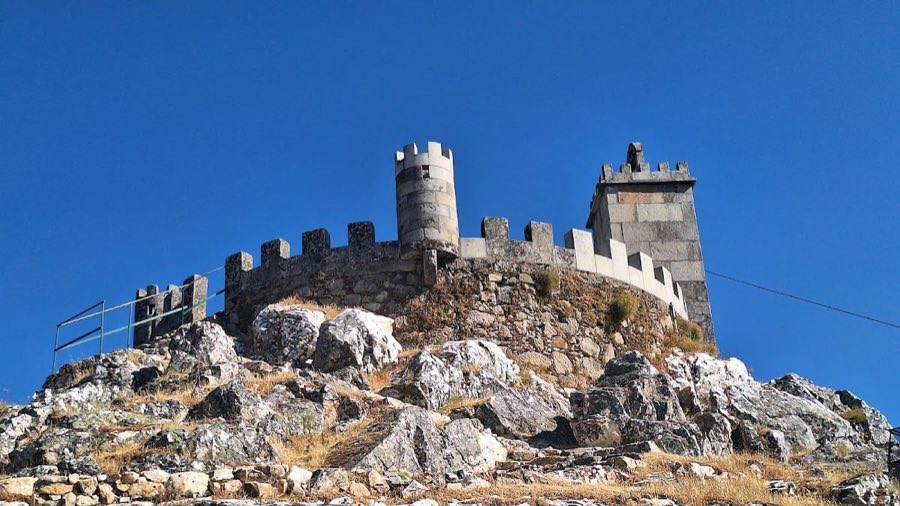
No. 91191
Castle · Portugal
No. 91191 · 40.511 N, 7.512 W
Quick summary
Castle of Folgosinho is a castle in Portugal with origins associated with the 12th century.
See all castles in PortugalThe Castle of Folgosinho is located in the municipality of Gouveia, Portugal. It was built by the Portuguese under King Sancho I in the late 12th century, likely erected on the site of a previous Lusitanian hillfort, known as a castro. This early foundation reflects the medieval efforts to consolidate territory during the formation of the Portuguese kingdom.
The castle’s origins date to 1183, when its construction was commissioned to strengthen local control in the region. A royal charter, or foral, was granted to the settlement of Folgosinho in 1187 by King Sancho I, establishing certain legal and administrative rights. This charter was reaffirmed by subsequent monarchs, including King Afonso II in 1217 and King Denis in 1350, highlighting the town’s continued significance under Portuguese rule. Later, in 1512, King Manuel I issued a renewed foral, reflecting administrative reforms that often updated earlier privileges.
Throughout the medieval and early modern periods, the lands surrounding the castle were designated as Terra de El-Rei, meaning they belonged to the crown. These domains were entrusted to various noble families holding donatary captaincies, such as the Marqueses of Arronches, the Dukes of Lafões, and the Counts of Miranda do Corvo. Additionally, Folgosinho fell under the jurisdiction of the Order of Christ’s commandery, linking the site to one of Portugal’s key religious-military orders involved in territorial administration.
The town of Folgosinho maintained municipal status until 1836, when a nationwide reorganization of local administration resulted in the loss of its seat, with Gouveia replacing it as the administrative center. During the 20th century, archaeological studies confirmed the castle’s medieval origins, though some aspects of its founding remain debated by scholars. By the late 1930s, the castle was already in a state of ruin; however, after being declared a Property of Public Interest in 1936, restoration efforts were initiated to preserve the monument, recognizing its cultural value despite its decline.
The Castle of Folgosinho sits atop a hill at around 930 to 933 meters above sea level on the slopes of the Serra dos Galhardos, overlooking the Mondego valley. Its plan is almost circular, with an approximate diameter of 10 meters. This compact form features a lower wall built from masonry, or roughly shaped stone blocks, with an upper portion composed of well-crafted stonework. Above these walls runs a slightly raised and deep adarve, which is a walkway along the battlements allowing defenders to patrol the perimeter.
At the western side, the castle’s entrance opens into a small courtyard, providing access to the interior. Opposite this gate, on the eastern side, rises a square-shaped keep tower supported by stone corbels—projections that carry the tower’s weight. On the northern side, there is a gate topped with a horizontal beam, or lintel, accompanied by a small bell. This gate is preceded by a decorative frieze that juts out from the wall and is crowned with short rectangular merlons, which are the solid upright sections typical of battlemented parapets used for defense.
Additional defensive features include three cylindrical guard towers placed around the perimeter. These towers are notable for their doors framed with broken arches—a type of arch that comes to a sharp angle rather than a smooth curve—and are also topped by rectangular merlons similar to those on the main walls. Inside the castle grounds, a geodesic marker has been placed, serving as a modern surveying reference point.
The structure is primarily built of quartz stone in both white and reddish hues, giving the castle a distinctive visual character that sets it apart from other medieval fortifications. Despite being in a state of partial reconstruction, much of the castle remains well preserved and stands within the built-up area of Folgosinho, reflecting its historical integration with the surrounding community.
No. 74321
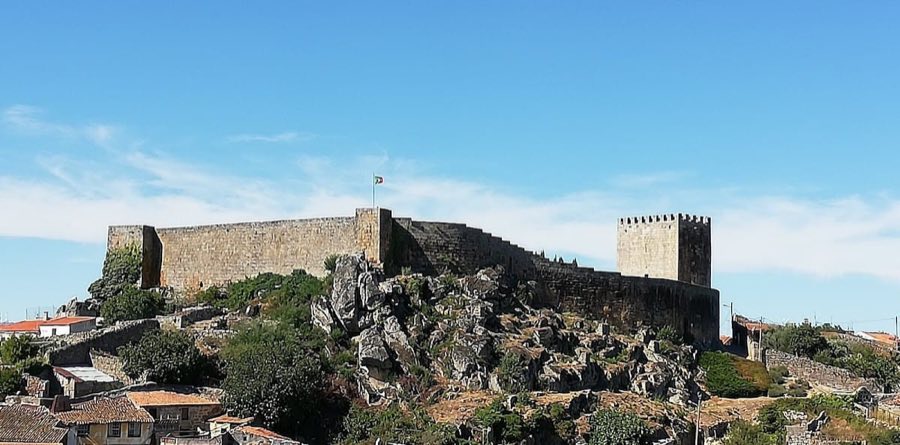
No. 49399
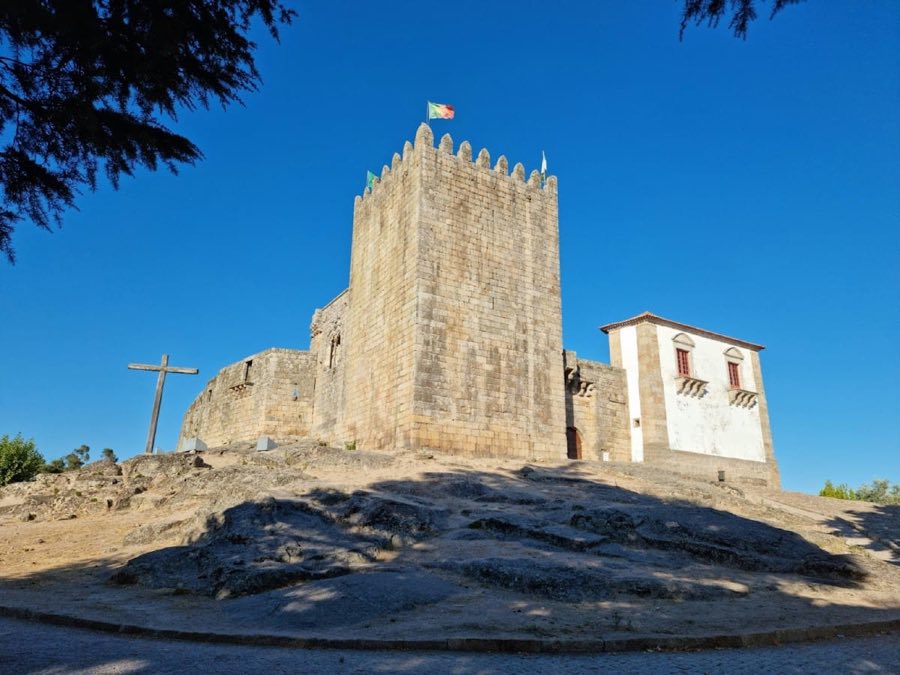
No. 69018
No. 51516
Comments
Comments for Castle of Folgosinho will require a verified account before posting.
We'll send a verification link before your first comment is published.