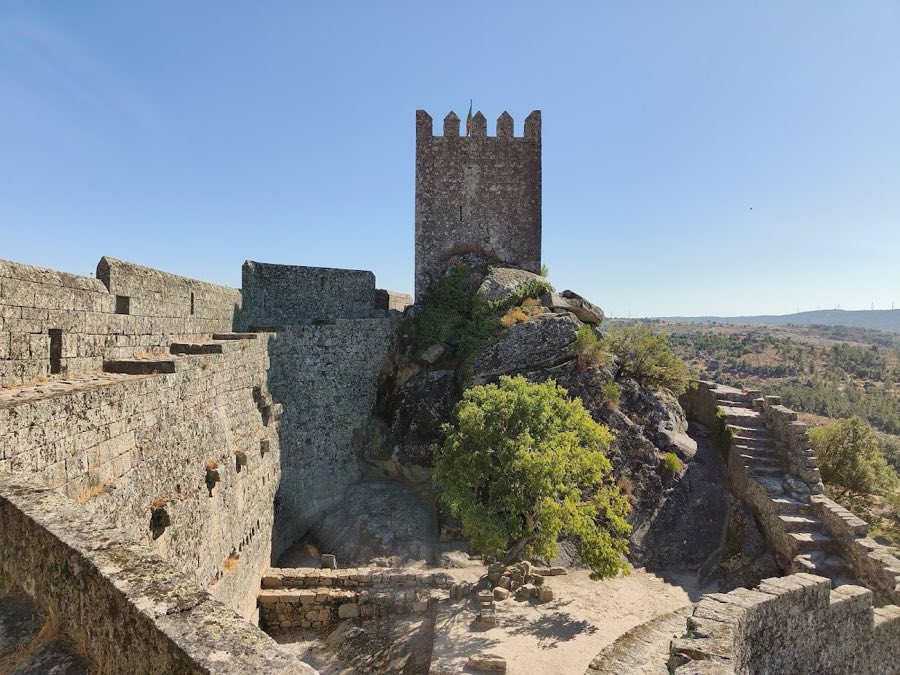
No. 79335
Sortelha Castle
Portugal
CastleRestored13th century
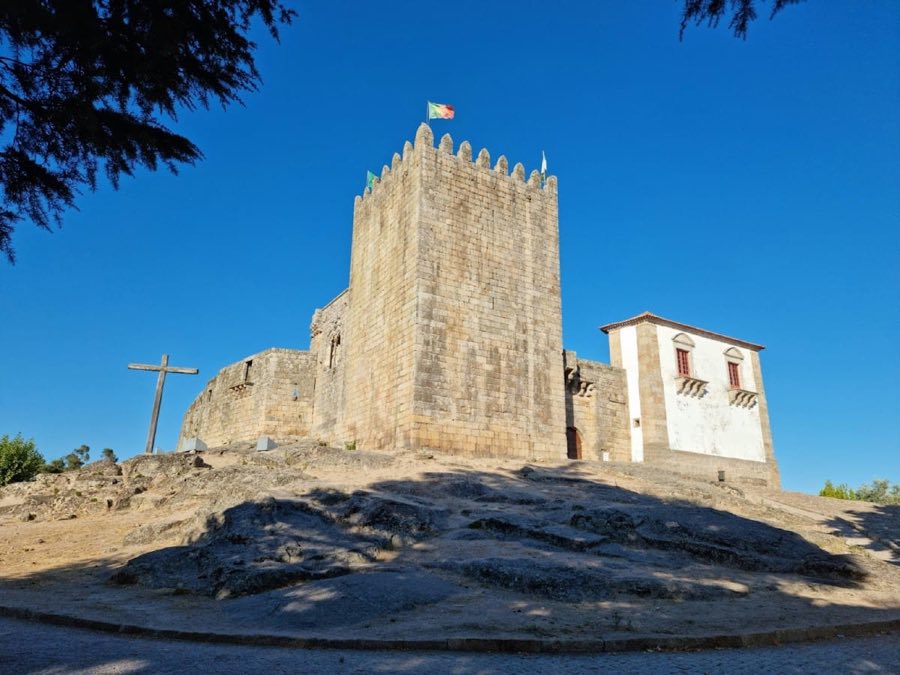
No. 69018
Castle · Portugal
No. 69018 · 40.359 N, 7.348 W
Quick summary
Castle of Belmonte is a castle in Portugal with origins associated with the 13th century.
See all castles in PortugalThe Castle of Belmonte stands on a hill overlooking the Zêzere River in central Portugal. The site shows evidence of human presence dating back to the Roman period, when a road connecting Braga and Mérida passed nearby. This early occupation laid the groundwork for later medieval developments.
The first written record of the castle’s lands appears in 1168, when King Afonso Henriques granted them to the Bishop of Coimbra. In 1199, King Sancho I issued a charter to the village of Belmonte, marking its formal recognition. During the mid-13th century, King Afonso III ordered the construction of a tower and castle, a project likely completed under King Dinis I. Archaeological findings confirm that houses were demolished in the late 12th or early 13th century to build the castle’s keep and walls.
Following the 1297 Treaty of Alcañices, which expanded Portugal’s borders westward, the castle’s military role diminished. The settlement began to grow beyond the castle walls, reflecting a shift from defense to civilian life. During the 1383–1385 crisis, the castle suffered damage to its walls. After the local commander supported a rival claimant, King John I confiscated the castle and village, granting them to General Luís Álvares Cabral. Under his family’s care, the northern wall was rebuilt, including a new postern gate and a bulwark.
In 1466, King Afonso V gave the castle and town to Fernão Cabral, father of the explorer Pedro Álvares Cabral. Fernão adapted the fortress for residential use, marking a transition from purely military to noble habitation. During the Portuguese Restoration War in the 17th century, the castle’s defenses were updated with bastions to meet contemporary military needs. A fire in 1694 caused interior damage, and in the 18th century, the main gate was reconstructed by Caetano Francisco Cabral, the last lord of Belmonte.
In the early 20th century, a building next to the main gate served as a prison. The castle was officially declared a National Monument in 1927. Between 1940 and 1960, government efforts focused on conservation and restoration. Archaeological excavations in the 1990s uncovered Roman artifacts within the castle walls, confirming the site’s ancient origins. In 1992, an amphitheater was built inside the castle for historical performances. Since 2022, the local municipality manages the site, emphasizing preservation and cultural value. The original key to the castle is preserved at the João Soares House-Museum in Cortes.
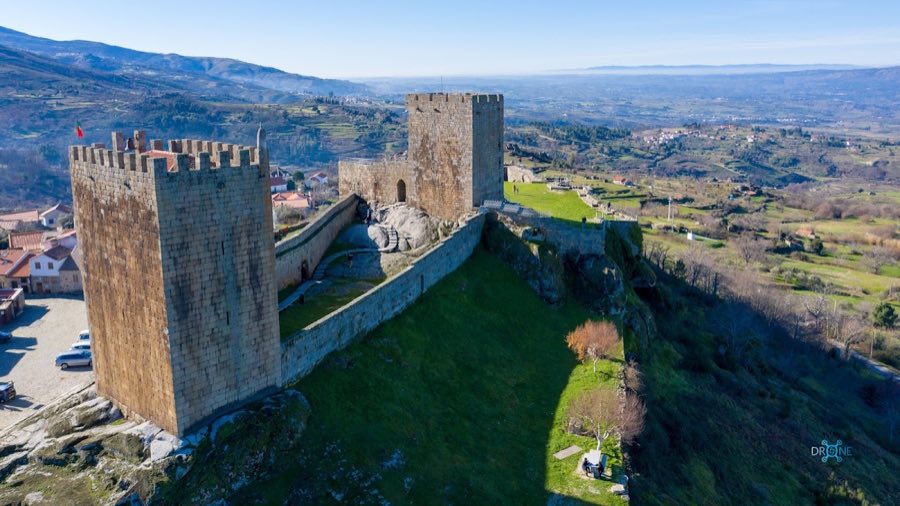
The Castle of Belmonte occupies an irregular oval-shaped area at 615 meters above sea level. Its walls are made of granite blocks, a durable local stone. The fortress includes a stone curtain wall and remnants of a defensive rampart that largely survive today.
The main entrance on the southern side features an arched gate adorned with the Cabral family coat of arms and an armillary sphere, a symbol associated with Portuguese exploration. At the southwest corner stands a Romanesque-style keep with three floors. This tower is topped by square merlons, which are the upright sections of battlements, each ending in a pyramid shape.
On the southeast side, ruins of medieval residential buildings remain alongside a small tower remodeled in the 16th century mannerist style. The western sector contains the remains of a palace expanded by Fernão Cabral. This palace is attached to the keep and includes Manueline-style balcony windows supported by corbels, as well as a distinctive trilobed window lintel, reflecting late Gothic Portuguese architecture.
The castle walls are equipped with embrasures and loopholes, narrow openings used for defense. Stone heraldic decorations are also present on the walls. The northern wall, rebuilt in the late 14th century, includes a postern gate known as the “Porta da Traição” or “Gate of Treason,” along with a bulwark added for reinforcement.
The building adjacent to the main gate was reconstructed in the 18th century. Despite the fire damage in 1694, many medieval and early modern architectural elements remain visible within the castle. Archaeological excavations have revealed Roman artifacts inside the walls, confirming the site’s long history of occupation.
No. 79335
No. 33289
No. 91191
No. 74321
Comments
Comments for Castle of Belmonte will require a verified account before posting.
We'll send a verification link before your first comment is published.