No. 24664
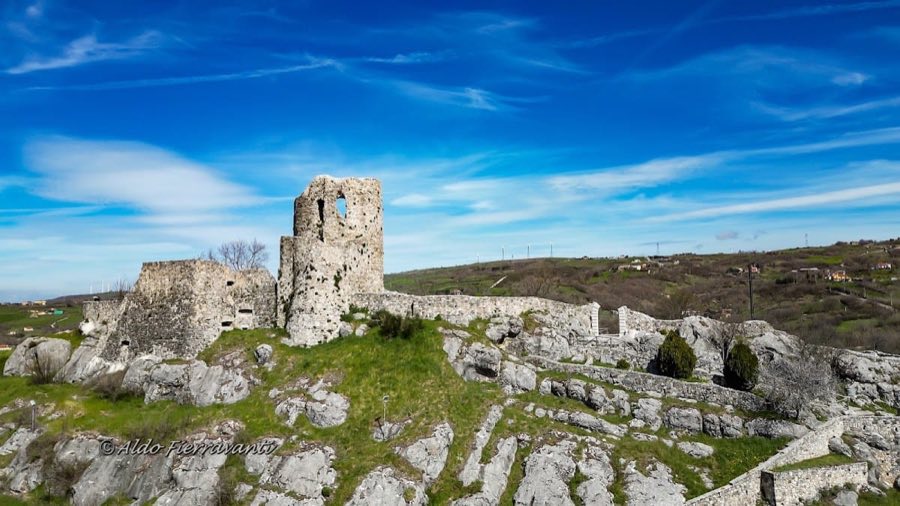
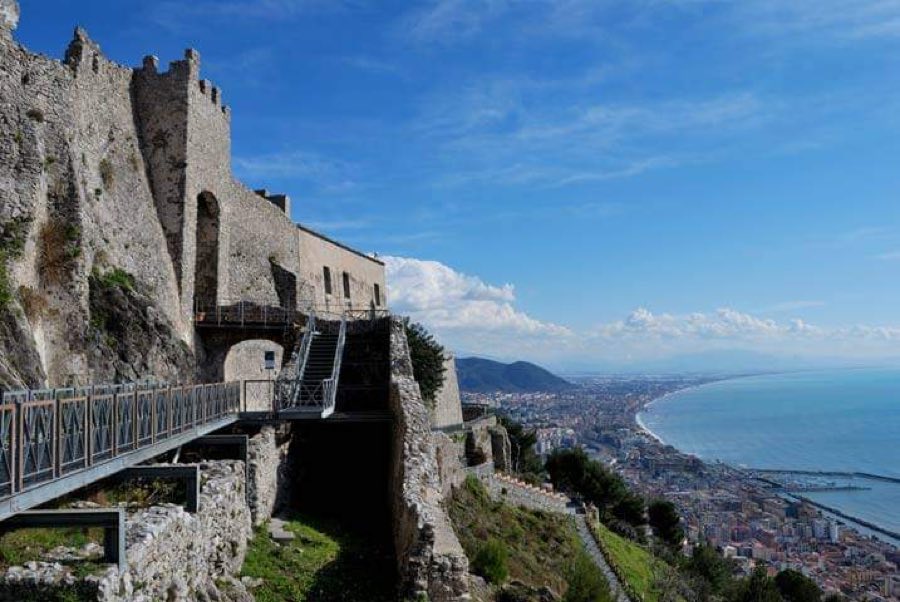
Castello di Rocca San Felice
Italy
CastleRuin12th century
No. 53825
Castle · Italy
No. 53825 · 41.006 N, 15.069 E
For events
Castle of Gesualdo is marked as a château or castle venue lead. Capacity, indoor/outdoor spaces, catering rules, and accommodation options are published only after public verification.
Event types: Private events, Cultural gatherings, Filming and photography
Quick summary
Castle of Gesualdo is a castle in Italy with origins associated with the 9th century.
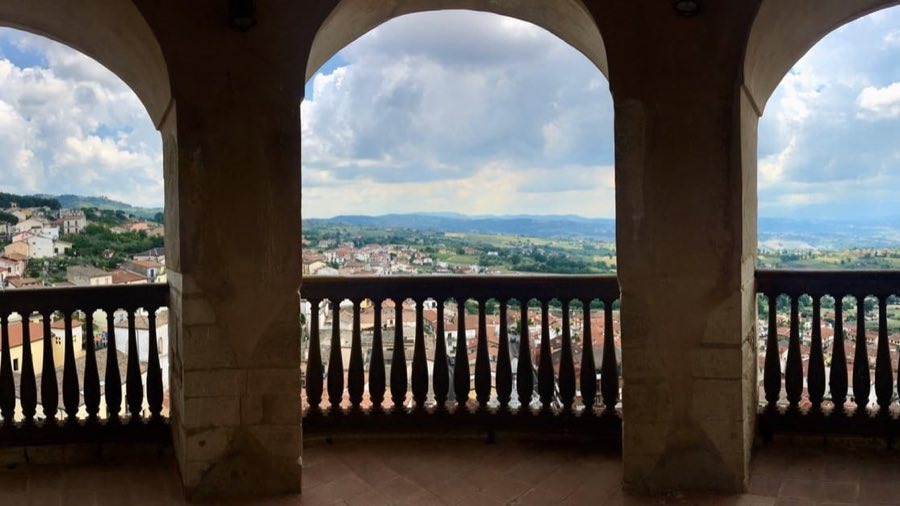
See all castles in ItalyThe Castle of Gesualdo is situated in the town of Gesualdo, Italy. Its origins trace back to early medieval times, with two main historical theories proposing its initial construction during the Lombard period or slightly later in the 9th century. One account suggests that in the 7th century, Romuald I, Duke of Benevento, ordered his tutor named Sessualdo (or Gesualdo) to build a fortress in a naturally defensible area to protect against threats from the Byzantine Emperor Constans II. Another version credits Radelchis I, the Prince of Benevento in the 9th century, with its construction to secure the southern borders of his principality.
The earliest written records about the castle emerge from the 12th century under Norman control. During this time, the fortress was governed by William d’Altavilla and his family, who maintained lordship over the fief for nearly five hundred years. This long tenure reflects the castle’s role as a feudal administrative and military center during the Middle Ages.
At the close of the 16th century, a significant transformation took place under Prince Carlo Gesualdo, a nobleman renowned for his contributions to modern polyphonic music. He extensively renovated the castle, converting it into a Renaissance court complete with new buildings, including a theater that reflected his artistic pursuits. This period marked the castle’s evolution from a purely defensive stronghold into a cultural hub aligned with Renaissance ideals.
In the centuries that followed, the castle underwent further modifications. Notably, iron railings—an uncommon feature in castles from medieval or Renaissance times—were added. By the mid-19th century, the structure had fallen into ruin. The Caccese family acquired it in 1855 and undertook restorations that involved adding new interior rooms, updating the façade with 19th-century architectural styles, and physically connecting the castle to the nearby Piazza Neviera, integrating it more fully with the surrounding town.
The castle suffered serious damage during the 1980 earthquake in the Irpinia region. Restoration efforts began at the start of the 21st century, aiming to recover the site’s historical and architectural values. These works are ongoing. The castle reopened to the public in late 2015 and currently serves as a venue for cultural events that honor its historical legacy and especially the memory of Carlo Gesualdo.
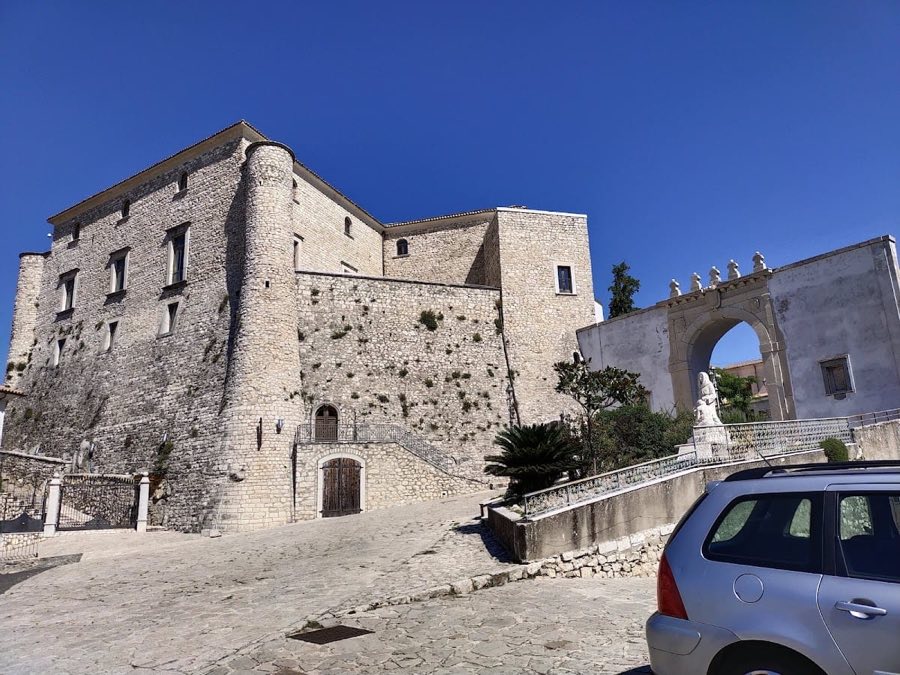
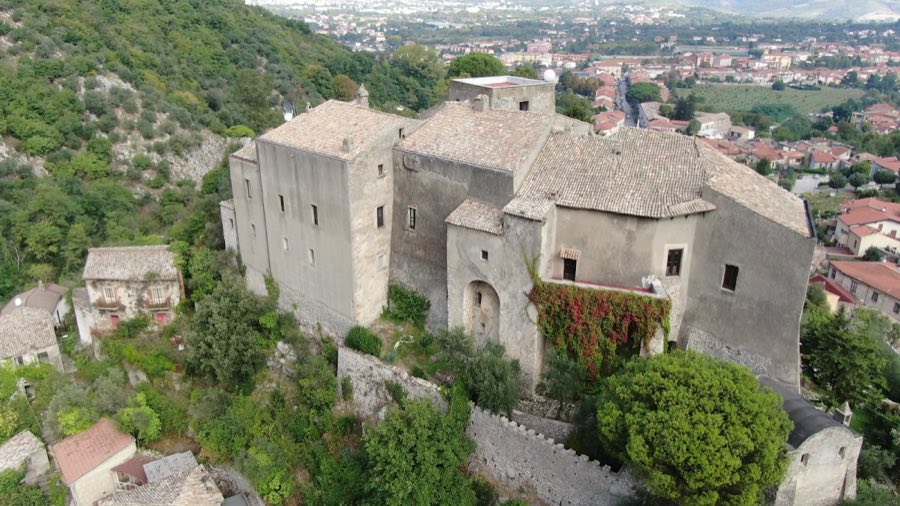
The Castle of Gesualdo is defined by its robust medieval layout, enclosed by four large circular towers linked by curtain walls. These defensive walls are additionally protected by ravelins, which are triangular outworks designed to shield the fortress from attack. Within the enclosed perimeter lies a central courtyard, serving as the heart of the complex. The castle’s structural design reflects its origins as a military fortress, adapting over time into a residential and cultural space.
The exterior façade shows the influence of 19th-century renovations, a result of the Caccese family’s 1855 restorations. These works altered the original medieval appearance by refurbishing the front with architectural styles of that century and creating a direct connection to the adjacent Piazza Neviera, thereby integrating the castle with the town’s urban fabric. The addition of iron railings, a feature not typical for castles of medieval or Renaissance date, also dates from later modifications and adds a distinctive element to its silhouette.
Inside the castle, the artistic and stylistic layers reveal a blend of Gothic and Renaissance elements. The interior prominently showcases Gothic art alongside Renaissance architectural details, illustrating the castle’s evolution in line with changing tastes and functions. A notable addition from Carlo Gesualdo’s renovations is the theater, constructed during the late 16th century. This space was built to accommodate artistic performances and reflects Gesualdo’s engagement with music and culture.
The structure endured considerable damage in the 1980 Irpinia earthquake, which affected many buildings in the region. Restoration initiatives launched from the year 2000 onward have focused on stabilizing and preserving the castle’s historical fabric. These efforts continue to work toward the safeguarding of its architectural features and the enhancement of its role as a center for cultural activities connected to the legacy of the Gesualdo family.
No. 24664
No. 33219
No. 27610
No. 41166
Comments
Comments for Castle of Gesualdo will require a verified account before posting.
We'll send a verification link before your first comment is published.