No. 32182
Jehay Castle
Belgium
ChâteauRestoredFor events12th century
No. 57140
Palace · Belgium
No. 57140 · 50.586 N, 5.371 E
For events
Castle of Warfusée is marked as a château or castle venue lead. Capacity, indoor/outdoor spaces, catering rules, and accommodation options are published only after public verification.
Event types: Private events, Cultural gatherings, Filming and photography
Quick summary
Castle of Warfusée is a palace in Belgium with origins associated with the 11th century.
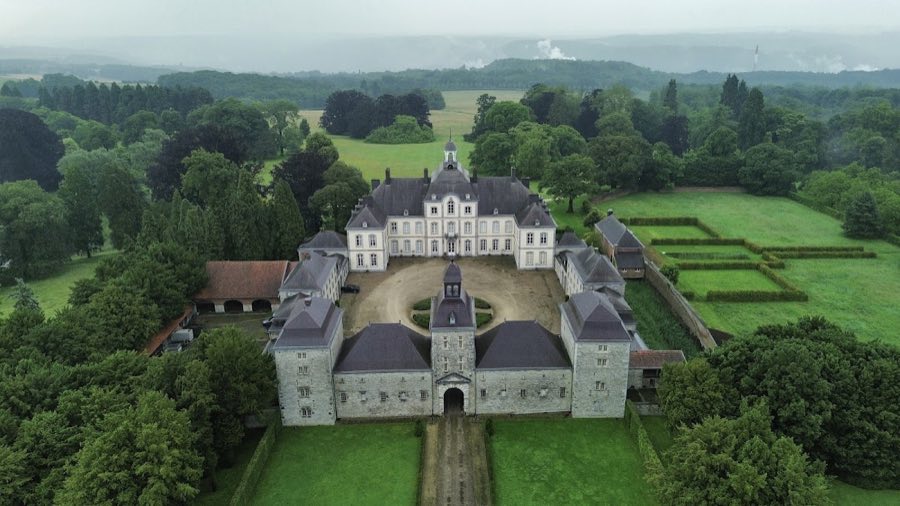
See all castles in BelgiumThe Castle of Warfusée is situated near the village of Stockay, within the municipality of Saint-Georges-sur-Meuse in Belgium. Its origins stem from medieval times and it was built by the local nobility to control the surrounding region.
The earliest known structure at Warfusée was a donjon, a fortified tower constructed in the 11th century overlooking the Meuse valley. This initial stronghold served as a defensive and administrative center, though the original donjon no longer exists. By the early 12th century, the seigneurie, or lordship, of Warfusée was already established and documented, marking the site’s importance during the Middle Ages.
Throughout the 14th and 15th centuries, ownership of the seigneurie changed frequently. It passed through several noble families, including the Haneffe, d’Enghien, de la Marck, de Corswaren, de Hamal, de Renesse, de Thiennes, and Bavière-Schagen lineages. These transitions reflect the shifting political and social landscape of the region in the late medieval period.
A key moment occurred in 1707 when Marie-Isabelle de Bavière-Schagen married François d’Oultremont. This union transferred the castle into the d’Oultremont family. Their son, Florent d’Oultremont, undertook a major reconstruction of the castle during 1754–1755. Under the direction of architect Jean-Gilles Jacob, the building was remodeled according to the Louis XV style, a reflection of contemporary tastes and the family’s status.
The castle was also the birthplace and lifelong residence of Charles-Nicolas d’Oultremont (1716–1771), who served as prince-bishop of Liège. During his time, the castle functioned as a social and political hub within the Prince-Bishopric of Liège, hosting events and gatherings tied to the region’s governance.
In the 19th century, the castle remained tied to notable historical figures. Émile d’Oultremont (1787–1851), a member of the Belgian National Congress involved in the country’s political foundation, died there. His daughter, Émilie d’Oultremont, who later became known as the Blessed Émilie d’Oultremont for founding the Society of Mary Reparatrix, lived at Warfusée until 1847.
Today, the castle continues to be a private residence of the d’Oultremont family. Its historical importance has been formally recognized through classification as exceptional heritage within the Wallonia region.
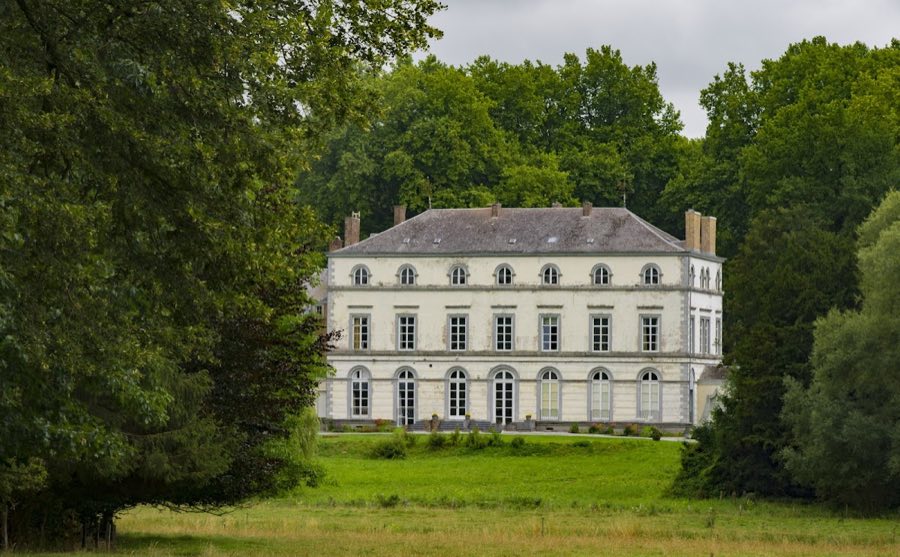
The present Castle of Warfusée reflects an 18th-century reconstruction embodying pure neoclassical design. It features a square layout with buildings enclosing an inner courtyard and is surrounded by landscaped grounds that include a park and a pond. Perched on a plateau approximately 130 meters above sea level, the estate overlooks the Meuse River, which lies about two kilometers away.
A prominent entry feature is the monumental gatehouse or donjon, dating from 1622. This structure serves as the main access point, leading visitors into the honor courtyard, bordered on all sides by the four buildings forming the castle’s square. The gatehouse stands as a preserved architectural element contributing to the castle’s defensive appearance.
The main building is distinguished by a small bell tower, known as a clocheton, which houses a carillon— a set of tuned bells played using a keyboard mechanism. This feature adds an auditory dimension to the castle, consistent with the period’s stylistic preferences.
Inside, several apartments maintain their 18th-century character through original furnishings such as a four-poster bed and velvet-covered chairs. The salon spaces contain tapestries from Audenaerde portraying episodes from the adventures of Don Quixote. Walls also hold portraits of King Louis XV and King Louis XVI, reinforcing the connection to the castle’s era and social milieu.
Additional interior highlights include a chapel featuring stucco decoration and an entrance hall tiled with marble flooring. Multiple salons are similarly adorned with tapestries and portraits, emphasizing the relative luxury of the residence for its time.
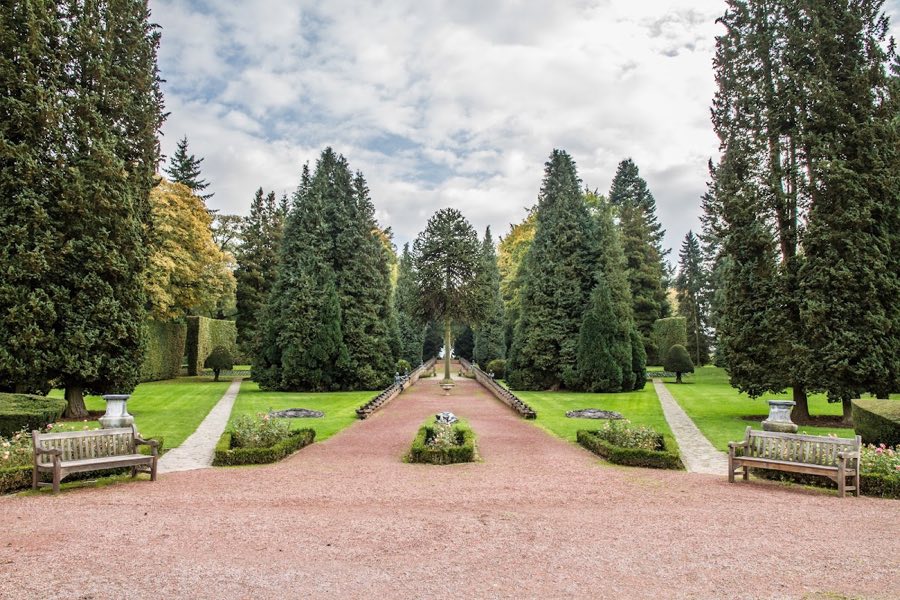
Within the park lie notable sequoia trees planted around 1877, marking a 19th-century enhancement to the grounds in keeping with contemporary trends in landscaping.
Together, the castle, its various outbuildings, the orangery used for growing citrus trees, and the landscaped grounds comprise a protected ensemble formally classified as extraordinary heritage in Wallonia. Public access is controlled and limited to organized group visits.
No. 32182
No. 26680
No. 83277
No. 81301
Comments
Comments for Castle of Warfusée will require a verified account before posting.
We'll send a verification link before your first comment is published.