No. 90644
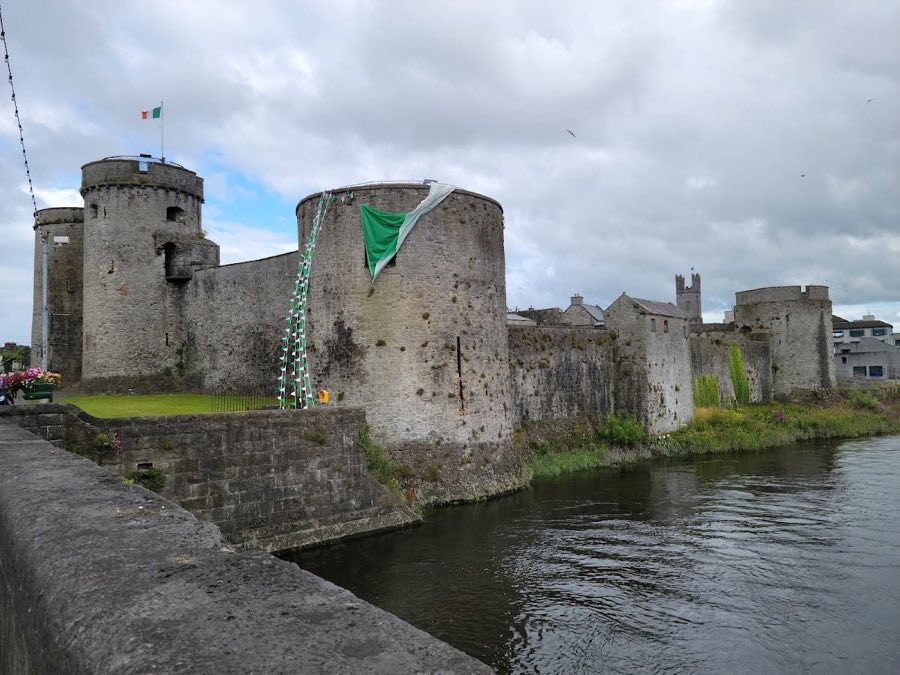
King John's Castle, Limerick
Limerick, Ireland
CastleRestoredFor events10th century
No. 51980
Castle · Ireland
No. 51980 · 52.678 N, 8.551 W
For events
Castle Troy is marked as a château or castle venue lead. Capacity, indoor/outdoor spaces, catering rules, and accommodation options are published only after public verification.
Event types: Private events, Cultural gatherings, Filming and photography
Quick summary
Castle Troy is a castle in Ireland with origins associated with the 13th century.
See all castles in IrelandCastle Troy, on the outskirts of Limerick, Ireland, was erected by the O’Brien clan during the Gaelic period. It first occupied a site that had earlier fortifications before the castle itself was established in the 1200s while King Henry III reigned.
After its initial construction in the 13th century, the lands passed into the hands of Anglo‑Norman feudal lords who are recorded as having “built the castle of King John.” The fortress later came under the control of the Mac Keogh (Mac Kех) family, although it is not recorded whether that change of hands was achieved by agreement or by force. Major rebuilding work took place in the 1400s and again in the 1500s, giving the castle much of its later form.
In the late 1500s the site became linked to the Earls of Desmond during the reign of Elizabeth I. Gerald Fitzgerald led a rebellion around 1574–1582 and was killed by the Moriarty family of Castledrum. Following the unrest, lands belonging to Desmond and Moriarty were apportioned to English feudal lords, and Castle Troy came into the possession of Sir John Burke of Brittas.
Sir John sheltered Catholic priests at the castle. In 1607 Theobald led English soldiers to arrest priests at the stronghold; the place was besieged, and Sir John escaped. He attempted to flee to Spain but was captured, sentenced to hanging and quartering, and subsequently executed. Theobald received the castle and estates thereafter, later taking the title Baron Brittas and dying in 1654. During the mid‑17th century conflicts General Henry Ireton laid siege to Limerick between 1650 and 1651, and Castle Troy was reportedly struck by cannon fire and taken by storm in 1651. During the fighting around 1690–1691 the 1691 treaty governing Limerick was said to have been violated, and Castle Troy again suffered attack and destruction.
Historically, the castle formed one link in a ring of fortifications that once defended Limerick; that defensive chain was later entirely destroyed. A Jewish cemetery lies beside the castle and experienced severe damage in 1904 when a mob led by priest John Creagh attacked it; the burial ground was restored in 1990, and people from Cork provided shelter to the local Jewish community after the 1904 events.
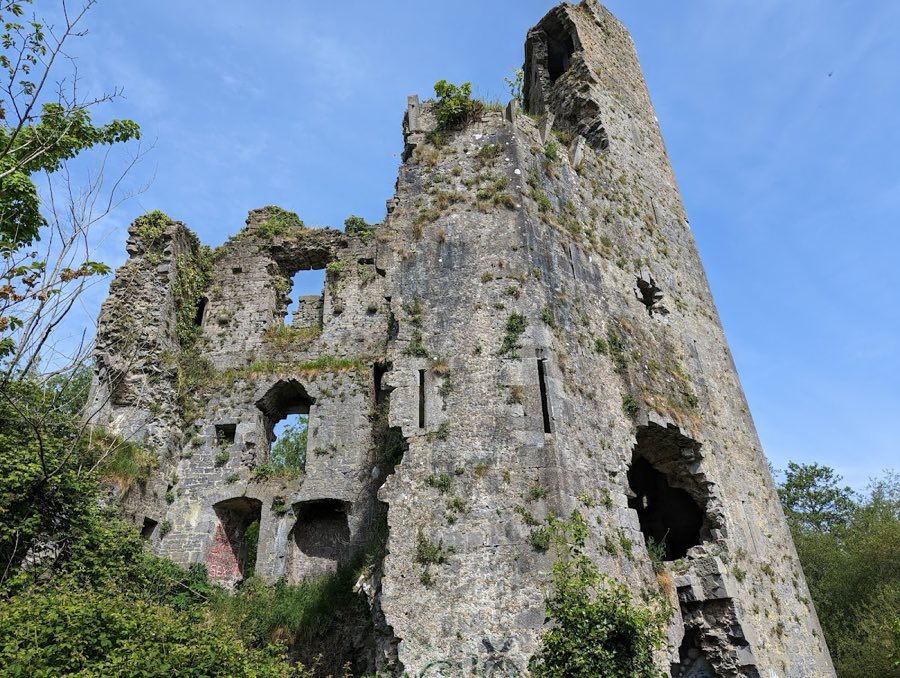
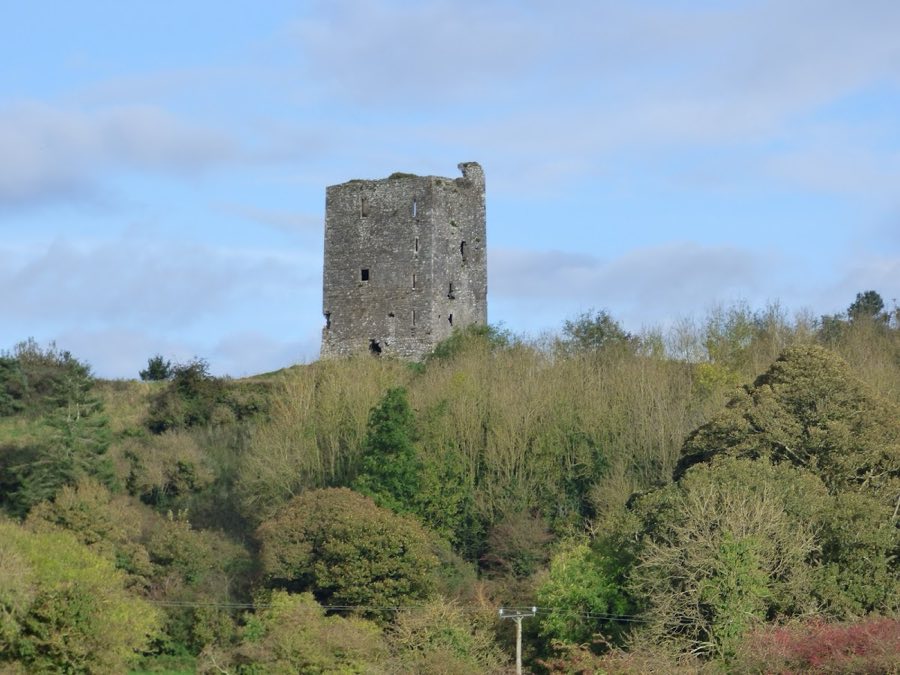
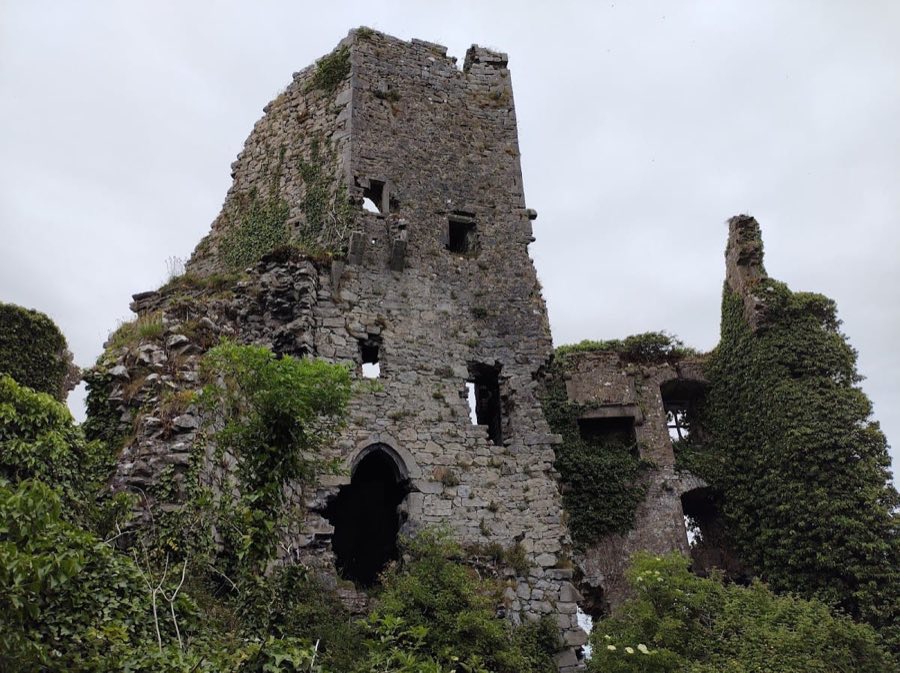
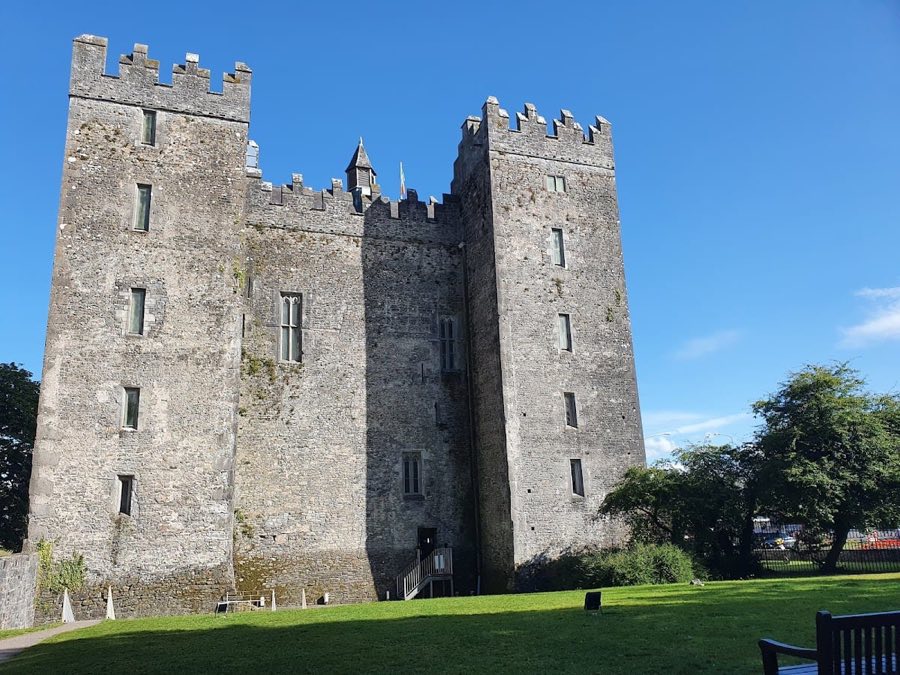
The site today is a ruin focused on a largely freestanding fragment of the former structure. The castle fabric reflects medieval construction with phases of later rebuilding, and the position beside the city shows its role within a formerly linked network of defenses.
A single wall survives almost to its original height and defines much of what can still be read on site. Within that surviving elevation there are traces of internal spaces: fragments of rooms are visible on what would have been the second and fourth floors. These room remnants stand as vertical echoes of the castle’s multi‑storey plan and record interior divisions that belonged to different construction phases.
A small opening in the surviving wall gives access to a winding stair that rises within the fabric. This spiral stair remains intact up to the third floor, above which only fragmentary walling is left. On the third floor the remains of a corner turret can be observed, its partial form marking a defensive projection at an upper level of the building.
Beside the castle the Jewish cemetery is an identified element of the site complex. The burial ground was badly damaged in an attack in 1904 led by priest John Creagh and underwent restoration in 1990. Historical commentary records that residents of Cork sheltered members of the local Jewish community in the aftermath of the 1904 assault.
No. 90644
No. 69384
No. 45329
No. 50521
Comments
Comments for Castle Troy will require a verified account before posting.
We'll send a verification link before your first comment is published.