No. 59038
Château Gruaud-Larose
France
ChâteauRestored18th century
No. 15458
No. 15458 · 45.028 N, 0.679 W
Quick summary
Château Cantenac-Brown is a château in France with origins associated with the 18th century.
See all castles in FranceChâteau Cantenac-Brown in Margaux-Cantenac, France, is a Bordeaux wine estate whose core château and vineyards were developed by French landowners from the mid-18th century and rebuilt in a Tudor style in the early 19th century. The property became historically important for its classified wine status in 1855 and for the artistic activity that gathered painters at the estate during the 19th century.
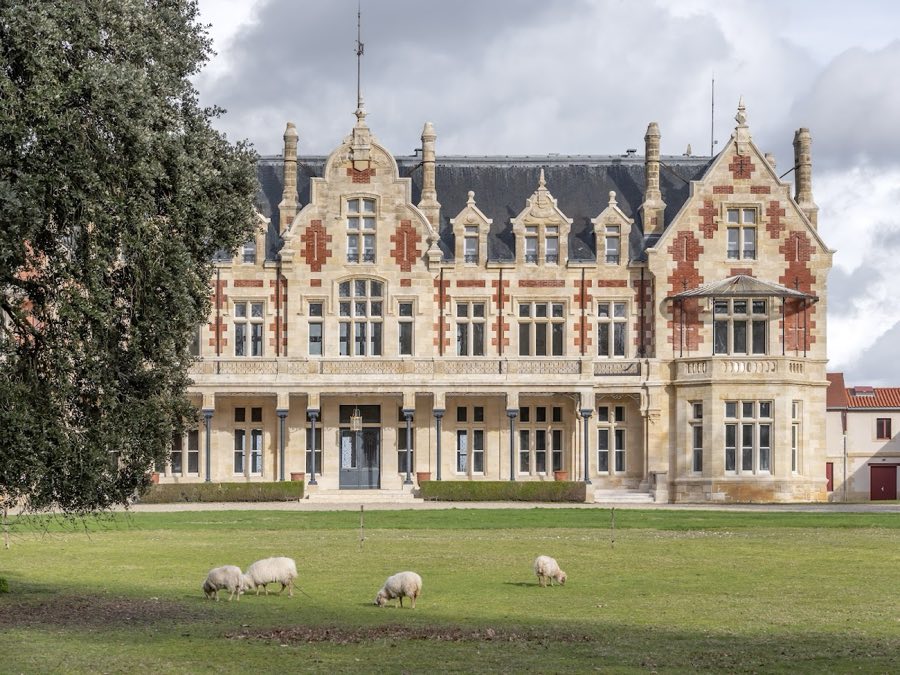
The estate began when Jacques Boyd, esquire to the king, acquired land at Cantenac in 1754 and formed a domaine that later split into two properties, Boyd-Cantenac and Cantenac Brown. In 1806 John-Lewis Brown, a Frenchman of Scottish descent, purchased vines on the site and established the name the estate still bears; he had a bourgeois house constructed in the Tudor manner that became the estate’s principal residence.
During the 19th century the château’s grounds were a focus of artistic life. The painter John-Lewis Brown, a grandson of the owner, grew up at the property and depicted its landscapes. He shared the estate with visiting artists including Edgar Degas, Édouard Manet, Camille Pissarro and Henri de Toulouse-Lautrec, and the house and lands were associated with work at the forefront of Impressionism. The property passed in 1843 to a banker named Gromard, who still held it when the Bordeaux classification of 1855 ranked the estate as a Third Growth (Troisième Cru). By the time the land was later divided the properties were identified as Boyd and Cantenac Brown.
In 1860 the vineyard changed hands to Louis Armand Lalande, who greatly enlarged the château while preserving its Tudor appearance. In the 20th century Madame Édouard Lawton, born Lalande, transferred the estate to her son Jean in 1935; Jean sold to the Du Vivier family in 1968. New ownership and investment followed: the Compagnie du Midi acquired the property in 1987 and renewed the wine cellars, AXA Millésimes bought the domaine in 1989, a family linked to Simon Halabi took it in 2006, and at the end of 2019 the Le Lous family (owners of the Urgo group) became the proprietors with Tristan Le Lous representing the family.
A figure central to recent operations is José Sanfins, who joined the estate as a trainee in 1989, adopted a policy of reasoned, sustainable viticulture across the vineyards from 1996, and became manager in 1998. The estate covers 60.5 hectares planted mainly to Cabernet Sauvignon (about 65 percent), Merlot (about 30 percent) and Cabernet Franc (about 5 percent). It produces three named wines: the Grand Vin Château Cantenac Brown (Margaux), the second wine BriO de Cantenac Brown (Margaux), and a white Bordeaux called AltO de Cantenac Brown, introduced in 2011 from 1.8 hectares planted to Sauvignon Blanc (90 percent) and Sémillon (10 percent). In 2020 the owners announced an eco-responsible cellar project designed to raise environmental standards and target zero carbon through material and construction choices, with delivery planned for the 2023 harvest.
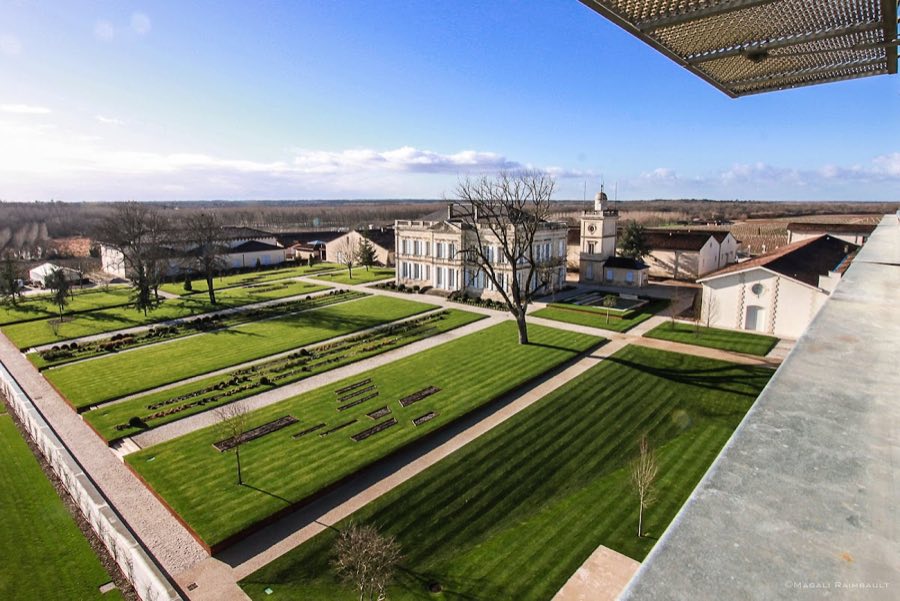
The estate is organized around a Tudor-style bourgeois house, working wine buildings and extensive vineyards. The principal residence was built in 1806 in a Tudor idiom and later enlarged in 1860 while keeping that stylistic character; it is described as an emblematic château in the Médoc region. The vineyard parcels form the agricultural setting that has supported continuous vine cultivation from the domaine’s formation.
The wine-making complex includes cellars and related production spaces. The cellars were modernized after the Compagnie du Midi took ownership in 1987, bringing renewed winemaking infrastructure to the site. A recent project proposes a new cellar built entirely of raw earth and solid, untreated mass timber sourced from the Aquitaine area, with walls formed using rammed earth (pisé/tapial), meaning earth compressed on site. The rammed-earth walls are intended to supply thermal inertia and stable humidity for wine ageing without mechanical cooling.
Planned internal arrangements emphasize winemaking precision and integration with existing buildings. The vat room will be arranged as several small vats to allow finer control during blending, and the new construction will sit within the present enclosure so the building group and grounds retain their character. The vineyard fabric remains extensive and documented by its plantings: roughly 60.5 hectares divided among Cabernet Sauvignon, Merlot and Cabernet Franc, with a 1.8-hectare parcel planted to Sauvignon Blanc and Sémillon dedicated to the white wine introduced in 2011.
No. 59038
No. 36402
No. 36588
No. 56884
Comments
Comments for Château Cantenac-Brown will require a verified account before posting.
We'll send a verification link before your first comment is published.