No. 17659
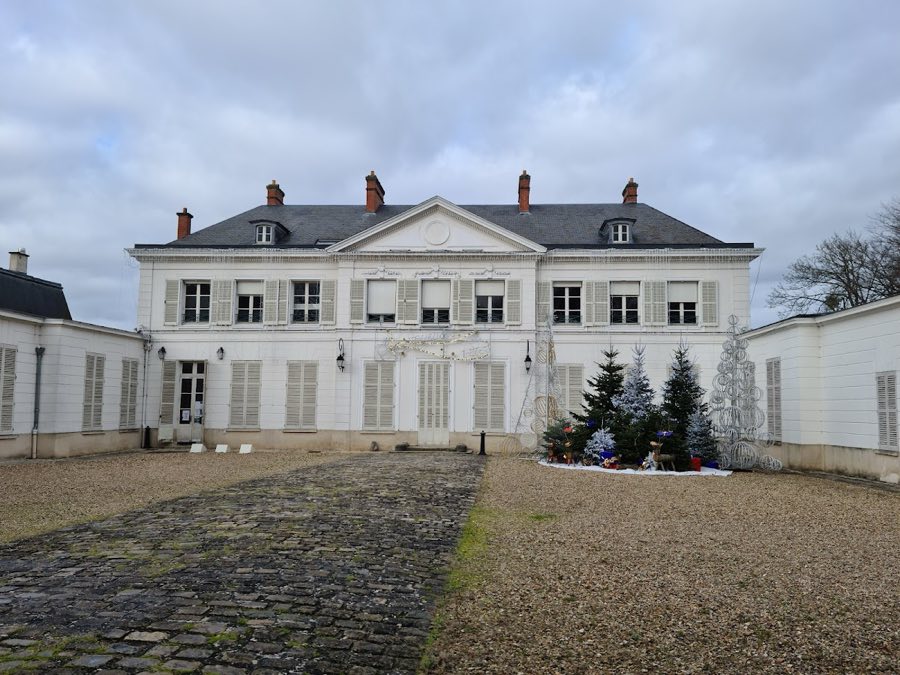
Château de Villiers, Draveil
Draveil, France
ChâteauRestoredFor events18th century

No. 54831
Château · France
No. 54831 · 48.750 N, 2.746 E
For sale
Château d'Armainvilliers in France is marked with a public sale signal. Asking price, tenure, land area, floor area, and room counts are shown only after public verification.
Status: Public sale signal
Price: Price on application or not publicly verified
Property type: Château / Chateau
Notable features: Restored historic fabric, Residential use
Availability note: Submit an official public listing or register buying interest to complete the sale record.
For events
Château d'Armainvilliers is marked as a château or castle venue lead. Capacity, indoor/outdoor spaces, catering rules, and accommodation options are published only after public verification.
Event types: Private events, Cultural gatherings, Filming and photography
Quick summary
Château d'Armainvilliers is a château in France with origins associated with the 5th century.
See all castles in FranceChâteau d’Armainvilliers in Tournan-en-Brie, France, began as a medieval feudal seat within the French realm and is first connected with the area in documents from the twelfth century, while a fortified dwelling on the site appears in records from the fourteenth century. The site later took on an important role in national events, offering refuge to King François I in 1544 after the fall of Château-Thierry, and across centuries served as the country residence of regional lords and, from the late seventeenth century, of a family ennobled with the county title in 1704. The property therefore figures in the political and aristocratic geography of early modern France.
During the sixteenth century the estate became the principal home of the local seigneurs, and in the seventeenth and eighteenth centuries it belonged to a family whose head served at the royal household and was raised to the countship in June 1704. In March 1762 King Louis XV exchanged this estate, together with other holdings, for the principality of Dombes, after which the new proprietor assumed the county title. On that proprietor’s death in 1775 the lands passed to the Duke of Penthièvre. The château suffered partial destruction during the French Revolution, reflecting the widespread violence and seizures of that period.
In 1808 a private investor, working in finance, acquired the grounds. Under the Bourbon Restoration ownership reverted to a leading Bourbon heiress, and after her death in 1821 the estate descended into the Orléans family; in the division of 1822 the property was assigned to a member of that branch. In 1855 a duchess bought the château, carried out restoration work, introduced carved woodwork removed from another noble house, and enlarged the surrounding park. She pursued legal action in 1863 against a neighbor for using the same estate name; that neighbor’s house was later mistakenly bombed in 1944 and taken down in 1950.
A banker bought the property in 1877, removed the earlier building, and replaced it with a newly composed residence in the Anglo-Norman aesthetic, set into a designed park. Over the following decades the house and grounds were enlarged, the holding growing from a few hundred hectares toward several thousand by the end of the nineteenth century, and modern comforts such as multiple private bathrooms were installed. During the First World War an infirmary operated in the house, and in the Second World War German forces occupied the property. Ownership passed down within the family that rebuilt the château, and in the late twentieth century the estate entered the possession of the Moroccan royal family, who carried out major rehabilitation. Reported transactions in the early twenty-first century transferred the property into private hands, and in 2024 the château, described as a 100-room residence of roughly 96,875 square feet set in nearly 2,500 acres, was placed on the market.
The present complex centers on a large S-shaped country house created in 1877 in the Anglo-Norman mode. That rebuilding replaced the earlier fabric and established the principal residential block that survives. Additions and alterations made between 1881 and 1938 expanded the living quarters and service ranges; notably, the modernizing work of that era included the fitting of several en suite bathrooms. The main dwelling has served changing functions in the twentieth century, including an infirmary in the First World War and accommodation for occupying forces in the Second World War.
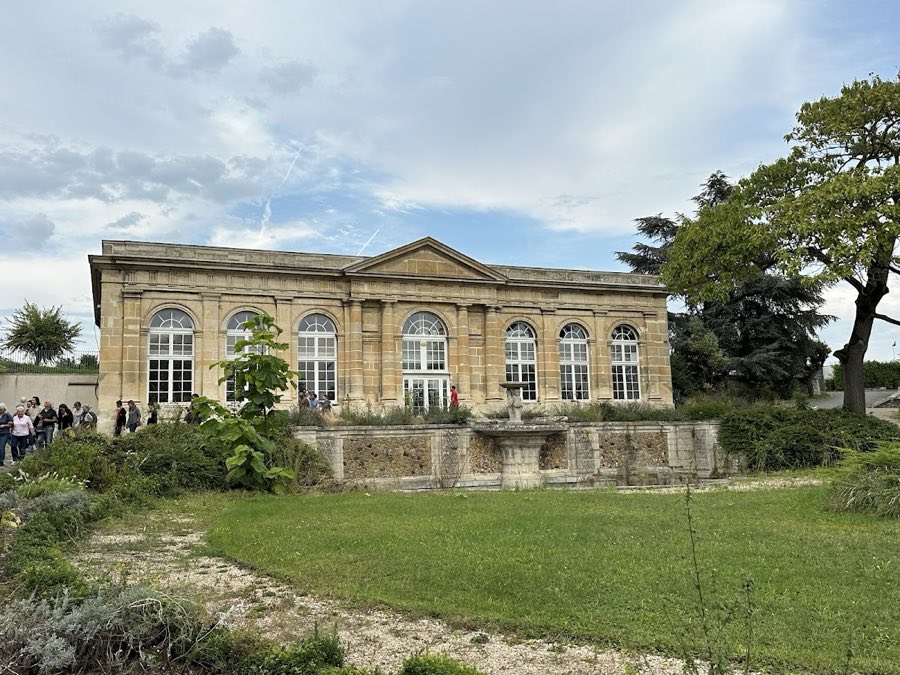
The estate retains a broad ensemble of supporting buildings and landscape elements laid out as a landscaped park. The service group comprises guardhouses, farm buildings executed in a Norman idiom, and a range of outbuildings organized as commons, all intended to function with the main house. A large orangery in the English manner stands within the grounds and was part of the nineteenth-century program of improvement. Over the long nineteenth and early twentieth centuries the estate’s footprint grew substantially, incorporating agricultural and parkland into a single managed property.
Historic descriptions of the grounds record formal water features and alleys that structured movement and views. The layout once included water-filled moats around courtyards and farmyards, a straight canal flanked by alleys of hornbeam, a planted labyrinth, clipped walkways forming arcade-like tunnels, wooded groves, and a large pond. These elements were integrated with the late-nineteenth-century park works to form the designed landscape that surrounds the main house. As of 2024 the late-nineteenth-century residence and its associated grounds survive as a large, articulated estate and were offered for sale as a single property.
No. 17659
No. 64870
No. 85803
No. 42869
Comments
Comments for Château d'Armainvilliers will require a verified account before posting.
We'll send a verification link before your first comment is published.