
No. 54831
Château d'Armainvilliers
France
ChâteauRestoredFor sale5th century
No. 64870
No. 64870 · 48.554 N, 3.014 E
Quick summary
Château de Nangis is a château in France with origins associated with the 14th century.
See all castles in FranceChâteau de Nangis stands in the town of Nangis, France, and was established during the medieval period by the political and military actors of medieval France. The place-name La Motte points to origins as a motte-and-bailey stronghold, and the earliest recorded lord was Fleury (active c.1093–1147), identified as a son of King Philip I. Control of the estate passed into the household of the Montmorency family in 1245. By the late 14th century the complex is described as a fortress, and during the fighting of the Hundred Years’ War it served to shelter the inhabitants of the seigneurie.
English forces inflicted severe damage in 1429. In the aftermath, King Charles VII granted the seigneurie to Denis de Chailly of Chailly-en-Bière in recognition of his assistance to Joan of Arc; Denis de Chailly rebuilt the fortifications in 1436. In 1507 Louis de Brichanteau acquired the property through marriage, and his family retained the domain until the Revolution. Around 1590 Antoine de Brichanteau carried out modernization of the principal residential range.
The seigneurie was elevated to a marquisate in 1612. In 1678 the castle received a royal visit from King Louis XIV. After the death of Armand de Brichanteau in 1742 the title passed to a distant cousin, the count de Guerchy; his son Anne-Louis de Regnier de Guerchy (1755–1806) became the last marquis and sold the property to a Parisian notary in 1795. That purchaser demolished two of the three main buildings later that year, preserving only the wing to the left. The municipality bought the remaining building in 1859 and converted it for use as the town hall. Six paintings located in the marriage room were officially classified as historical monuments in May 1909, while the fabric of the building itself was not placed under that classification.
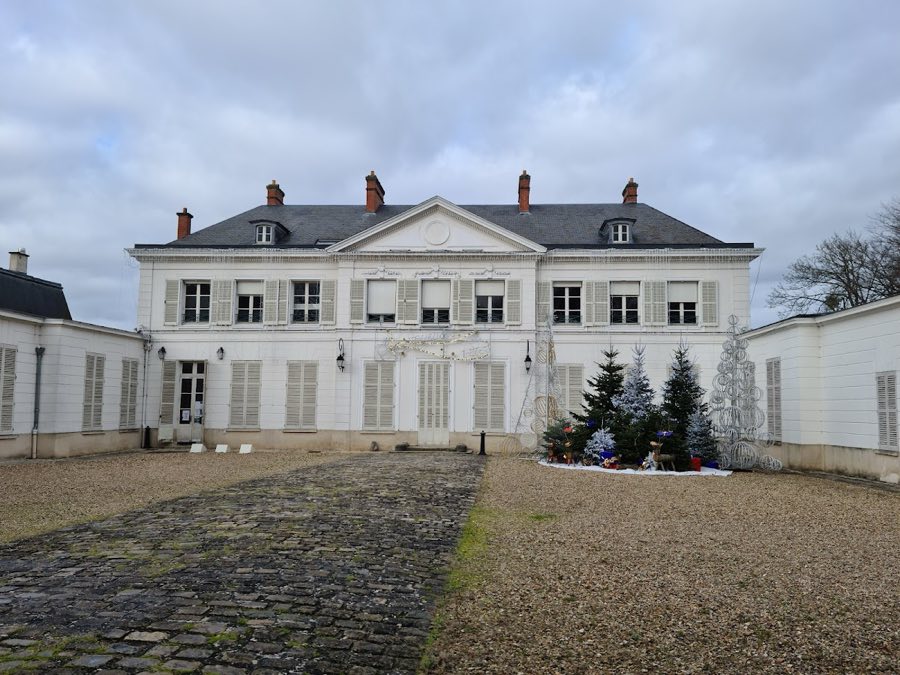
The surviving ensemble is dominated by the single remaining wing that was kept after late 18th-century demolitions. Seen from the exterior, this wing has undergone little visible change since the municipal purchase in 1859. At its corners the wing incorporates two defensive towers, which mark the footprints of the medieval residence and its defensive plan.
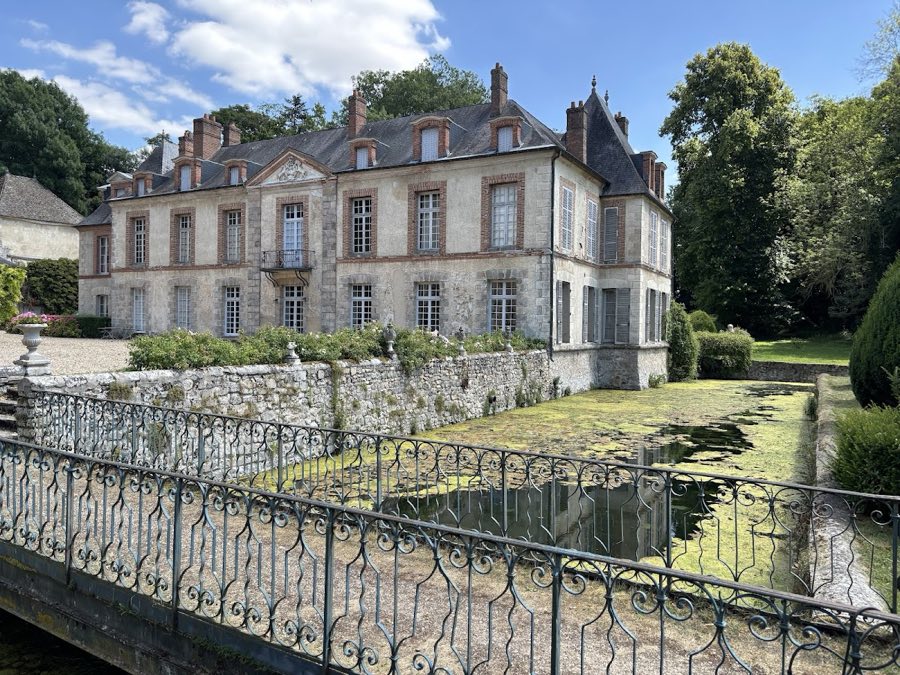
The site still preserves the water-filled moats that encircle the original earthen mound, the motte that gave the place its traditional name. Historical testimony records that Joan of Arc crossed the drawbridge to enter the keep, an episode tied to the site’s role during the campaigns of the early 15th century. The recorded survival of the moats highlights the persistence of the medieval earthworks around the built remains.
Beyond the left wing, a cylindrical tower belonging to the outer defensive wall survives; this round outer-tower was pierced with narrow vertical openings for missile use. That outer wall tower is visible in early 20th-century photographs preserved in a national photographic archive, which also holds an image showing the building façade in perspective. The two images date from about 1907–1909 and document the tower and the principal elevation as they appeared at that time.
Interior heritage preserved within the municipal building includes six paintings installed in the marriage room, works that received formal protection in May 1909. The remainder of the former castle’s main ranges were removed in 1795, leaving the left wing, the corner towers, the outer wall tower, and the surrounding moat system as the principal archaeological and architectural traces on the site.
No. 54831
No. 17659
No. 82772
No. 83284
Comments
Comments for Château de Nangis will require a verified account before posting.
We'll send a verification link before your first comment is published.