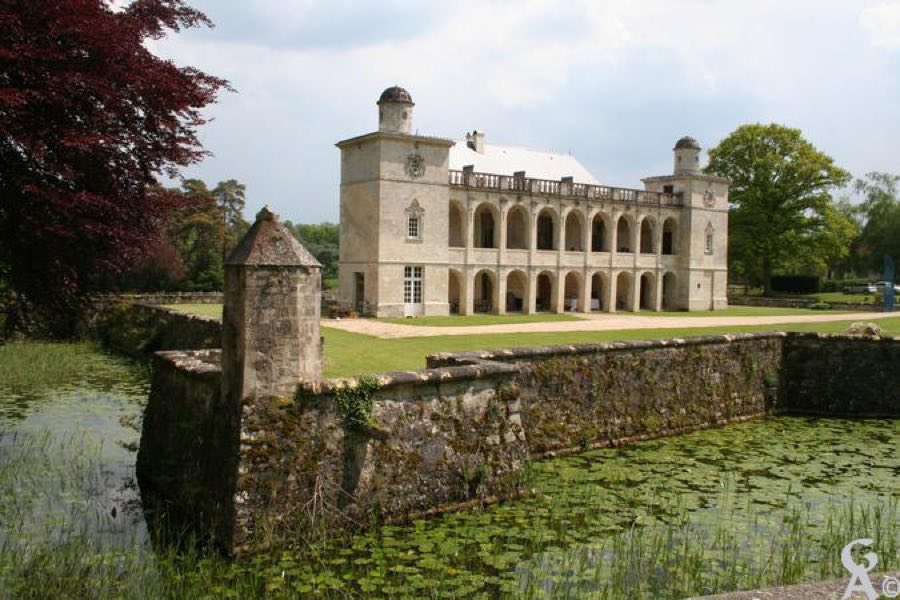
No. 87025
Château de Chailvet
France
ChâteauRestored16th century
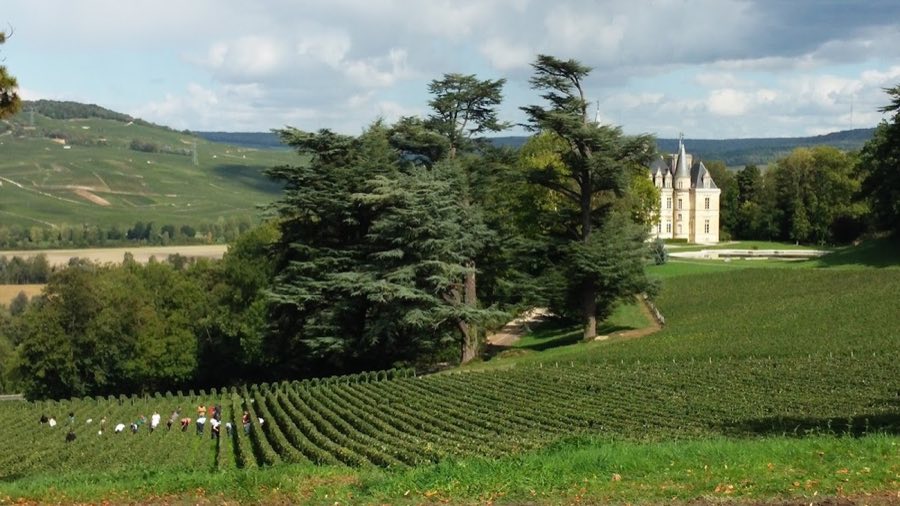
No. 39925
Château · France
No. 39925 · 49.064 N, 3.850 E
Quick summary
Château de Boursault is a château in France with origins associated with the 19th century.
See all castles in FranceChâteau de Boursault in Boursault, France, is a 19th-century Neo‑Renaissance residence built by members of the French seigneurial class. Its present form dates to the mid-1800s and was created to replace an earlier medieval stronghold; the house became important both for its connection to the family behind the Veuve Clicquot champagne house and for the vineyards and cellars that surround it.
The site has medieval roots. Records of the seigneurie of Boursault appear in the 14th century, when Robert de Flandre transferred the land to Geoffroy de Naast, and later the estate passed through Robert’s daughter into the family of Henry IV, Count of Bar (around 1315–1344). In 1409 Cardinal Louis de Bar received Boursault and other lordships from his father, Robert, Duke of Bar. By the 16th century the barons of Boursault occupied a fortress-like château, and vineyards covered the surrounding slopes from that era onward, except for a century when the hill was wooded.
By the start of the 19th century the medieval château had fallen into serious disrepair. The present château was built at the request of Madame Clicquot Ponsardin, founder of the Veuve Clicquot champagne house, to mark the 1839 marriage of her granddaughter Marie Clémentine de Chevigné to Louis de Rochechouart-Mortemart. Work began with the laying of the first stone on 15 August 1842 in the presence of the local national guard when the young Paul de Mortemart was held by his father, and construction was finished five years later; other dates given for the building period are 1842–1848 and 1843–1850. An architect who was working on the restoration of Reims Cathedral designed the house and laid out a landscaped park of about eleven hectares on the wooded hilltop planted with vines.
Madame Clicquot retired to the new house at the age of 64 and died there at 89. Her granddaughter’s daughter, Anne de Rochechouart de Mortemart (1847–1933), later Duchess of Uzès, inherited the property in 1866 and sold it in 1913. The Berry family of Canada owned the château from 1913 until 1927. During both the First World War (1914–1918) and the Second World War (1939–1945) the building was used as a military hospital.
The park was converted to vineyards to produce champagne, and the Château de Boursault label is made from grapes grown in the surrounding vines and aged in the estate cellars, with production recorded from 1927. A plaque above the central window facing the basin bears the Latin inscription NATIS MATER, translated as “a mother to her children,” recalling the gift of the house to daughter and granddaughter. The grounds were placed on the pre-inventory of remarkable gardens.
The ensemble sits on the summit of a vine-covered hill and combines a large 19th-century residence with landscaped grounds of about eleven hectares. The house follows a Neo‑Renaissance vocabulary designed for formal entertaining: a tall roofline, prominently decorated windows, and an unusually large number of chimneys and fireplaces give the building a monumental silhouette that dominates the village below. The park was laid out at the time of construction and later became planted with vineyards that surround the château.
Inside, the dining room displays modern tapestries and rich carved wood paneling, while the grand salon contains extensive carved wood wall treatments and a large fireplace executed in Burgundy stone. The carved wood paneling in the grand salon and the dining room was made by Jean‑Baptiste‑Jules Klagmann, and the boudoir ceiling was painted by Levastre. The estate includes extensive cellars where the champagne produced from the surrounding vineyards is aged.
Remnants of the earlier, medieval château survive near the park entrance beside the parish church. These older elements consist of a main dwelling block and a tower, and they stand apart from the 19th-century house. By the early 1800s the medieval building was reported to be very dilapidated, and what remains today survives as part of the approach to the later château. The park, transformed into productive vineyards, and the cellars continue to serve the estate’s role in champagne production.
No. 87025

No. 64870
No. 12175
No. 48784
Comments
Comments for Château de Boursault will require a verified account before posting.
We'll send a verification link before your first comment is published.