No. 15254
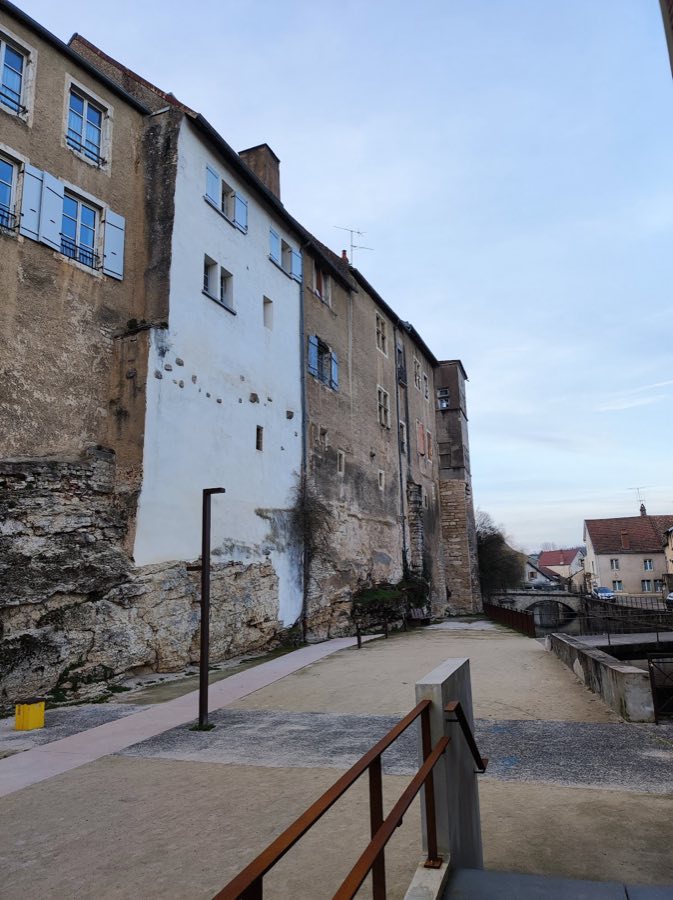
Château de Marnay
France
ChâteauRestored11th century

No. 69133
Château · France
No. 69133 · 47.404 N, 5.812 E
For events
Château de Gy is marked as a château or castle venue lead. Capacity, indoor/outdoor spaces, catering rules, and accommodation options are published only after public verification.
Event types: Private events, Cultural gatherings, Filming and photography
Quick summary
Château de Gy is a château in France with origins associated with the 15th century.
See all castles in FranceChâteau de Gy is in Gy, France, and it was built and occupied by the archbishops of Besançon, although the exact date when construction began is not known.
Medieval violence shaped the château from an early date. In 1259 Jean I of Chalon came into open conflict with Archbishop Guillaume II de la Tour and a coalition laid siege to Gy. After resisting, the defenders were overcome, the stronghold was taken and destroyed, and the archbishop placed the attackers under excommunication; Pope Alexander IV confirmed that sentence and the penalty was lifted only after a negotiated payment of five bichots of wheat from the mills of Vuillecin.
In 1380 another crisis began when Archbishop Guillaume de Vergy set up a mint at Gy. The action drew protests from Besançon, the lords of Chalon and Duke Philip the Bold. Pope Clement VII intervened and the archbishop abandoned minting; the duke then prohibited coin production in Besançon. The archbishop excommunicated the duke in response, the duke replied by besieging Gy, and the archbishop fled to Avignon. The dispute was resolved amicably in 1391.
Tensions with the city of Besançon recurred in the 15th century. Quentin Ménard, chosen as archbishop in 1439, took refuge at Gy after disputes with Besançon residents. After the château of Bregille was destroyed, he surrendered regalian jurisdiction so he could retire to Gy, he placed those responsible under excommunication, and he strengthened the site by adding two square towers. Later in the century an archbishop described as tutor and adviser to Philip the Fair rebuilt the castle that had been damaged during the 1477 attack by the Sire de Craon, moved the court of the Régalie to Gy while he lived, and left elements of that rebuilding still visible. Another archbishop described as tutor to Charles V also withdrew to Gy after a quarrel with Gauthiot d’Ancier.
In the 16th century Claude de La Baume, who served from 1545 to 1584 and was the nephew of Pierre de La Baume, inherited the château as a child. During his minority the archbishopric was administered by François Bonvalot, and Claude de La Baume is recorded as visiting Gy frequently for hunting.
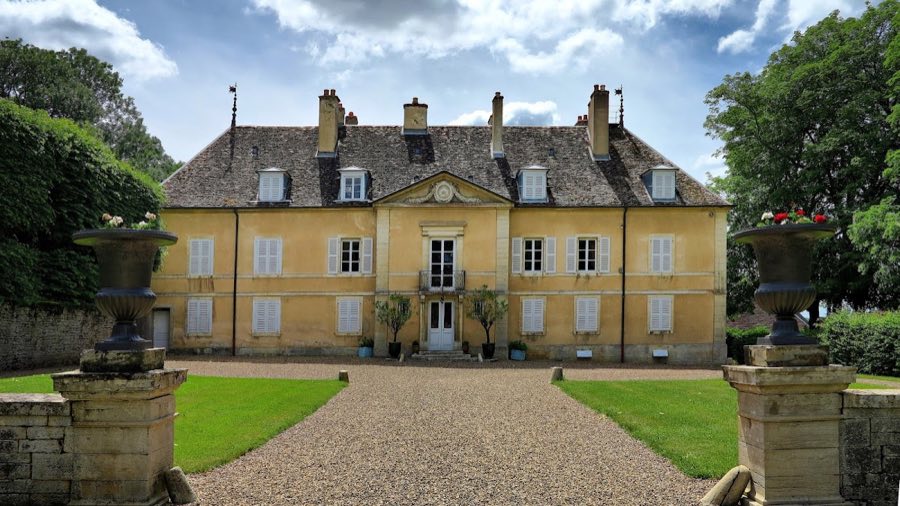
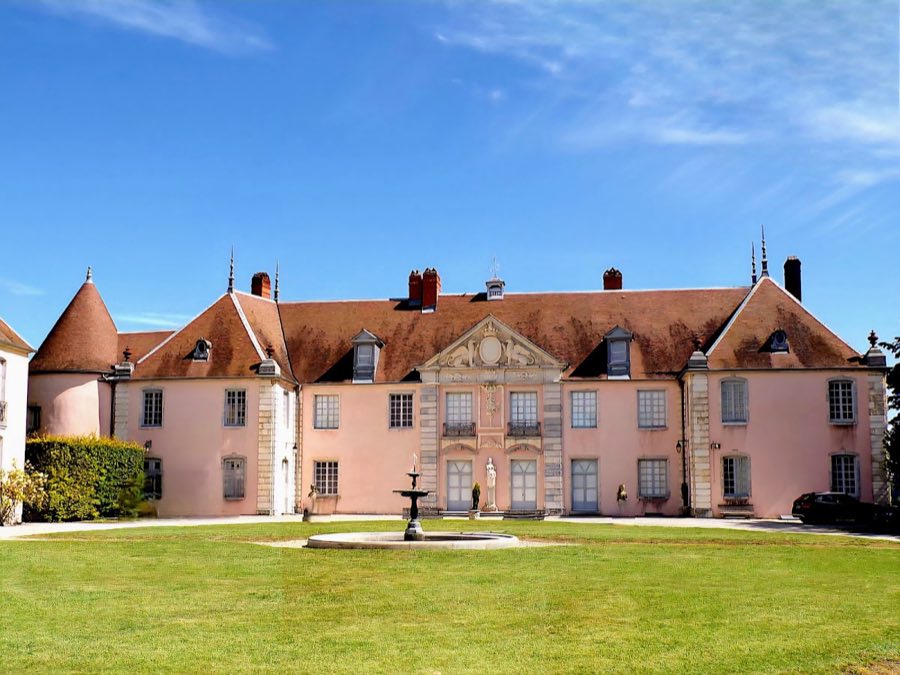
The château’s most visible transformation came in the 18th century under Cardinal Antoine-Clériade de Choiseul-Beaupré (1707–1774). Named to the archbishopric of Besançon in 1755, he carried out major alterations that created the appearance the château largely presents today; his coat of arms remains on the principal entrance. He also had a new road laid toward Besançon and left outstanding debts that his successor, the archbishop of Durfort, inherited. The building survived the upheavals of the French Revolution without being seized.
In the 19th and 20th centuries the château’s outbuildings were sold at auction, and between 1854 and 1876 the property served as a school; it continued as an educational establishment, functioning as a college until 1974. The site received official protection for its artistic character by decree on 22 July 1913, was listed among historic monuments in 1922 and again in 1991, and was registered in 1991. For almost ten years it hosted cultural events, including bicentennial commemorations. A restoration of the roof of the Marmet tower was completed in 2012. The château remains in private hands and is not open to the public.
The buildings are arranged as a roughly pentagonal ensemble that opens to the south, forming a compact courtyard. Entering that courtyard, visitors encounter a hexagonal stair tower built in the flamboyant Gothic manner; this tower contains the staircase that provides circulation throughout the principal residential block. The stair tower stands opposite the entrance and continues to define the courtyard’s vertical focus.
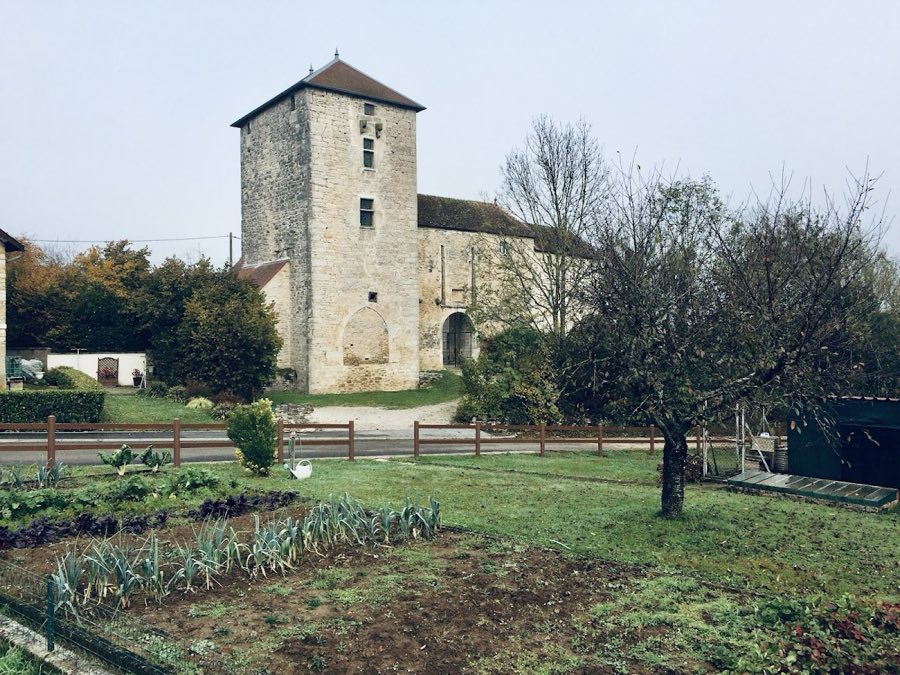
The principal residential block sits between east and west wings, and each wing is anchored by square towers that are dated to the 16th century. These towers mark a phase of alteration and give the façades a measured, flanked composition. Surviving parts of the residence reflect successive rebuilding campaigns rather than a single medieval plan, so the wings and their towers show how the château evolved over time.
Remains from a 15th-century reconstruction are visible in the central lodging, where a gallery of arcades survives alongside an octagonal tower that contains a spiral staircase. Those elements are linked to the rebuilding after the 1477 attack and represent late medieval work that has endured within later remakes. The main entrance retains the carved arms of Choiseul-Beaupré over the portal, a direct trace of the 18th-century campaign that shaped much of the present appearance. The roof of the Marmet tower was repaired in 2012, a conservation intervention that preserved that part of the silhouette for the present.
No. 15254
No. 37813
No. 80665
No. 16980
Comments
Comments for Château de Gy will require a verified account before posting.
We'll send a verification link before your first comment is published.