No. 37813
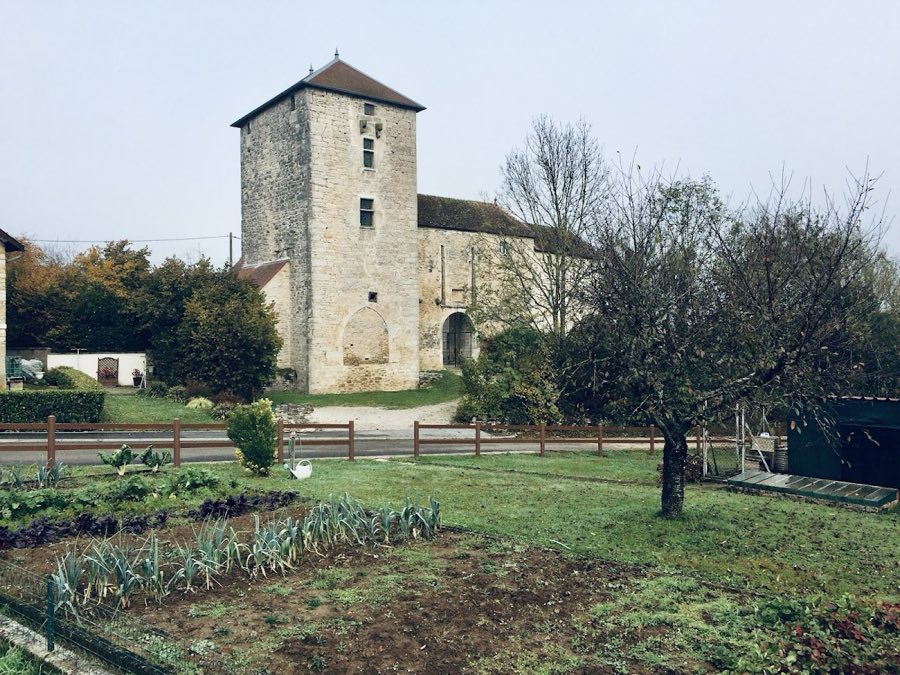
Château de Cordiron, Burgille
Burgille, France
ChâteauRestored13th century
No. 15254
No. 15254 · 47.289 N, 5.773 E
Quick summary
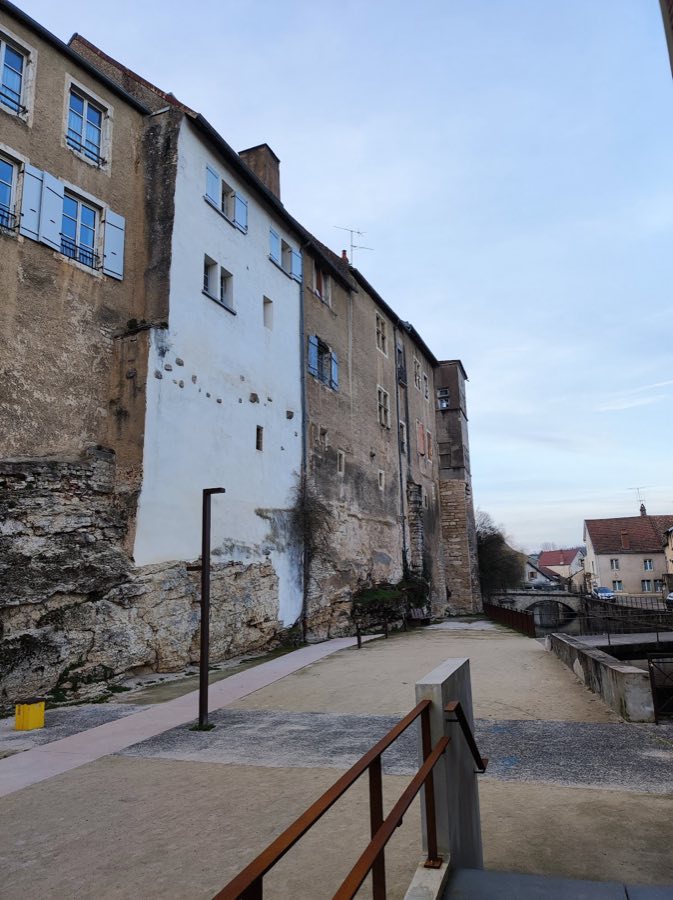
Château de Marnay is a château in France with origins associated with the 11th century.
See all castles in FranceChâteau de Marnay stands in the commune of Marnay, France, and was constructed within the political framework of the medieval Holy Roman Empire.
The castle is first recorded in the mid‑11th century, when in 1044 Emperor Henry III granted Marnay and the lands between the Ognon and the Saône to the archbishop of Besançon. From these early years the site functioned as a feudal stronghold guarding the road that linked Langres to Besançon.
During the high medieval period the seigneurie passed into the hands of the Bourgogne‑Auxonne‑Chalon line after purchase by Count Étienne I. Members of that family reinforced the place substantially; Étienne II died at the château on 6 March 1241. Over time the dynasty enlarged the defenses, adding many small towers, digging deep defensive ditches, and creating a doubled outer enceinte to strengthen the first line of fortification.
Ownership then moved through several noble houses. Béatrice d’Auxonne took up residence there. The Joinville family, including Simon I and Simon II, held the lordship in turn, followed by the houses of Montfaucon‑Montbéliard and Neufchâtel‑Montaigu. The seigneurie was acquired in 1512 by Laurent de Gorrevod, who from about 1520 undertook a program of rebuilding. Gorrevod restored the seigneurial chapel and carried out broader modernization of the fabric; it is possible that artists involved with the contemporary Monastère royal de Brou also worked at Marnay.
The château experienced repeated military violence. Troops of Duke Odo IV of Burgundy captured it in 1336. In the spring of 1477 forces acting for King Louis XI devastated the site. In May 1674 French troops under Marshal de Navailles occupied the castle during operations around Besançon. Louis XIV stayed at the château that month during the siege of Besançon and ordered the dismantling of the castle’s defenses; the king then had the château destroyed as part of measures taken after the conquest of Franche‑Comté.
The Treaty of Nijmegen (1678–1679) confirmed Franche‑Comté’s annexation to France and with it the castle’s transition from the Empire to the French crown. In the 18th century the Bauffremont‑Scey family came to possess the property. Alexandre, first duke of Bauffremont, sold the estate in 1799, and following the French Revolution the former seigneurie was divided among several owners. From 6 December 2002 several surviving portions of the château have been placed under legal protection as historic monuments.
The site occupies a commanding position overlooking the valley of the Ognon and developed as a fortified complex through successive building campaigns between the 13th and the 17th centuries. Its defensive plan once included numerous small towers around the circuit of the walls, deep external ditches, and a doubled outer enclosure added to strengthen the original fortification.
Elements associated with those defensive phases survive in fragmentary and consolidated form. The base of a round tower remains and is recorded as part of the preserved fabric; it belongs to the castle’s defensive circuits that were expanded during medieval and early modern phases. A spiral, or turning, staircase survives in situ and provides vertical circulation within a surviving tower mass. These features reflect the castle’s plan as a multilevel stronghold adapted and enlarged over centuries.
Built components of the domestic complex also survive. The north wing is preserved and forms a clear part of the later château layout, while the east wing’s façades and roofs, including its entire northern section but not the chapel, stand as restored or conserved elements from the post‑medieval rebuilding. The seigneurial chapel itself was repaired in the early 16th century under Laurent de Gorrevod, although the chapel’s north part is excluded from a number of the listed protections.
The former entrance and service buildings retain visible fabric. The gatehouse retains its façades and roofs and marks the place where access was controlled, and the concierge building adjacent to the entrance survives as part of the service arrangement for the estate. An archives pavilion and its tower remain and are specifically recognized among the protected sections, indicating administrative use within the château complex.
The dismantling ordered in 1674 and later destruction altered the ensemble, but the portions now inscribed as historic monuments include the round tower base, the turning staircase, the north wing, the east wing façades and roofs (north part excluded for the chapel), the gatehouse façades and roofs, the concierge building, and the archives pavilion with its tower. These preserved components stand today as tangible witnesses to the castle’s long sequence of construction, repair, military action, and adaptation.
No. 37813
No. 80665

No. 69133
No. 16980
Comments
Comments for Château de Marnay will require a verified account before posting.
We'll send a verification link before your first comment is published.