No. 83907
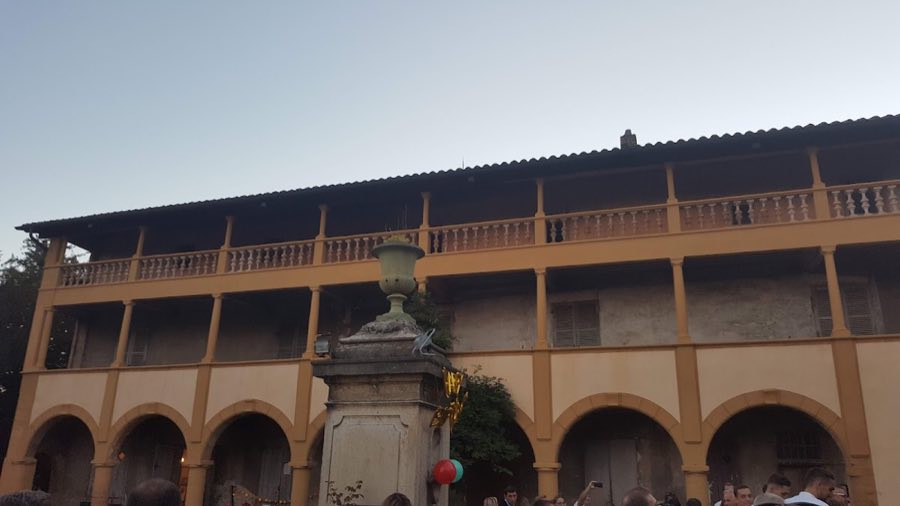
Château du Petit Perron
France
ChâteauRuin12th century
No. 78502
No. 78502 · 45.700 N, 4.810 E
Quick summary
Château du Grand Perron is a château in France with origins associated with the 12th century.
See all castles in FranceChâteau du Grand Perron stands in the commune of Pierre-Bénite, France, and was constructed during the Middle Ages.
The site began as an old fortress that took part in the defence of Lyon. The earliest recorded owner is Robert Ruffi, a canon of Lyon who died in 1183. Over the centuries the estate changed hands among clerical and lay proprietors and acquired a residential character alongside its original defensive role.
In the early 1500s the property belonged to Antoine Besson, a canon of Saint-Paul, and remained with his family until 1521. In 1518 King François I granted Claude Besson, a relative, permission to strengthen or fortify the house. Two years later, in 1521, Guidobaldo Gondi (1486–1560) and Marie‑Catherine Pierrevive bought the domain and had the residence rebuilt; Guidobaldo later took the name Antoine de Gondi, seigneur du Perron, and Marie‑Catherine is recorded as governess to the children of France. Queen Catherine de Médicis visited the estate on three occasions, the last visit taking place in 1564.
Ownership passed again in 1555 when Albisse d’Elbène acquired the château; his son Alexandre later disposed of the property. In 1582 Antoine Camus, baron de Riverie, became owner; his son Marc Antoine, who served as a prévôt des marchands (chief municipal magistrate), and then Marc Antoine’s son Maurice succeeded to the fief before later heirs sold it. Lambert de Pontsaintpierre purchased the domain in 1675 and his family kept it until they sold the property for 110,000 livres to the administrators of the Aumônerie de la Charité. In 1762 Jean Pierre Giraud, a resident of Lyon, made that same administration, the Hospices, his universal heir.
By the time of the French Revolution the château was already in poor condition and was converted into a relief house and a home for orphans. In the twentieth century the buildings served social and health needs: in 1956 they housed displaced persons and Hungarian refugees, and in 1957 they were used to care for overflow patients during the Asian influenza epidemic. The estate and the neighbouring Longchêne plot now stand separated by a broad valley and together form the core of the Centre hospitalier Lyon Sud. The Renaissance façade and the roof of the central block received formal historic protection on 31 December 1979, and on the same date the remains of the façades and roofs at the inner angle and the main staircase were placed under historic listing; another record notes protection beginning in 1971.
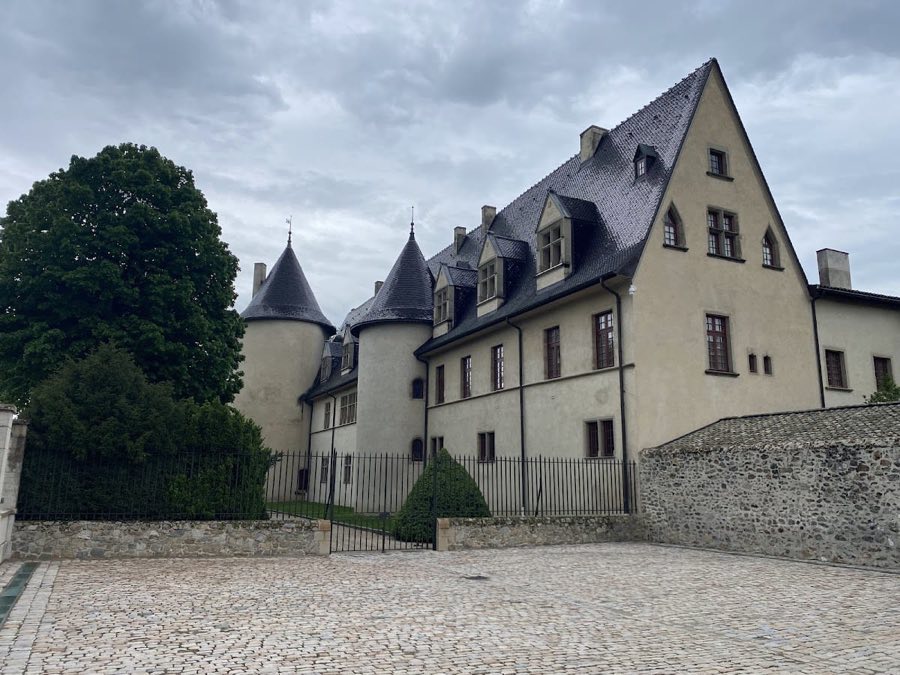
The rebuilt complex of the early 1500s presents a U-shaped layout, with a central block and two returning wings. The western wing is terminated by two square pavilions, and the house rises over a ground floor with two upper storeys. The ensemble shows the scale and domestic arrangement established when the residence was reconstructed in the sixteenth century.
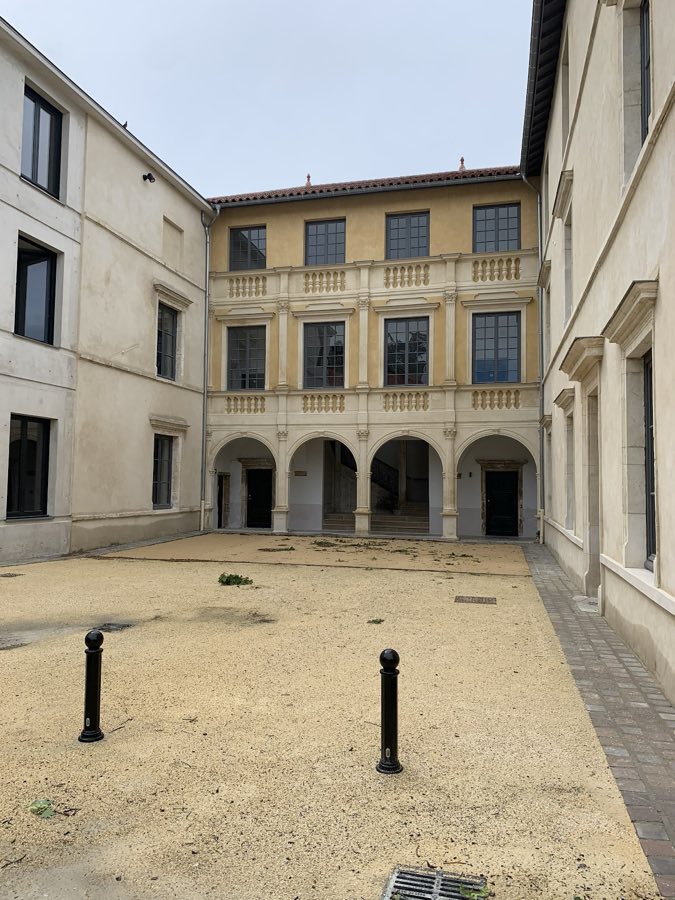
On the north face of the central block a formal porch with Corinthian-style columns opens onto a courtyard in front of the principal stair. This porch functions as a vestibule and is composed of four large round-arched openings set in straight jambs; within those openings columns are partially embedded into the wall to about one third of their diameter. The ground-floor openings of the front have been blocked up, and the eastern wing was taken down for safety reasons. The exterior façades have been restored and converted into housing units, while the inner return staircase and the former gallery remain accessible within the compound.
Inside the principal block a monumental fireplace from the sixteenth-century fitting survives in documentation: two Doric columns support a broad mantel moulded across its width and decorated at its ends with the Gondi family arms. The stone hood of this hearth is built of large squared blocks and rises to the ceiling; this fireplace ensemble has been relocated from its original setting. The private chapel dating from the sixteenth century was later demolished and replaced by a more recent structure. Heraldic emblems recorded on the site include the arms of the families Ruffi, Gondi, Elbène (Del Bene), Camus de Riverie, and Pontsaintpierre. The château is not open for public visits.
No. 83907

No. 28326
No. 54531
No. 23953
Comments
Comments for Château du Grand Perron will require a verified account before posting.
We'll send a verification link before your first comment is published.