No. 96610
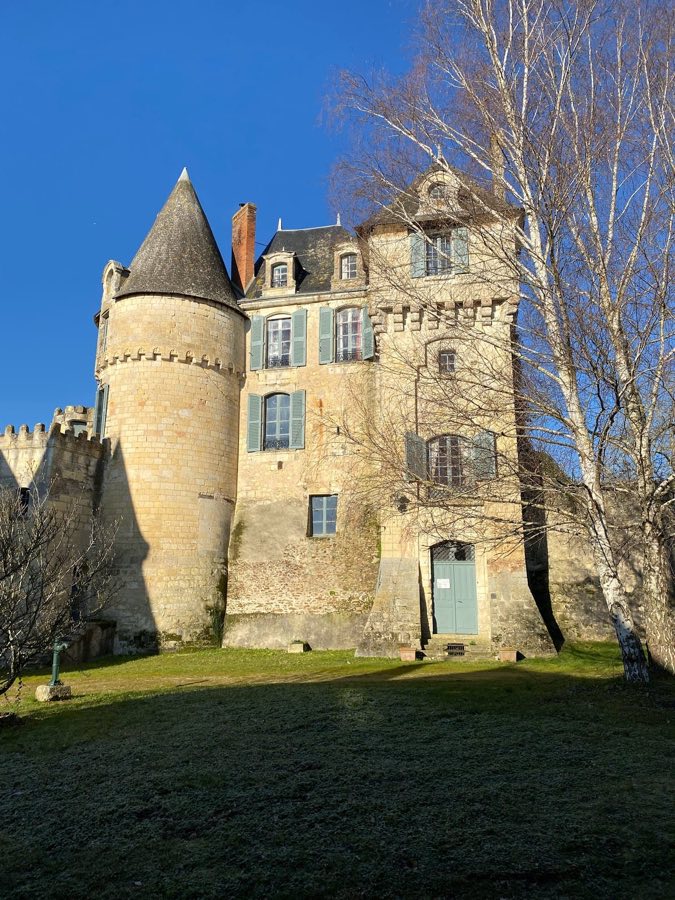
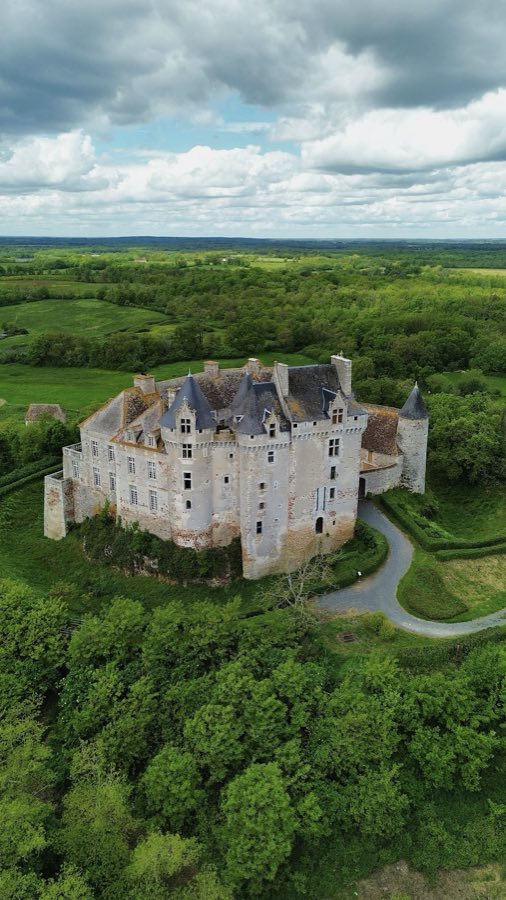
Château de La Celle-Guenand
France
ChâteauRestored10th century
No. 18706
Château · France
No. 18706 · 46.922 N, 0.803 E
Quick summary
Château du Grand-Pressigny is a château in France with origins associated with the 8th century.
See all castles in FranceChâteau du Grand-Pressigny stands in the commune of Le Grand-Pressigny, France, and was erected by medieval French lords.
The locality appears in written records as Presciniacensis in the sixth century in the Vita sancti Nicetii by Gregory of Tours, when it formed part of the vicairie of Abilly. From at least the late eighth century the chapter of canons of Saint‑Martin of Tours held the place, with documentary notes of ownership in 774, 862 and 930 recording a chapel, a seigneurial domain and numerous dependencies.
The first stone fortress was raised in the twelfth century. Guillaume de Pressigny, whose name is attested in 1190, is the first known lord and is thought to have commissioned the initial masonry castle. On 4 August 1202 King John of England ordered the seneschal of Poitou to seize Guillaume’s lands and to raze his fortresses; the record of that order states explicitly that it is unknown whether the command was carried out. In 1204 Guillaume received the rank of chevalier banneret from King Philip Augustus.
During the reign of King Louis IX followers of the Pressigny line undertook substantial strengthening of the site as part of a wider regional program of fortification, work that may have been coordinated with royal technical and financial support. The keep’s summit acquired a ring of machicolations in the late fourteenth century. Guillaume IV of Pressigny died in 1300 and the castle passed by alliance to the Craon family in 1301; a member of that house, Guillaume III de Craon, rendered homage for the barony of Pressigny in 1392, the first explicit use of the baronial title.
Ownership changed several times from the fifteenth century onward. The Chabot family held the property in the early 1400s, Bertrand de Beauvau about 1454, and René de Prie in 1501. After 1523 the estate passed through a series of hands including the Savoie de Villars, La Baume, d’Averton, Brulart de Sillery, Bertrand, Masson de Maison‑Rouge and finally Alexandre Gilbert de Voisins. In the mid‑sixteenth century the castle was transformed into a Renaissance residence, with Honorat II de Savoie, marquis de Villars, credited with an Italianate conversion around 1550.
The property was confiscated during the upheavals of 1789 and Alexandre Gilbert de Voisins was guillotined in 1793. In the twentieth century the château’s Renaissance gallery became the home of the departmental Museum of Prehistory in 1955, an institution for which another account gives an origin date of 1910. A contemporary museum building designed by Bernd Hoge was completed in September 2009. The medieval keep partially collapsed on the morning of 6 February 1988. The site has received multiple historic‑monument protections at different times, including formal classifications and inscriptions for castle remains, a well pavilion, a carved grotto entrance, the keep and a nymphaeum of the former park.
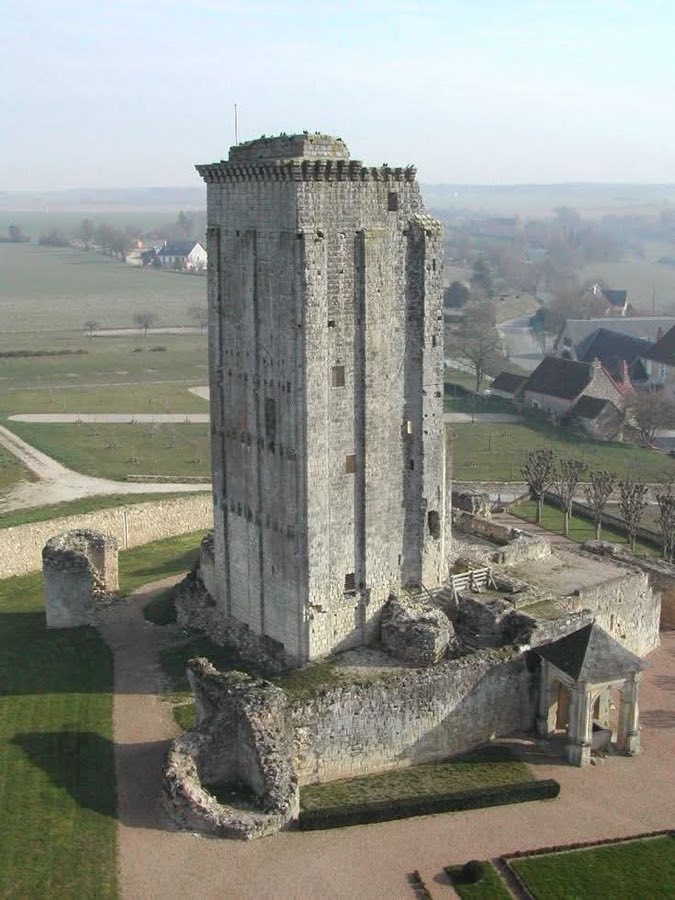
The castle occupies the tip of a rocky spur above the village, looking down the valley of the Claise near where that river meets the Aigronne. The standing complex presents two main chronological components set within surviving defensive earthworks: a medieval keep and an attached residential range of Renaissance date, together with fragments of the surrounding curtain wall and towers that once enclosed the stronghold.
The earliest and most imposing element is a square Romanesque keep built in the late twelfth century under Guillaume I of Pressigny. Erected in stone, the tower rises to roughly thirty‑four to thirty‑five metres and originally provided vertical defense and command of the ridge. Its upper levels were reached by a very narrow spiral stair, and in the later medieval period the summit was fitted with a crown of machicolations, horizontal openings that allowed defenders to attack assailants at the base of the towers. The keep survives in ruined form and suffered a partial collapse on 6 February 1988. The keep has been formally protected as a historic monument.
Remnants of the fourteenth‑century outer defenses remain in place around the core of the site. A stone curtain wall with rounded defensive towers and a fortified gateway represent part of the later medieval envelope that strengthened the castle’s flanks and approaches. These enclosures are preserved as fragments of the once continuous defensive circuit and they bear the character of the fifteenth century fortification program that affected the estate.
The central residential range belongs to the sixteenth century and reflects an Italianate conversion made in the mid‑1500s under the Savoie de Villars family. A main living wing, which may have been begun about 1520 and then altered around 1560, occupies the fortress interior and incorporates domestic features from the Renaissance period. Renovations of the 1560 phase included work on the so‑called Vironne tower, fitted with waterspouts and topped by a dome, and the erection of an aedicule over a well built at the foot of the keep. Architectural traces also point to a range between the principal court and the service court that combined a ground‑floor portico with an upper gallery. The Renaissance range remains standing and contains the gallery that has housed the Museum of Prehistory since the mid‑twentieth century.
The former park and garden preserve later decorative and prehistoric elements. A nymphaeum attributed to a member of the Savoie family lies within the grounds and is among features granted protection at the end of the twentieth century. In the garden a polished stone slab known as the Coeur de Birette stands as a prehistoric work surface for finishing flint blades. The museum attached to the château holds archaeological and small paleontological collections, with material reaching from the Middle Paleolithic, around 100,000 years before present, to the Bronze Age, which the record gives as between 1,400 and 1,800 years before our era.
No. 96610
No. 94784
No. 39842
No. 97113
Comments
Comments for Château du Grand-Pressigny will require a verified account before posting.
We'll send a verification link before your first comment is published.