No. 39842
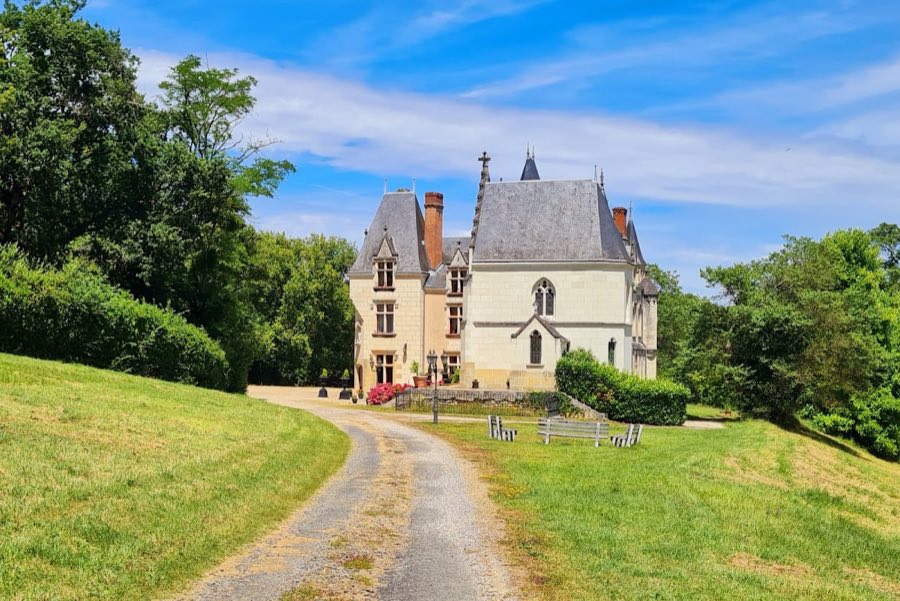
Château de Brou
France
ChâteauRestoredFor rent15th century
No. 94784
No. 94784 · 46.949 N, 0.429 E
Quick summary
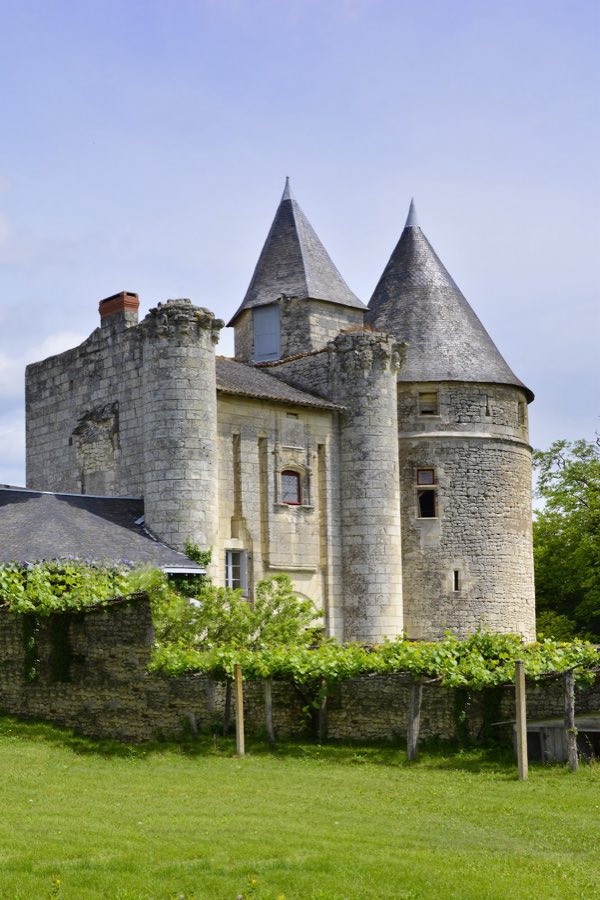
Château du Chillou is a château in France with origins associated with the 14th century.
See all castles in FranceThe Château du Chillou stands in Jaulnay, France, and was established within the medieval feudal structures of France.
The seigneurial line attached to Chillou is first recorded in the early 14th century with Hardouin Maumoine, a mounted knight active around 1329. In the late medieval period Martine-Jeanne Maumoine, who made her will in March 1424, linked Chillou by marriage to several local families when she wed Émery de la Grézille, then Guillaume I Le Roy, and later Macé de Gémages. Descendants from her marriage to Guillaume I included Guillaume II Le Roy.
Guillaume II, who married Jeanne de Dreux-Bossart in 1398, fathered Guillaume III Le Roy (1410–1479). Guillaume III held the lordship of Chillou and of Chavigny, served as chamberlain to Charles of Maine, and in 1436 commanded the castle at Montlhéry. He married Françoise, daughter of Ambroise de Fontenay, in 1442.
A later generation produced René Le Roy (1450–1512), who bore the titles of Chavigny and la Baussonnière and acted as counselor-chamberlain to kings Louis XI and Charles VIII; he wed Madeleine Gouffier in 1481. Members of the Le Roy line continued to hold prominent royal and ecclesiastical posts: Gilles Le Roy, who died in 1539, served as the king’s bread officer in 1529; François Le Roy, who died in October 1515, was Grand Almoner of France in 1514–1515; Jacques Le Roy, who died in 1572, became archbishop of Bourges and held multiple abbeys; and another Guillaume Le Roy was bishop of Maguelonne in 1487–1488. Guyon Le Roy, living around 1455–1528, appears as vice-admiral of France, credited with constructing Havre-de‑Grâce, and is named as lord of Chillou and Mondon.
Through the female line Chillou passed into the du Plessis de Richelieu family when Anne Le Roy, styled lady of Chillou, married François III du Plessis de Richelieu in 1506. Their descendants who inherited the estate include Louis I du Plessis (d. 1551), Louis II du Plessis (d. 1555), François IV du Plessis de Richelieu (1548–1590), and Henri du Plessis de Richelieu (active c. 1580–1619). Armand‑Jean du Plessis, later known as Cardinal de Richelieu (1585–1642), was styled the marquis of Chillou in 1597 and is recorded as heir to the lordship in 1619. The Chillou holding was brought into the duchy and peerage of Richelieu when that title was created in 1631, and later dukes named in connection with the estate include Armand‑Jean de Vignerot du Plessis (1629–1715), Louis‑François‑Armand de Vignerot du Plessis (1696–1788), and Louis‑Antoine‑Sophie de Vignerot du Plessis (1737–1791).
In the 20th century the château together with its moats received formal heritage protection when both elements were entered on the register of historic monuments on 14 November 1951.
The site is recorded as a feudal fortress arranged with surrounding moats. The surviving complex is identified in official protection records as the castle itself and the water-filled defensive ditches surrounding it, the latter explicitly mentioned as part of the protected ensemble.
The castle is documented as a medieval fortified residence that functioned as the seigneurial seat for the families identified above. The building is therefore associated with military and administrative uses across the 15th and 16th centuries, reflecting the offices and commands held by its owners. The structure and its immediate setting were important enough to be incorporated into a ducal estate in the 17th century and to receive heritage listing in 1951. The official designation records the château as an archaeological and historical element; the entry confirms that the building and its grounds survive in a form that warranted protection.
The moats, named among the listed components, are recognized as the estate’s defensive water channels. They are recorded together with the castle in the monument listing of 14 November 1951, showing that these earthworks and channels remain an integral and documented part of the site’s layout. The official protection treats the moats and the fortress as a single historic ensemble.
No. 39842

No. 26624
No. 18706
No. 49723
Comments
Comments for Château du Chillou will require a verified account before posting.
We'll send a verification link before your first comment is published.