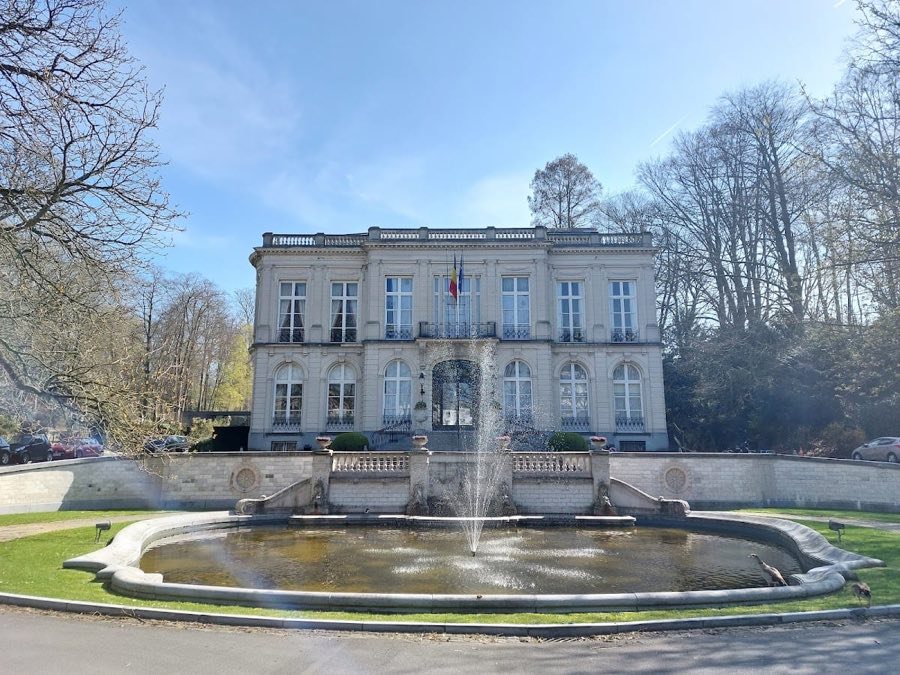
No. 54400
Château Sainte-Anne
Belgium
ChâteauIntact19th century
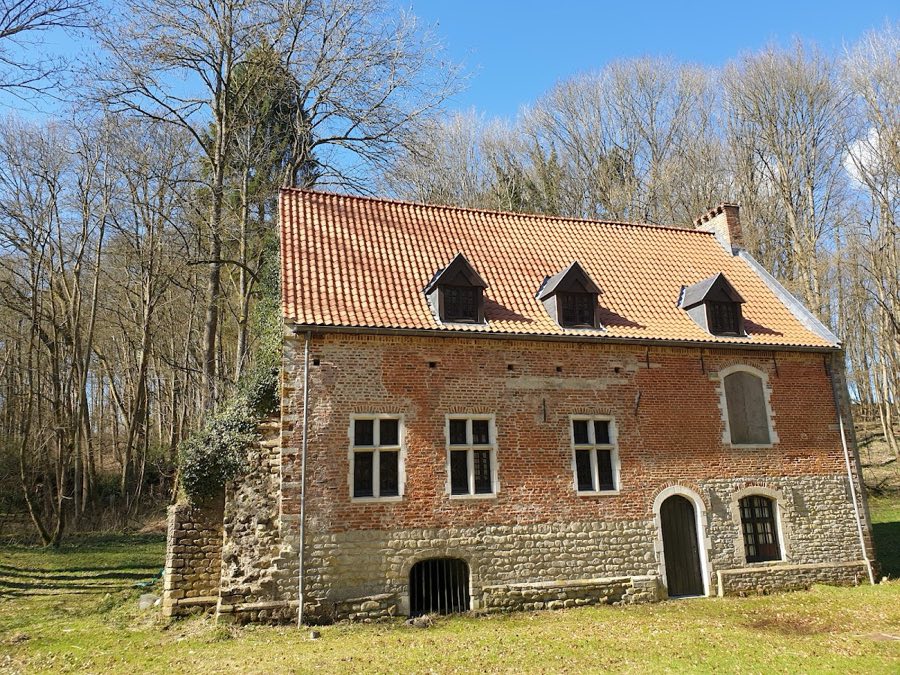
No. 82687
Château · Belgium
No. 82687 · 50.806 N, 4.446 E
Quick summary
Château of Trois-Fontaines is a château in Belgium with origins associated with the 14th century.
See all castles in BelgiumThe Château of Trois-Fontaines in Auderghem, Belgium, is a medieval manor built and used by authorities of the Duchy of Brabant from the fourteenth century onward, with Gothic-period elements visible in later fabric. It served as the residence of the ducal gruyer, the forest judge and gamekeeper who protected the sovereign’s hunts, and it functioned for centuries as an official seat of forest administration and as a detention place for persons subject to the Forest Tribunal.
A modest religious presence was part of the estate’s early life. A hermitage is mentioned in 1321, and the site appears under the name Trois-Fontaines, also recorded as Dryen Borren or Drie Borne, in 1329. During the mid-fourteenth century Duke John III had a tower and a square erected at the manor and in 1355 established a chaplaincy in the castle chapel dedicated to the Virgin Mary and Saint Catherine. The chaplain was required to live in a house next to the castle wall, celebrated Mass four times a week, and received a fixed monetary and in-kind endowment that included old écus, Florentine small florins, quantities of rye, measures of wood and coal, and pasture rights for four head of cattle or four mares.
From the later fourteenth century the château’s role as a place of confinement becomes clear. Outsiders were held there from at least 1373, when Arnoul Van Redingen was imprisoned, and the site detained poachers, wood gatherers, robbers and political prisoners under the jurisdiction of the Forest Tribunal. In 1446 Philip the Good attached the chaplaincy to the conventual table of the Church of Saint James on Coudenberg to make good losses suffered by that community when coin values changed, and he ordered that Mass be celebrated at the duke’s Boitsfort chapel while the castle’s chapel lay in ruin.
Warfare and religious conflict altered the estate’s condition in the sixteenth century. The domain suffered looting and destruction during the wars of religion, and by the rule of King Philip II the prison was described as desolate, burned and ruinous. On 13 December 1585 the forest sergeant Philippe De Meestere received permission to erect a temporary shelter on the site and to watch over remaining building materials for future reuse.
Administrative revival and maintenance took place in the later seventeenth century. By letters patent of 6 August 1680 the gruyer Madoets was confirmed as concierge and castellan of Trois-Fontaines and obliged to keep the site in repair, a status confirmed by the Council of Finances on 25 August 1680. A bakehouse was added to the domain in 1659, indicating continued domestic use of the estate during this period.
The château’s official functions declined at the end of the eighteenth century. On 6 May 1786 the Archdukes Albert and Maria Christina ordered prisoners moved to the Laeken gate prisons in Brussels. The last warden, Charles Théodore de l’Escaille, left the post and the office was suppressed under Emperor Joseph II, with suppression dated to 1793, after which Trois-Fontaines was abandoned and fell into ruin.
In the nineteenth century the ruined estate passed into private hands and agricultural use. In 1822 the property entered the portfolio of the Société générale, which sold the remains and the site became a farm. Recorded private owners include Josse Devisser in 1832, the Marnix family in 1845 and the Vinck family from 1882. François Sombrijn owned the estate from 1901 until 1906, when the Belgian State acquired it to protect the site and housed workers there.
Twentieth-century stewardship brought conservation measures and changing management. Local custodians carried out restorations and organised exhibitions during the 1970s, and from 1973 the property was managed by the regional environmental institute. The remains were legally protected as a historic monument by royal decree on 19 November 1986, and ownership passed to the Brussels-Capital Region in 1991. Since March 2014 the Buildings Agency of the Brussels-Capital Region has had responsibility for the property. The site has been in disuse since 2008.
The surviving footprint of the château sits at the edge of the Sonian Forest, beside the Watermaelbeek stream, and reflects a fortified manor clustered around a tower and small domestic ranges. In the sixteenth century the complex comprised a stone tower and two low dwelling blocks set on stone foundations and arranged in an L-shaped plan at its maximum extent. Access then was across a single-arch bridge and a drawbridge, and a water-filled moat surrounded the position on every side.
The tower was built of stone and retained a pointed entrance arch, described as an ogival arch (a pointed arch). Small square windows pierced the masonry and the roof was finished with a spire. Only the tower’s foundations survive intact at ground level, while the adjacent domestic block largely survives in the form it acquired in rebuilding at the end of the sixteenth century. The rear façade and the great hall belong to fifteenth-century construction phases and a large Gothic fireplace remains in place in the standing building.
Below ground the basement that once housed dungeons survives, offering a direct link to the château’s long use as a prison. The interior spaces display the monumental Gothic hearth and the vaulted basement areas; these features were reused over time as the house was repaired and altered. A bakehouse constructed in 1659 was later attached to the domain, showing continued service and household activity into the early modern period.
Today the château stands as a ruin. Stone foundations, the rear wall, the great hall with its Gothic fireplace and the cellarled dungeons are preserved in situ, while the tower survives principally at foundation level. The ruins are protected as a classified historic monument, reflecting their long sequence of medieval and early modern use.
No. 54400
No. 47252
No. 33004
No. 28358
Comments
Comments for Château of Trois-Fontaines will require a verified account before posting.
We'll send a verification link before your first comment is published.