No. 54400
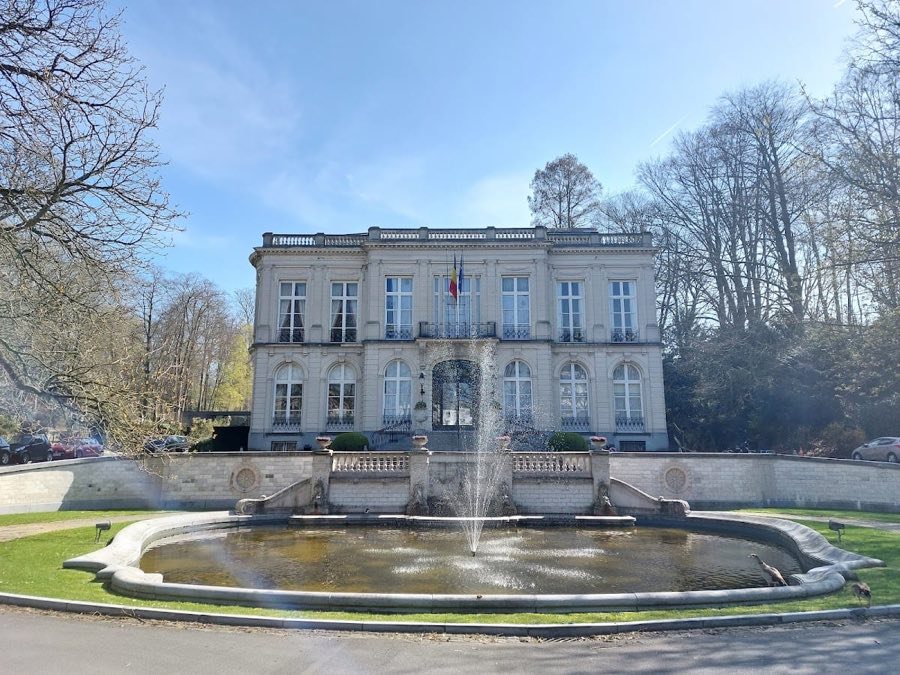
Château Sainte-Anne
Belgium
ChâteauIntact19th century
No. 47252
Château · Belgium
No. 47252 · 50.820 N, 4.434 E
For events
Val Duchesse is marked as a château or castle venue lead. Capacity, indoor/outdoor spaces, catering rules, and accommodation options are published only after public verification.
Event types: Private events, Cultural gatherings, Filming and photography
Quick summary
Val Duchesse is a château in Belgium with origins associated with the 13th century.
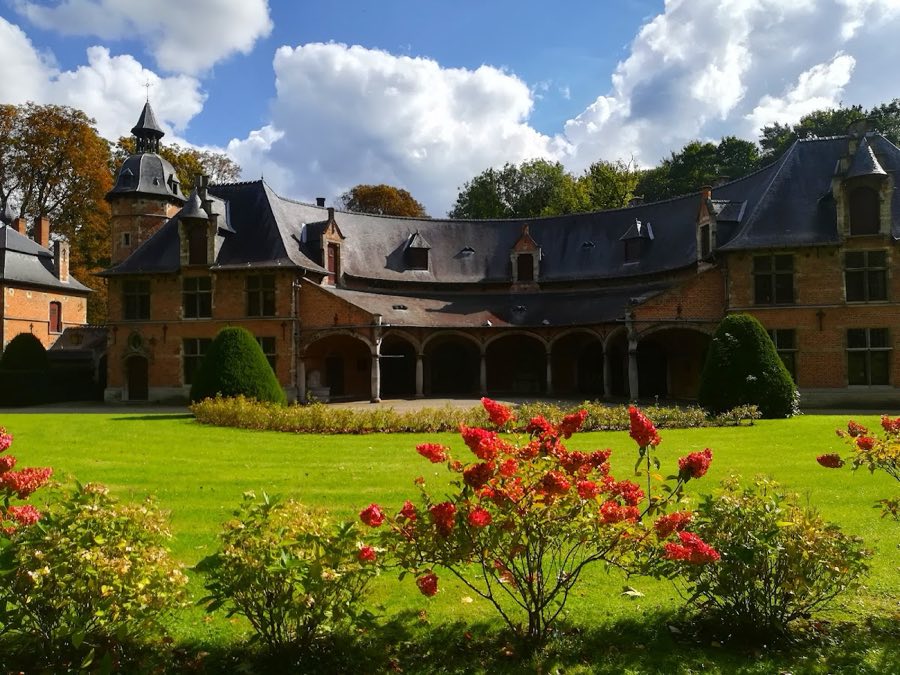
See all castles in BelgiumThe Château of Val Duchesse in Auderghem, Belgium began as a Dominican women’s priory founded in 1262 by Adelaide of Burgundy. Established in the 13th century as a community following the rule of Saint Dominic, the site took its name from the duchess who founded it and became notable as the first convent for women in the Low Countries to follow that order. Over later centuries the place acquired new buildings and changing roles, and in the 20th century it came to host important national and international conferences.
Medieval and early modern developments centered on the religious community and its monuments. Adelaide’s heart was placed in a funerary mausoleum on the grounds, a structure that later disappeared. In 1650 an enclosing wall was built around the priory’s group of buildings to provide protection. During the reign of Maria Theresa of Austria the complex was enlarged, and in 1760 a prioress’s suite was added in a late 18th-century French classical idiom known as Louis XVI style.
The residential seat for the head of the community took its present form in 1780 when the château now standing was constructed as the prioress’s house. Religious life continued at Val Duchesse until the period of French domination of the Netherlands at the end of the 18th century, after which church property was sold as “black goods” and the estate passed through several private owners. By the opening years of the 20th century the monastic complex had largely vanished, leaving only one wing, part of the enclosing wall, and a few agricultural buildings. In the following years the property was restored and enlarged by its private owner, who in 1915 commissioned rebuilding of farm and stable buildings, and in 1917 the grounds hosted a charity fête organised on behalf of war orphans.
In 1930 the owner placed the estate in the Belgian Royal Trust so it could be used for receiving important visitors to Brussels. Ownership remains with the Royal Trust while the Federal Public Service for Foreign Affairs carries out management and protocol functions. From the end of the Second World War the château served repeatedly as a meeting place for diplomatic negotiations and government business. Between 26 June 1956 and 24 March 1957 it hosted the intergovernmental conference chaired by Paul‑Henri Spaak that prepared the Treaties of Rome of 1957, agreements that established the European Economic Community and Euratom in 1958. On 16 January 1958 the first formal meeting of the Hallstein Commission, the initial European Commission under Walter Hallstein, was held at the estate.
Val Duchesse has also been a venue for high-level Belgian political discussions. Théo Lefèvre and Paul‑Henri Spaak worked at the château on a language compromise that produced the language laws of 1963, which regulated language use in public administration and fixed the administrative arrangement of the Brussels arrondissement. Prime Minister Jean‑Luc Dehaene conducted many negotiation sessions there in the 1990s and, from 1992 onward, favoured the nearby Saint-Anne priory for his weekly Friday ministerial council. Other national political uses include formateur Yves Leterme beginning discussions at Val Duchesse on 16 July 2007, and formateur Bart De Wever arranging final talks there in January 2025 before having to relocate because the building’s heating failed. International meetings held on the grounds include a Western European Union conference on 23–25 April 1990 that agreed an accession sequence for former Warsaw Pact states, the Belgo‑British Conference in 2002 and 2006, and a Bilderberg meeting on 12 November 2009 where Herman Van Rompuy set out his vision for Europe.
The estate occupies a wooded valley of the Woluwe stream at the boundary between Auderghem and Sint-Pieters-Woluwe, beside the Sonian Forest, and today comprises the château and its adjoining gardens. A protective enclosing wall was erected around the priory complex in 1650; by the start of the 20th century sections of that barrier still stood and later formed part of the restored landscape. The main house visible now was raised in 1780 as the residence of the prioress, and a prioress’s suite added in 1760 reflects the late 18th-century French classical taste known as Louis XVI style (late 18th-century classical French design).
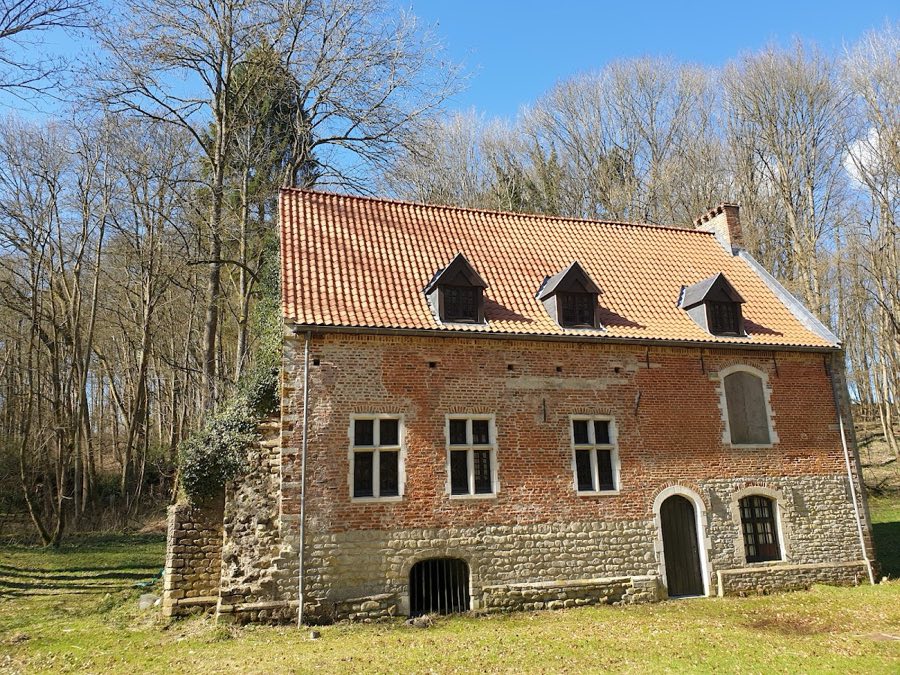
Rising on a hill within the grounds is the Saint‑Anne Chapel, a structure described as Romanesque (rounded-arch medieval style), and it is noted for having kept its original external appearance. The tomb that once held Adelaide’s heart was recorded on the site but the funerary mausoleum has disappeared. When the estate passed into private hands in the early 20th century only a single wing of the castle, a fragment of the enclosing wall, and several farm buildings remained; those elements were the focus of restoration and enlargement carried out by the owner at that time. A building frequently taken to be the old priory is in fact the result of the 1915 reconstruction of an earlier farm and stable complex, work undertaken to renew the estate’s agricultural buildings and later often mistaken for monastic fabric.
No. 54400
No. 82687
No. 28358
No. 40390
Comments
Comments for Val Duchesse will require a verified account before posting.
We'll send a verification link before your first comment is published.