No. 40393
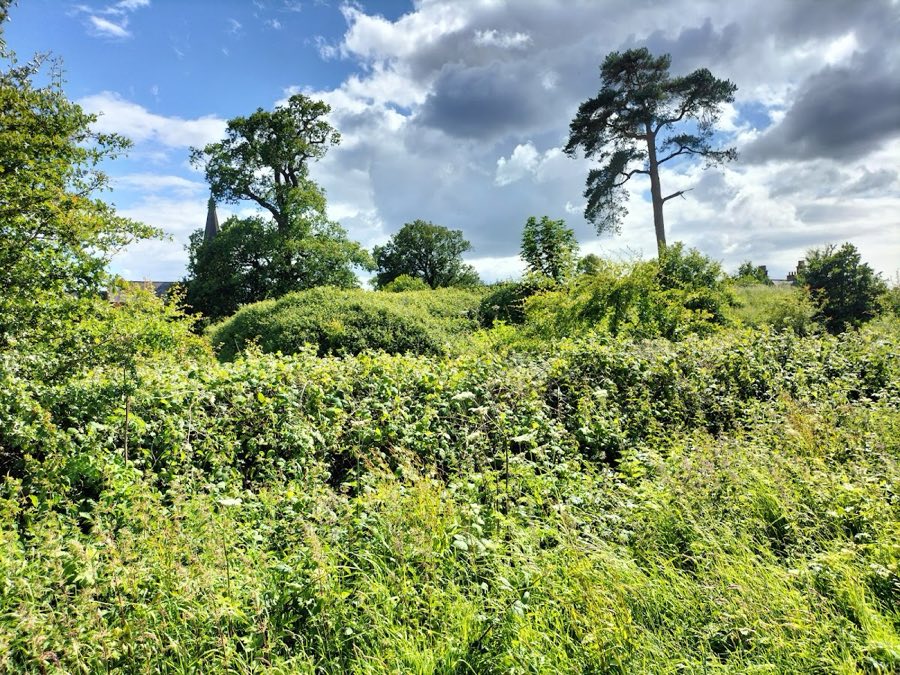
Aldford Castle
United Kingdom
CastleRuin12th century
No. 85855
Castle · United Kingdom
No. 85855 · 53.185 N, 2.892 W
Quick summary
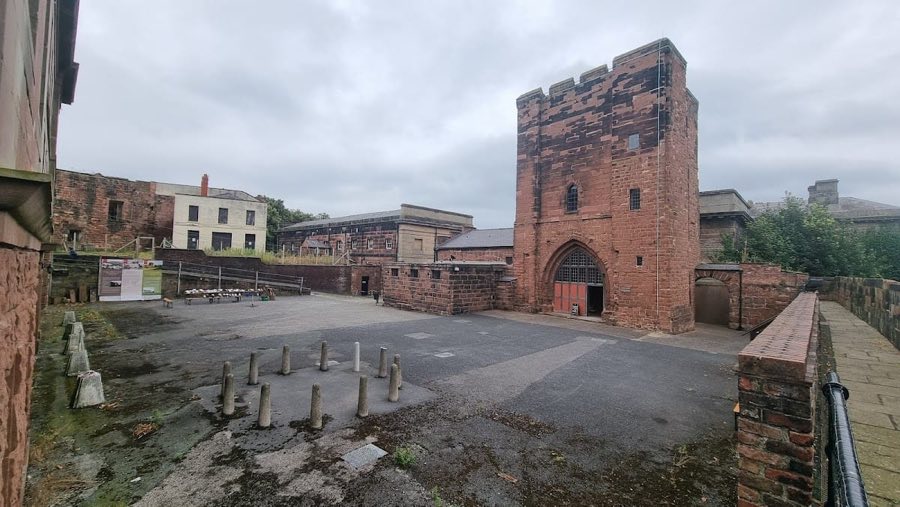
Chester Castle is a castle in United Kingdom with origins associated with the 12th century.
See all castles in United KingdomChester Castle is located in the city of Chester, England. It was originally constructed by the Normans shortly after their conquest of England.
The site was first established in 1070 by Hugh d’Avranches, the first Earl of Chester. At that time, the castle was likely built on the remains of an earlier Saxon fortification. The initial design featured a motte-and-bailey layout, a common form of early medieval fortification consisting of a raised earthwork (motte) topped by a wooden tower, with an enclosed courtyard (bailey). During the 12th century, this wooden structure was replaced with stone, including the construction of the Agricola Tower and the chapel dedicated to St Mary de Castro.
In the 13th century, Chester Castle underwent significant expansion under the reign of King Henry III. Outer defensive walls were added around the bailey, and the original gateway within the Agricola Tower was closed off. Residential buildings, such as a Great Hall, were erected along the southern side of the inner bailey to provide improved accommodation. Later, under Edward I, new defenses were introduced including a gateway fortified with two half-drum towers and a drawbridge spanning an eight-meter-deep moat. Along with these military enhancements, royal living quarters, an additional chapel, and stables were constructed.
Throughout its history, the castle’s crypt in the Agricola Tower functioned as a prison for notable prisoners such as King Richard II, Eleanor Cobham, and Andrew de Moray. During the Wars of the Roses, John Neville was held captive here by Lancastrian forces before being freed after a Yorkist victory.
During the English Civil War, Chester Castle remained under Royalist control and withstood several attacks and a lengthy siege from 1643 to 1646. After the war, the castle adapted to a range of civic and administrative roles, serving as a prison, court, and tax office. In 1687, King James II attended mass in the castle’s chapel, reflecting its continuing religious significance. Notably, in 1696, the city’s mint was established beside the Half Moon Tower, overseen by the astronomer Edmund Halley.
The castle’s military role persisted into the 18th century, with a gun emplacement added during the 1745 Jacobite rising. However, by the late 1700s, the condition of the castle’s prison facilities had deteriorated. Reformer John Howard criticized the state of the jail, which prompted the commissioning of the architect Thomas Harrison to design a modern prison. Completed in 1792, this new prison gained praise as one of England’s finest.
Thomas Harrison’s work extended beyond the prison. Between 1788 and 1822, he remodeled the medieval Shire Hall in a neoclassical style, introduced barracks and an armory, and designed a grand entrance known as the Propylaeum on Grosvenor Road. Following military reforms in the 19th century, the castle became a depot and remained home to the Cheshire Regiment until 1939.
In the 20th century, the crypt and chapel within the Agricola Tower were restored and reconsecrated in 1925 for use by the regiment. Further restoration of the chapel was completed in 1939. Today, the entire castle complex is managed by the local council on behalf of English Heritage.
Chester Castle occupies an elevated site at the southwestern edge of Chester’s city walls, overlooking the River Dee. The medieval remains define a strong defensive layout with stone walls surrounding the castle’s inner and outer baileys.
The Agricola Tower, a major feature dating from the 12th century, is a three-storey building constructed of carefully worked sandstone blocks known as ashlar. It has a metal roof and was originally designed for both defense and residence. The ground floor once contained a gateway, now blocked, while a stair turret is located to the tower’s right side. This tower encloses the royal chapel of St Mary de Castro on its first floor. The chapel retains distinctive Norman architectural details and is notable for its ceiling decorated with frescoes from the early 13th century. These murals portray scenes such as the Visitation and various miracles attributed to the Virgin Mary. These frescoes were uncovered during conservation efforts in the 1990s.
Surrounding the castle are curtain walls of medieval origin, particularly notable along the south and west sides. These include several prominent towers such as the Half Moon Tower and the Flag Tower. A later addition, a gun emplacement overlooking the river, was constructed to enhance the castle’s defensibility. These medieval walls and associated towers have been recognized for their historic importance with Grade I listing status, signifying buildings of exceptional interest. Other sections of medieval curtain walls and retaining walls include railings designed by Thomas Harrison, which are protected by Grade II listing.
The neoclassical elements of the castle date mainly from Harrison’s work between the late 18th and early 19th centuries. The Propylaeum, serving as the grand entrance on Grosvenor Road, is distinguished by its massive entablature supported by widely spaced Doric columns. This entrance is flanked by temple-like lodges, reinforcing its classical aesthetic.
The former Shire Hall, now housing the Crown Courts, exhibits Harrison’s neoclassical design sensibility with its 19-bay façade and a central portico emphasizing Doric columns that project forward. Close by are the former barracks and an armoury, which were adapted later into a military museum and officers’ mess, respectively. These structures also bear Harrison’s signature styling and enjoy Grade I listing for their architectural and historic significance.
Within the castle courtyard stands a statue of Queen Victoria, created in 1903 by the sculptor Thomas Thornycroft Pomeroy. The Agricola Tower and the medieval ruins are legally protected as scheduled monuments and hold Grade I listed building status, underscoring their importance as heritage assets.
Together, these surviving features reflect Chester Castle’s layered history, ranging from Norman military origins through medieval expansion to modern neoclassical adaptations, all preserved within a complex that speaks to the site’s long-standing strategic and civic roles.
No. 40393
No. 68310

No. 18142
No. 14587
Comments
Comments for Chester Castle will require a verified account before posting.
We'll send a verification link before your first comment is published.