No. 85855
Chester Castle
United Kingdom
CastleRuin12th century

No. 18142
Castle · United Kingdom
No. 18142 · 53.333 N, 2.696 W
For rent
Halton Castle is marked for bookable castle accommodation. Nightly pricing, sleeps count, stay rules, and amenities are displayed only when public operator data is available.
Rental type: Hotel / bookable stay, Short-stay rental
Short-term availability: Bookable accommodation signal
Quick summary
Halton Castle is a castle in United Kingdom with origins associated with the 11th century.
See all castles in United KingdomHalton Castle stands on Halton Hill within the town of Runcorn in England. It was established by the Normans in the 11th century as part of the feudal barony system following their conquest.
The castle’s origins trace back to Nigel of Cotentin, the first Baron of Halton, who likely built a wooden motte-and-bailey fortress shortly after the Norman invasion. This initial structure served as the seat for the Barons of Halton from the late 11th century into the 14th century. While archaeological digs in the 1980s did not uncover remains of the original wooden keep or palisades, historical understanding suggests that by the 12th century, this timber fortress was replaced with a stone castle made from sandstone quarried nearby. Although no written records detail this transformation, the shift would have reflected common medieval efforts to strengthen defenses with more durable materials.
By the late medieval period, the castle was under the control of John of Gaunt, the 14th Baron of Halton, who may have made alterations to the structure. Reliable documentation does, however, show that between 1450 and 1457 a new gatehouse tower was added. During the 15th and the early 16th centuries, the castle saw ongoing repairs and enhancements to maintain its condition. Despite these efforts, Halton Castle did not participate in the Wars of the Roses, possibly because its remote location reduced its strategic importance in the conflict.
In the Tudor era, the fortress’ role evolved. Its military significance diminished, and it became a center for local administration, court proceedings, and served as a prison. There was an official designation for the castle to hold recusant Catholics—those refusing to attend Church of England services—in 1580 to 1581, although no records confirm this function was carried out. Royal visits to the castle occurred sparingly; King John is believed to have visited around 1207 and supported the local chapel, while Edward II stayed for a brief three-day period in 1323.
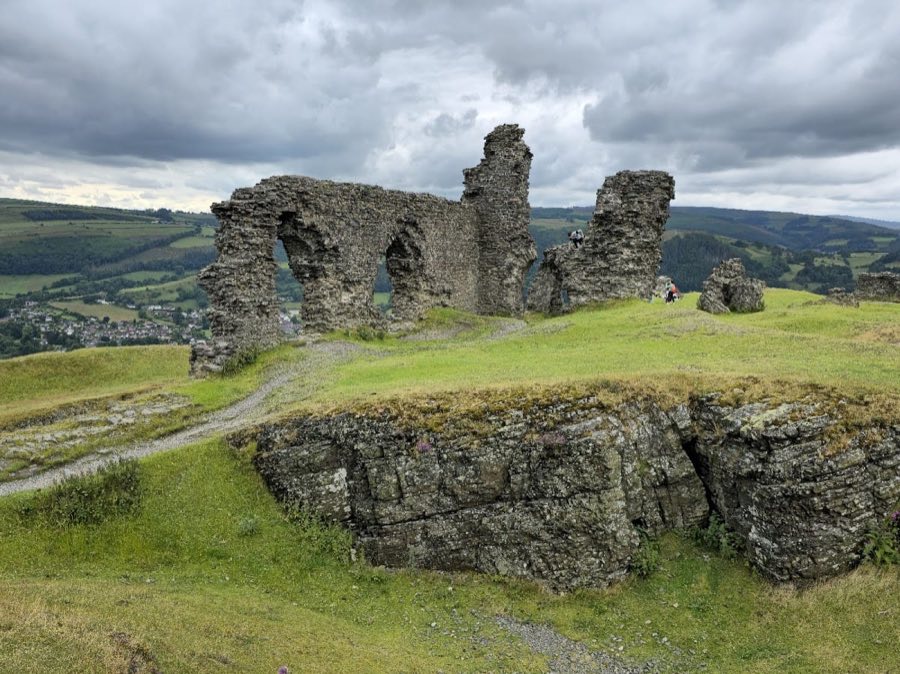
During the English Civil War in the 1640s, Halton Castle was garrisoned by Royalist forces led by Captain Walter Primrose. Parliamentarian troops commanded by Sir William Brereton laid siege to the castle twice, in 1643 and again in 1644. After the second siege, Royalist defenders withdrew, allowing Parliamentarian control. A 1646 Council of War decision led to the dismantling of the castle’s fortifications, effectively ending its role as a military stronghold. By 1650, observers described the castle as heavily ruined.
Despite its decline, the site continued functioning as a courthouse. In 1728, George Cholmondeley leased the grounds from the Crown, and in 1737 a new courthouse was constructed on the location of the medieval gatehouse. This building, designed by architect Henry Sephton with carpenter John Orme, featured a courtroom above prison cells and remained in use well into the 20th century after various repairs. In the late 18th and early 19th centuries, aesthetic modifications were made; decorative walls were built to the east of the ruins to improve views from the nearby Norton Priory estate, and Victorian-era landscaping included a sunken garden and two bowling greens within the castle grounds. In the modern era, control of the castle site passed to local authorities in 1977, and archaeological excavations took place in the mid-1980s, setting the stage for conservation and public engagement efforts managed by local heritage groups.
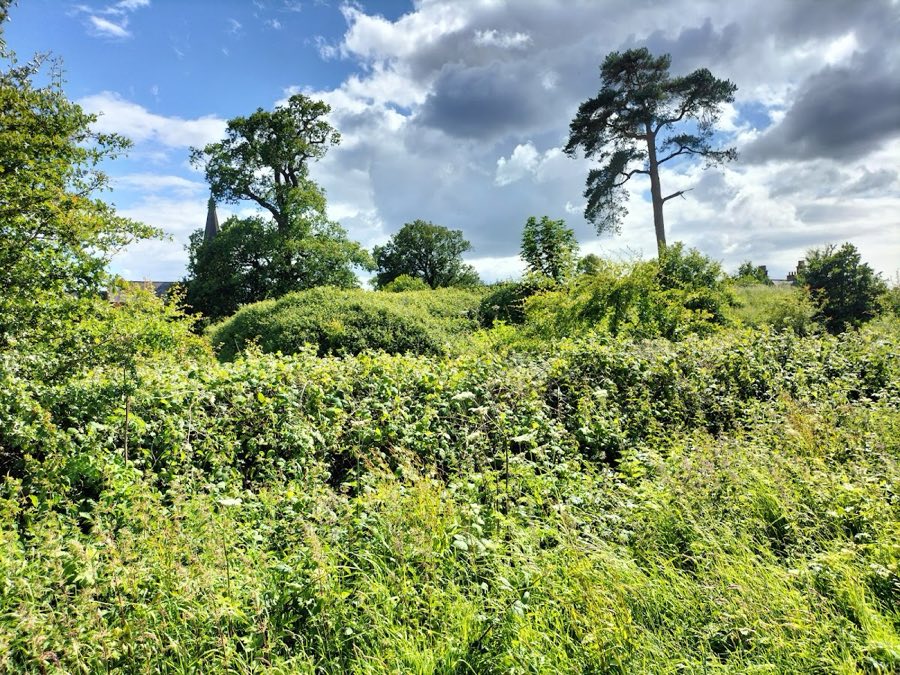
The remains of Halton Castle occupy the flat summit area of Halton Hill, a sandstone outcrop rising above the surrounding landscape. The castle’s stone construction, thought to date from the 12th century, primarily used locally sourced sandstone, a reflection of the geological character of the hill itself. While early wooden structures have left no archaeological trace, the surviving stone is laid out as a roughly enclosed perimeter that allows visitors to fully encircle the site today. This circuit of walls, though partially crumbled, remains largely intact and provides extensive views across the surrounding regions including Lancashire, Cheshire, and into the distant hills of the Pennines, Peak District, and North Wales.
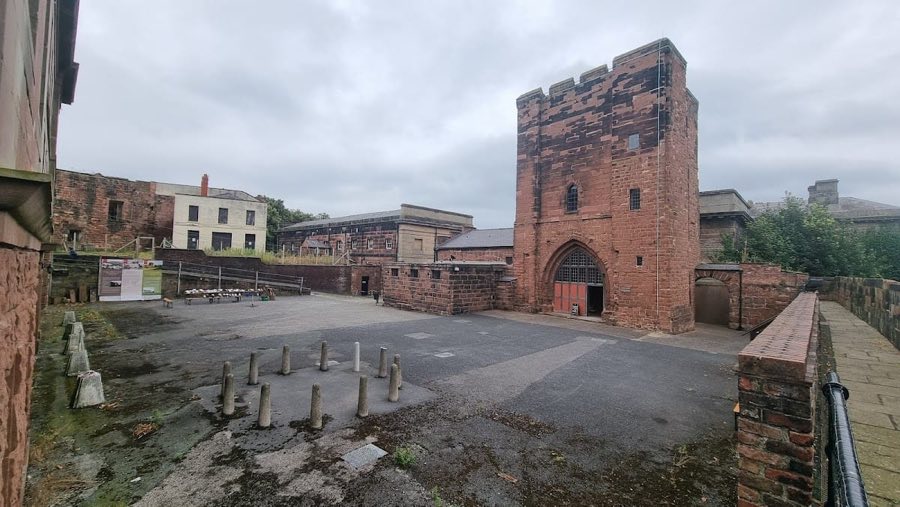
One of the key features of the ruins is the gatehouse tower, which was constructed in the mid-15th century between 1450 and 1457. This robust tower guarded the main entrance to the stronghold. Its remains stand adjacent to, yet separate from, a later courthouse building. The precise arrangement and size of the castle’s original buildings and layout are not documented in surviving records, but the gatehouse’s location likely corresponded with the original medieval entrance point.
In the 18th century, the gatehouse site was adapted to house a new courthouse built between 1735 and 1737. This building occupies the footprint of the medieval gatehouse and comprises a courtroom on the upper floor with prison cells below. Its solid sandstone construction has endured well over time. Presently known as the Castle Hotel, it is a Grade II* listed structure, recognized for its architectural and historical significance.
Later landscape enhancements were introduced around the turn of the 19th century to soften the visual impact of the castle ruins. Three decorative, or folly, walls were erected along the east side to augment the scenic outlook from the nearby Norton Priory estate, owned by Sir Richard Brooke. Around 1906, one of these walls was removed. The Victorian period also contributed ornamental features to the castle grounds, including a sunken garden and two bowling greens constructed within the enclosure, adding recreational and aesthetic value to the historic site.
Overall, the site’s surviving structures present a combination of medieval defensive remnants and later adaptations for civic use and landscaping. Together, they illustrate the castle’s evolving role from a Norman stronghold to a courthouse and a landscaped historic monument.
No. 85855
No. 68310
No. 40393
No. 14587
Comments
Comments for Halton Castle will require a verified account before posting.
We'll send a verification link before your first comment is published.