No. 71514
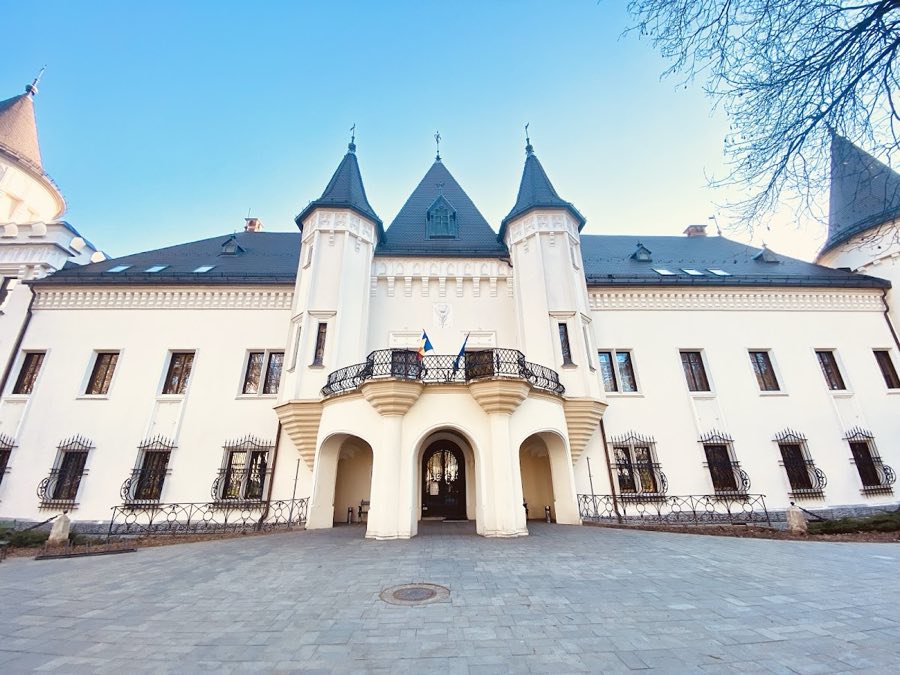
Bonțida Bánffy Castle
Romania
CastleRestored14th century
No. 99072
No. 99072 · 47.476 N, 23.576 E
Quick summary
Chioar Fortress is a castle in Romania with origins associated with the 14th century.
See all castles in RomaniaChioar Fortress is located in Remetea Chioarului, Romania, and dates to the medieval period. The place name connected to the stronghold appears in records from the mid-14th century, while documentary references to activity at the site reach back to 1319 when the location is recorded as a residence of the noble Gutkeled family.
Through the 14th century the castle passed among prominent Hungarian-era magnates. András Lackfi is listed as lord during the 1350s and his son Imre is named in 1368 in connection with the voivode’s seat at Kővár. In the 1370s the fortress is described as a royal castle, and between 1375 and 1378 control passed to Balk and Drág of Beltiug, voivodes of Maramureș, with the place recorded under the Latin form “Kewar castrum.”
King Louis the Great confirmed a donation of the lordship in 1378, and Sigismund of Luxembourg reaffirmed that grant in 1405; by that year the domain attached to the fortress comprised fifty-eight settlements. The house of Dragoș kept the lordship until that lineage died out in 1555.
From the second half of the 16th century the castle returned to royal possession and is described in contemporary records as one of the major fortresses within the Principality of Transylvania. Local inhabitants were bound by duties to supply men and resources for the stronghold’s defence, and the fort was commanded by a chief captain, an office ranked among the principality’s important posts. After Leopold I incorporated Transylvania into Habsburg domains in 1690 the fortress steadily lost its military role. In 1718 General Rabutin ordered cannon fire that demolished the works to prevent their occupation by the kuruc forces of Rákóczi. The site is today recorded as a Romanian historic monument (LMI code MM-I-s-A-04369) and appears in the National Archaeological Repertoire with code 108525.01.01; it lies within the Lăpuș Gorge Natural Reserve.
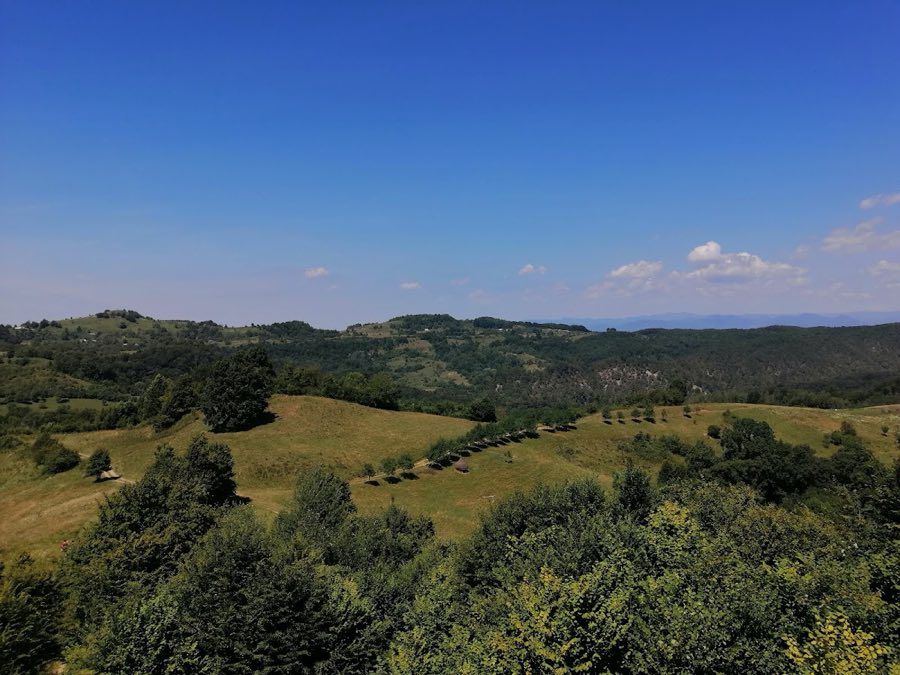
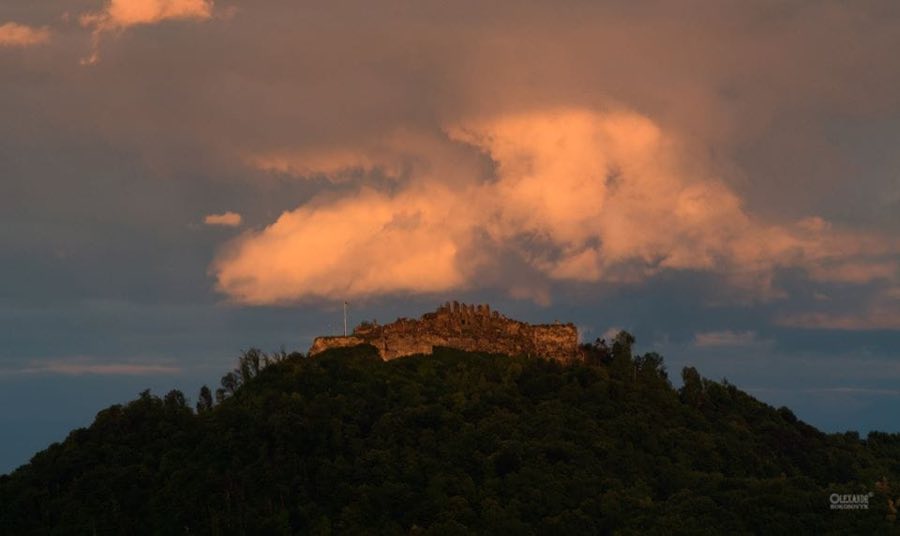
The ruined complex occupies a rocky promontory at 407 meters above sea level at the north exit of the Lăpuș river gorge, with a steep valley cutting around the site on three sides. The stronghold developed in three linked zones: an upper sector that housed the manor and a courtyard, a middle zone for prison spaces, administrative rooms, and the garrison, and a lower enclosure that functioned as a market area.
On the highest point stands the oldest portion, a compact rectangular keep-like structure that once had towers at its corners. On the western side of this summit work are the remains of a small square bastion and, built before it on the outer slope, a triangular platform intended to support cannon. A single route out of the promontory led westward toward the main road to Baia Mare.
A lower terrace toward the east contained the larger enceinte, and the two main enclosures were linked by a passage formed from a double defensive wall. In front of the enclosed courtyard an extra forecourt was constructed, completing the arrangement of the smaller stronghold built upon the rock. Near the market area archaeological observation recorded cobbled paving visible into the late nineteenth century, and a relatively large opening there has been identified as possibly a sunken cellar or dungeon.
Today the fortification survives only as a ruin, the structural outlines and some masonry fragments still in situ but largely overgrown with vegetation. The plan of the site, the remains of towers, bastion and artillery platform, the double wall linking terraces, and the traces of paved market surface all attest to its long use as a fortified manor and regional administrative center.
No. 71514
No. 80736
No. 10973
No. 41470
Comments
Comments for Chioar Fortress will require a verified account before posting.
We'll send a verification link before your first comment is published.