No. 10973
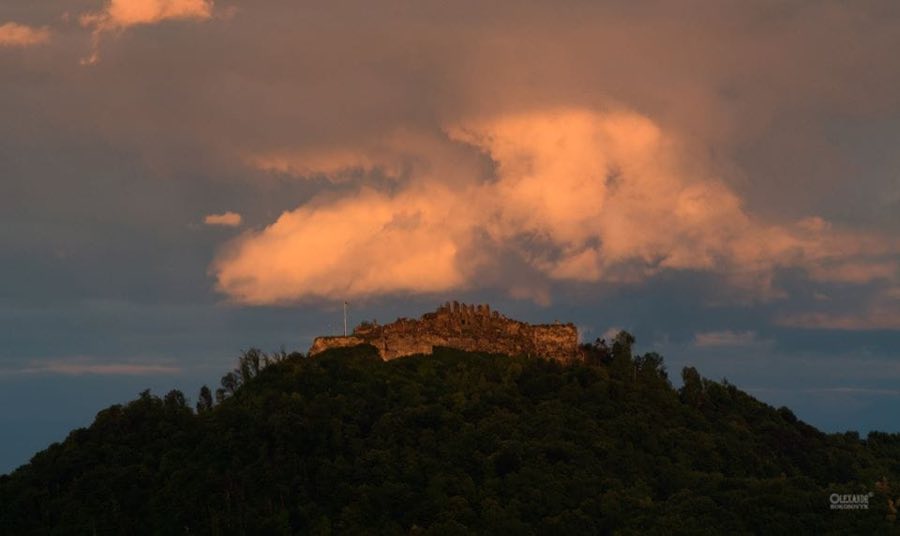
Castle Khust
Ukraine
CastleRuin18th century
No. 41470
Castle · Romania
No. 41470 · 47.684 N, 22.467 E
Quick summary
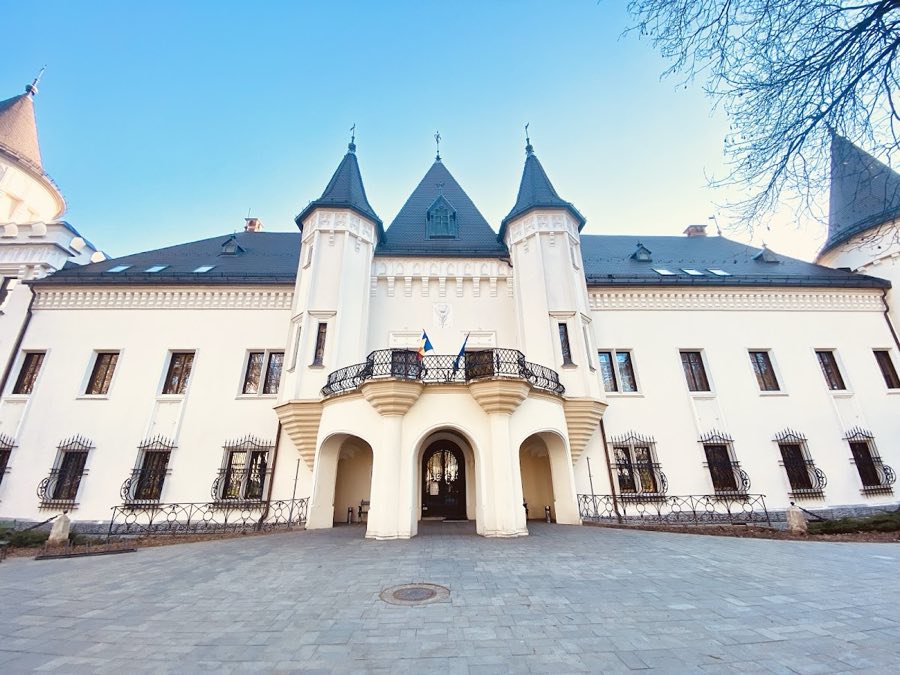
Károlyi Mansion, Carei is a castle in Carei, Romania with origins associated with the 15th century.
See all castles in RomaniaKárolyi Mansion, Carei, in the city of Carei, Romania, began as a fortified stronghold built by the Hungarian Károlyi family in the late 15th century. Work on a stone fortress started in 1482 with the approval of King Matthias. Over the centuries the site served military, political and administrative roles, evolving from a defensive fortification into a noble residence and later into public institutions.
The complex was still a martial center in the 16th century. In 1526 a Károlyi military contingent left the fortress to join the Hungarian forces at the Battle of Mohács, the clash in which the Hungarian kingdom suffered a decisive defeat by Ottoman troops. In 1592 Mihály Károlyi strengthened the defenses by adding four bastions (a projecting gun platform), widening the surrounding moats and reinforcing the raised rampart with palisades in anticipation of Ottoman attacks; the fortress withstood at least one Ottoman siege. At the close of the 16th century the settlement around the stronghold supported several hundred taxed families.
During the 17th century the fortress formed part of the region’s defensive network against the Ottomans and underwent repeated repair campaigns, recorded in 1661, 1666 and 1678, after which later Turkish assaults caused further damage that was subsequently repaired. In 1615 envoys of Matthias II and Gabriel Bethlen met at the site to seek an end to fighting in the Satu Mare area, and in 1622 negotiations between Ferdinand II and Gabriel Bethlen for the peace known as Nikolsburg began at the same place. Repeated military activity and punitive actions by Imperial troops reduced the local population in this period.
The early 18th century brought further political significance. During the 1703–1708 uprising led by Francis II Rákóczi, Sándor Károlyi opened the fortress to Rákóczi in 1703, who remained on the premises for 28 days, and the stronghold later resisted Habsburg forces during the rebellion; recorded repairs followed in 1708. After the 1711 peace Sándor Károlyi initiated efforts to repopulate the settlement, and in 1741 Ferenc Károlyi granted plots that formed a neighborhood subsequently known as Zsidóköz.
From the late 18th century the site shifted toward civil administration and residence. A Baroque manor replaced much of the old fortification in 1794, and from 1780 the complex functioned as the seat of Satu Mare County. By 1828 the town had grown substantially. The town experienced an earthquake in 1834, a casino opened in 1836 and a hospital in 1845, while the middle decades of the 19th century saw several cultural and demographic changes including the increasing use of the Hungarian language among local communities.
Major rebuilding in the last decades of the 19th century transformed the manor into a neo-Gothic, romantic-style ensemble with multiple towers between 1893 and 1896. The Károlyi family ceased to live at the estate after the death of István Károlyi in 1907. Following World War I the property passed to Romania under the Treaty of Trianon and served varied public functions during the interwar years, including use as a sanatorium and a casino. During World War II it housed a hospital and a military school and came under Romanian state ownership in 1944. In the 1950s cultural institutions occupied the building, including a museum, cultural house and the city library. After a period of vacancy in the late 20th century, large-scale restoration and renovation work carried out in the early 21st century returned the complex to public use.
The site preserves a sequence of defensive and residential structures set within a large planted park. The original late medieval fortress featured moats and four projecting gun platforms added in the late 16th century; these defensive earthworks and the surrounding water-filled ditches shaped the footprint that later reconstructions retained. The late 18th-century Baroque house replaced much of the medieval fabric, and a late 19th-century remodelling reworked the exterior into a multi-towered, neo-Gothic appearance, while the complex continued to be encircled by a moat. The top of the central bastion now functions as a lookout point.
The inner square courtyard was roofed over to create a two-storey central reception space, the atrium, fitted with a substantial wooden ceiling and arranged as a grand hall. The earlier Baroque plan included a chapel on the southeast side of the residence. Today the principal rooms serve institutional roles, and the building has undergone conservation and restoration in the 21st century to repair and stabilise its historic interiors and exterior massing.
The grounds comprise a 12-hectare park and arboretum laid out in its present form from the late 19th century but with garden origins around 1700. The plantings include 208 species of native and exotic trees and shrubs, a greenhouse with rare plants and a plane tree planted in 1810 whose trunk measured 205 cm in diameter. A riding hall dating from about 1760–1780 stands within the park; after partial collapse in the 1990s it has been partly rebuilt and is used again for horse breeding and riding lessons. A romantic-style water tower rising 33 metres dates to 1888. The grounds were designated a protected dendrological park in 1982.
No. 10973
No. 84500
No. 99072
No. 21078
Comments
Comments for Károlyi Mansion, Carei will require a verified account before posting.
We'll send a verification link before your first comment is published.