No. 24642
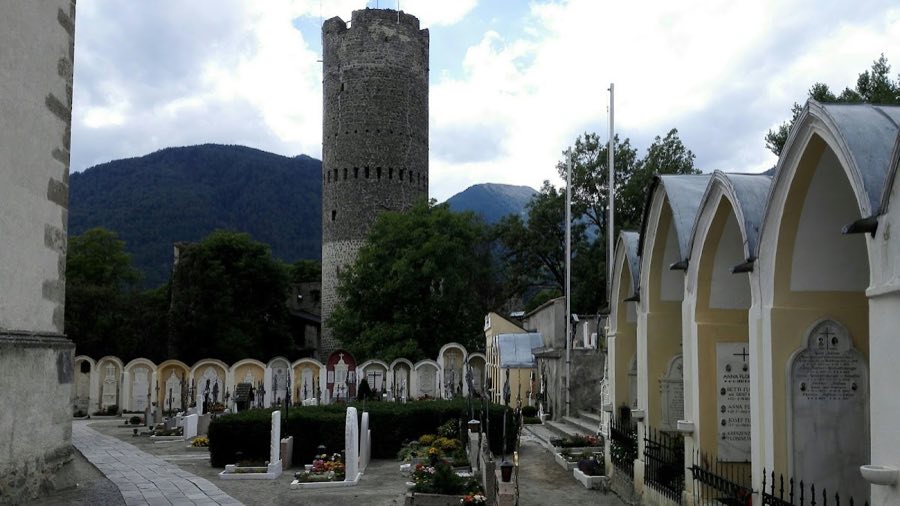
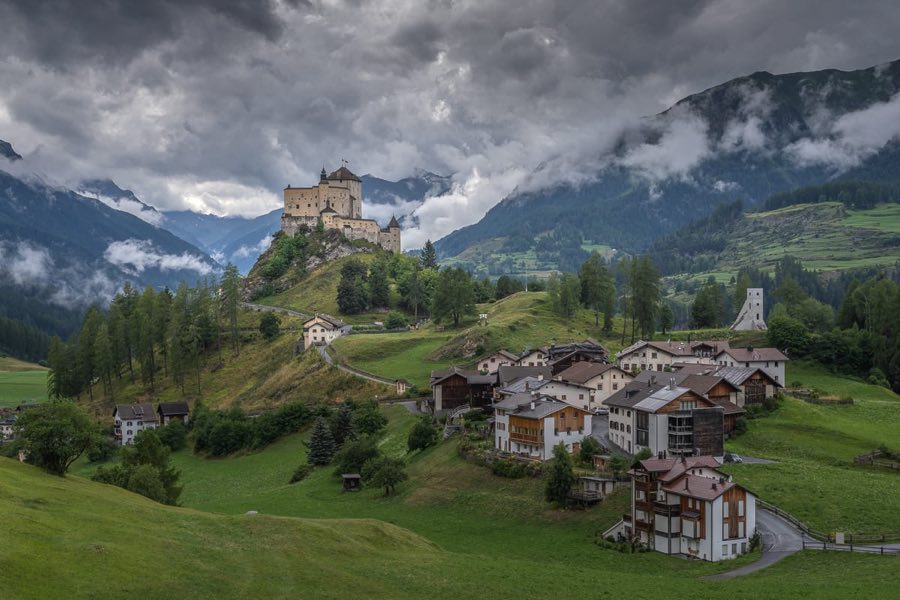
Fröhlichsburg
Italy
CastleRuin14th century
No. 54279
No. 54279 · 46.664 N, 10.589 E
For events
Churburg Castle is marked as a château or castle venue lead. Capacity, indoor/outdoor spaces, catering rules, and accommodation options are published only after public verification.
Event types: Private events, Cultural gatherings, Filming and photography
Quick summary
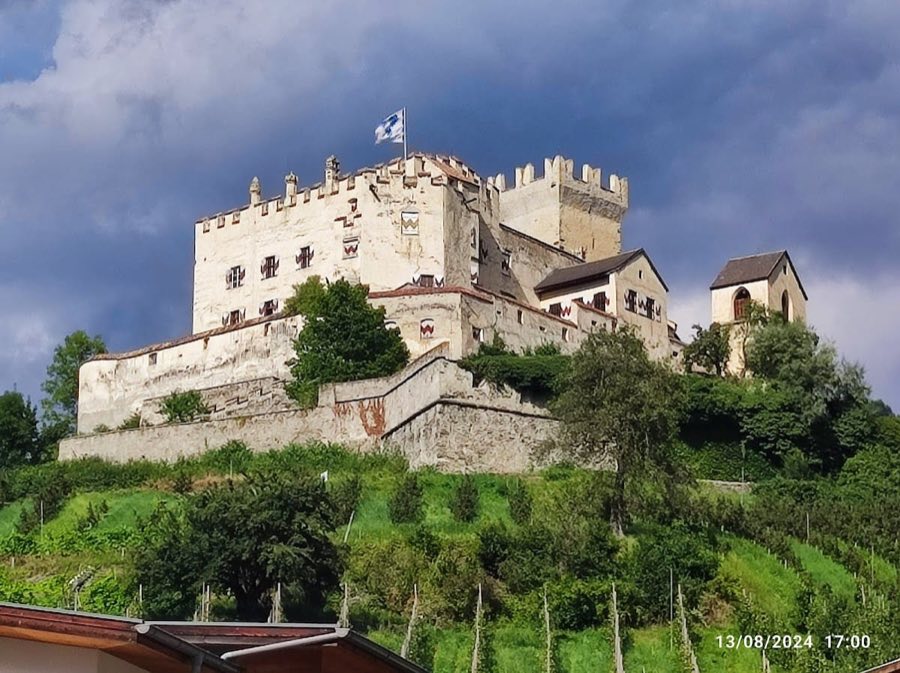
Churburg Castle is a castle in Italy with origins associated with the 13th century.
See all castles in ItalyChurburg is a medieval castle situated in Schluderns, Italy. It was originally constructed in the mid-13th century by Heinrich I von Montfort, prince-bishop of Chur, as a fortress intended to check the territorial ambitions of the local lords known as the Lords of Matsch.
By the end of the 13th century, the political landscape shifted when Meinhard II of Tyrol-Gorizia gained control over the Diocese of Chur. In 1297, he granted the castle to the Matsch family, who held it for over two centuries. During their tenure, Churburg functioned as a stronghold in regional power struggles.
Ownership changed again in 1504 through marriage, when the last Matsch heiress married a Count Trapp. The castle passed into the hands of the Trapp family, who continue to own it today. The early 16th century saw notable events, including a visit by Emperor Maximilian I in 1516, underscoring the castle’s prominence. After inheritance disputes, the 1537 Polheim Treaty reaffirmed the Trapp family’s claim.
Over time, Churburg evolved from a purely military fortress into a stately residence representing noble status and lineage. Although it remained occupied and never abandoned, the castle was expanded and adapted through subsequent centuries. Significant restorations took place during the Renaissance and again in the late 1800s under Count Gotthard Trapp, who modernized the estate.
In recent decades, the castle has been a center for annual medieval knightly games commemorating its historical background and regional events, such as the Battle of Calven. Additionally, its extensive archives, containing documents dating back to the 12th century, were transferred to the South Tyrolean provincial authority in 2016.
The castle of Churburg presents a classic medieval layout centered around a massive bergfried, a tall fortified tower that served as a stronghold and lookout, dating to its original construction in the 13th century. Around this keep lies the palas, the main residential building, all enclosed within a defensively designed ring wall. Over time, further fortifications were added, including additional defensive walls, zwingers—enclosed killing zones between walls—and strategically placed towers and gates to enhance security.
Positioned atop the naturally defensible Sonnenberg hill, the castle oversees the village center of Schluderns and the wider Vinschgau valley, benefitting from clear lines of sight and natural protection.
Religious architecture includes the Renaissance Chapel of St. James, which replaced an earlier Romanesque chapel once located outside the walls. The newer chapel was built after Count Giacomo Trapp undertook a pilgrimage to Jerusalem and features a richly decorated altar dating from 1597. Its interior boasts elaborately carved intarsia wooden columns and balcony, frescoes from the Renaissance period, and a vaulted ceiling adorned in 1904.
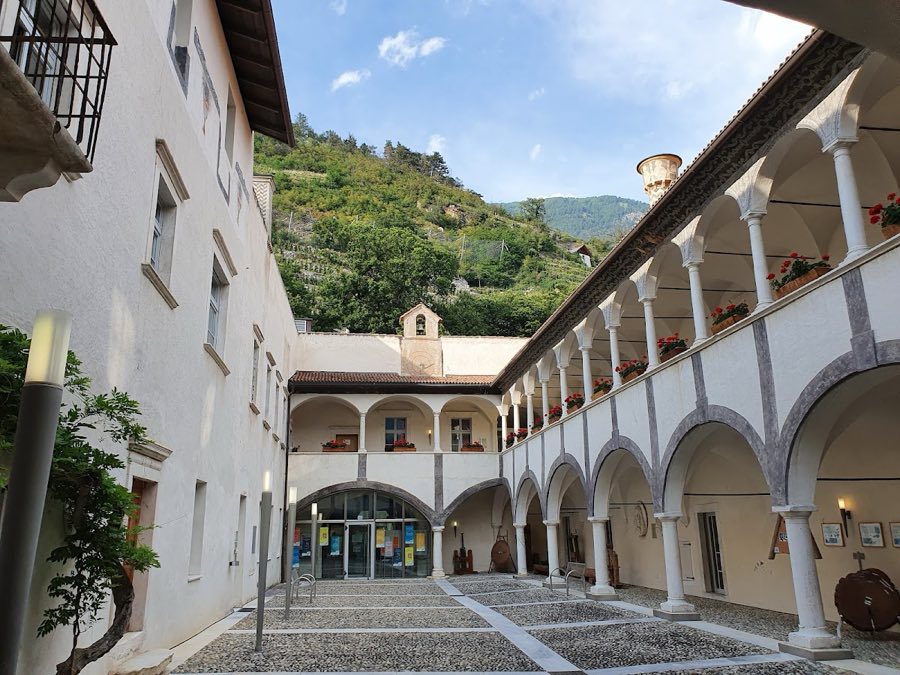
Adjacent to the chapel, the Renaissance loggia built around 1570 surrounds the inner courtyard, richly painted with vibrant frescoes depicting Aesop’s fables, mythological creatures, animals, and floral motifs that illustrate the genealogical ties between the Matsch and Trapp families. The vaulted ceiling in this space carries a painted family tree represented as a quince tree, created circa 1580.
Inside the castle, rooms preserve furnishings and artifacts spanning several eras, including a Romanesque wooden Madonna statue from around 1270, now housed in the deconsecrated old chapel, which ceased religious use in 1563 and was later repurposed as a smokehouse.
Among the castle’s unique collections is the largest private armory in Europe, featuring about fifty complete suits of armor. These include not only adult armor but also sets for children and horses. Among the most remarkable pieces is a towering Milanese suit of armor crafted around 1450 by Antonio Missaglia, weighing 46 kilograms and standing over two meters tall, originally belonging to Ulrich von Matsch.
Additional features highlight the castle’s architectural and functional development through the centuries. A Gothic bell tower, constructed in 1537, complements Renaissance-era additions such as terraces, bastions, formal gardens, stables, grain storage facilities, warehouses, a bakery, and the armory itself.
The residential palace was raised by an additional floor during the Baroque period, with interiors decorated with biblical themes and equipped with tiled stoves for heating. The “Hall of Ancestors” showcases portraits of Trapp family members spanning the 17th to 19th centuries, including Count Gotthard Trapp, responsible for the castle’s last major restoration.
An exceptional historic musical instrument preserved at the castle is a baldachin organ dating from 1559. This pipe organ retains nearly all its original pipes and remains in working condition, underscoring the castle’s long-standing cultural heritage.
Thanks to careful preservation and continual stewardship, Churburg remains exceptionally intact, offering a comprehensive glimpse into the fortress’s layered history and noble lineage.
No. 24642
No. 89954
No. 65404
No. 24162
Comments
Comments for Churburg Castle will require a verified account before posting.
We'll send a verification link before your first comment is published.