No. 28364
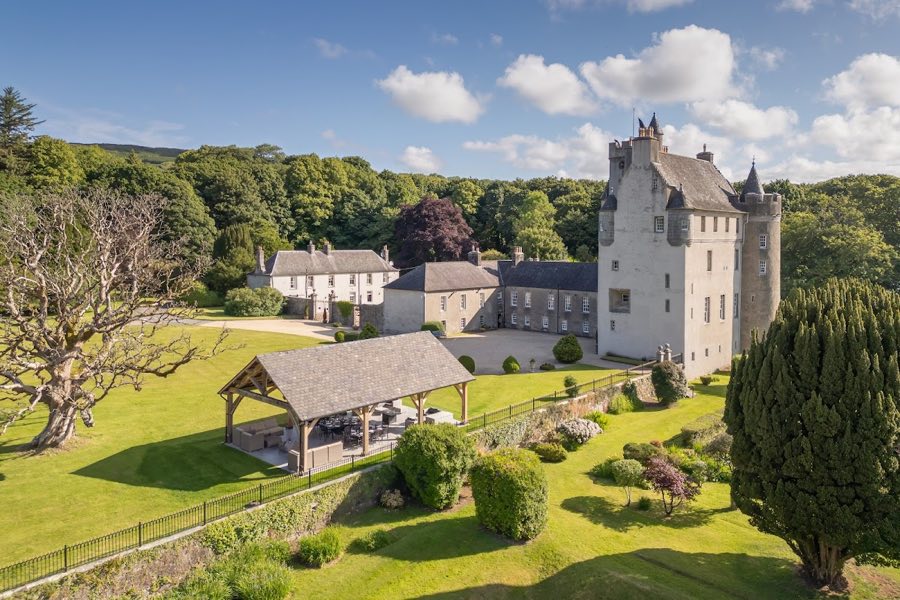
Killochan Castle
United Kingdom
Tower houseIntact16th century
No. 79994
Palace · United Kingdom
No. 79994 · 55.335 N, 4.590 W
Quick summary
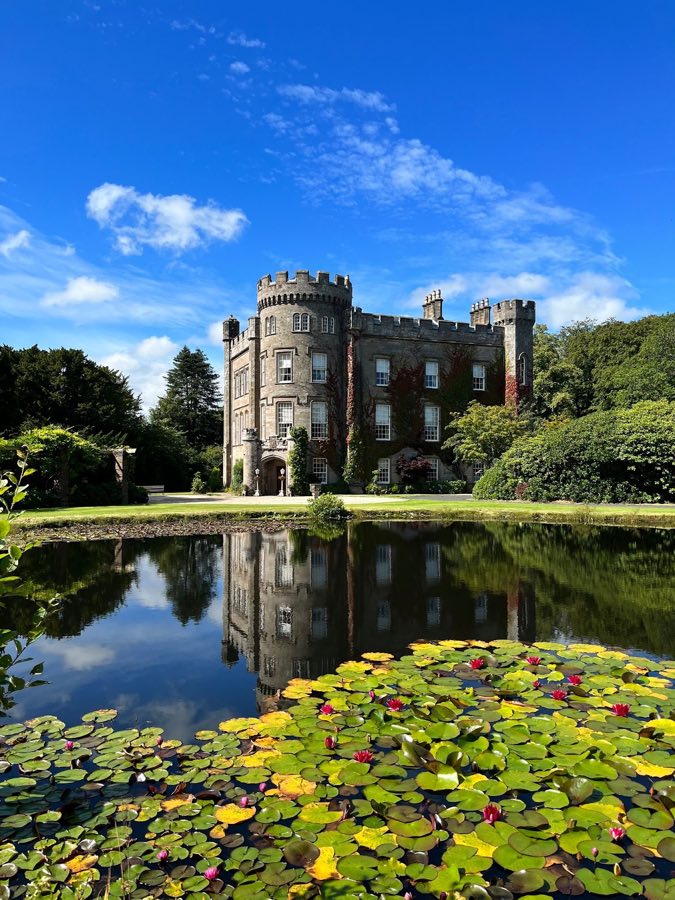
Cloncaird Castle is a palace in United Kingdom with origins associated with the 16th century.
See all castles in United KingdomCloncaird Castle is located in Kirkmichael, within the modern country of Scotland. It was originally built by Scottish feudal lords during the 16th century.
The site’s earliest recorded phase dates to the late 1500s, when the castle functioned as a fortified mansion typical of feudal estates of that time. An armorial panel bearing the date 1585 remains on the castle’s wall, providing a firm historical marker of its construction period. During this era, the castle was owned by Walter Mure of the Auchendrane family. Mure is historically noted for his involvement in the murder of Sir Thomas Kennedy of Culzean, an event in which Kennedy of Drumurchy also played a part, reflecting the turbulent alliances and rivalries among local nobility in late 16th-century Scotland.
In the early 19th century, ownership of Cloncaird shifted to Henry Ritchie of Craigton and Busbie. Ritchie, who came from a Glasgow merchant family that had acquired other estates including Busbie, undertook significant renovations in 1814. He rebuilt and updated the castle’s front façade, modernizing its appearance to match early 19th-century architectural tastes. After Henry Ritchie’s death in 1843, the estate passed to his nephew William Wallace of Cairnhill.
By the early 20th century, Colonel Hugh Robert Wallace sold Cloncaird Castle in 1905 to Mrs. Dubs, who initiated extensive renovations, continuing the process of adaptation and preservation into modern times. From 1949 onwards, the property served a new role as the Dubs Memorial Convalescent Home, operating under local government management until the home’s closure later in the 20th century. Following this period, the castle returned to private ownership. Before 2003, Ephraim Belcher, chairman of Belcher Food Products, became the owner.
Throughout its history, Cloncaird Castle has thus evolved from a 16th-century feudal residence into a modernized estate adapting to varied residential uses, reflecting the broader social and economic changes in Scotland over several centuries.
Cloncaird Castle’s layout maintains elements typical of a 16th-century fortified mansion alongside later architectural adaptations. The original structure included a prominent large square tower, which served as a defensive stronghold and residence. Access within the tower was provided by a narrow spiral staircase, a common feature in feudal buildings designed for both space efficiency and defense.
The castle is situated beside the Kelsie Burn, a small stream within a spacious 140-acre (approximately 57-hectare) estate. This landscape includes water features such as a pond and a weir, the latter adorned with a fountain, which contribute to the ornamental and practical use of water on the grounds. A walled garden also lies within the estate, illustrating traditional approaches to enclosed horticultural spaces for privacy and protection.
Several ancillary structures on the estate hold separate listed status due to their architectural and historic interest. Among them is a garage built in the Arts and Crafts style, reflecting an early 20th-century architectural movement that emphasized handcrafted quality and natural materials. Additionally, a U-shaped stable block constructed in a neogothic design underscores the Victorian and Edwardian tastes for reviving medieval architectural forms. A bridge crossing the Kelsie Burn further complements the estate’s infrastructure, facilitating movement across the watercourse and enhancing its picturesque qualities.
While the front façade visible today dates mainly from the substantial rebuilding carried out in 1814 by Henry Ritchie, elements such as the 1585 armorial panel have been carefully preserved in situ on the castle wall, bearing witness to the building’s origins. The estate’s broader historic landscape remains largely maintained, preserving its character as a country house with curated gardens and water features. Together, these components demonstrate the castle’s layered architectural history and its adaptation over time to changing tastes and functions.
No. 28364

No. 70481
No. 64366
No. 76326
Comments
Comments for Cloncaird Castle will require a verified account before posting.
We'll send a verification link before your first comment is published.