
No. 52392
Świecie Castle
Poland
CastleRuin14th century
No. 79995
Castle · Poland
No. 79995 · 51.031 N, 15.304 E
For rent
Czocha Castle is marked for bookable castle accommodation. Nightly pricing, sleeps count, stay rules, and amenities are displayed only when public operator data is available.
Rental type: Hotel / bookable stay, Short-stay rental
Short-term availability: Bookable accommodation signal
For events
Czocha Castle is marked as a château or castle venue lead. Capacity, indoor/outdoor spaces, catering rules, and accommodation options are published only after public verification.
Event types: Private events, Cultural gatherings, Filming and photography
Accommodation: Accommodation signal present
Quick summary
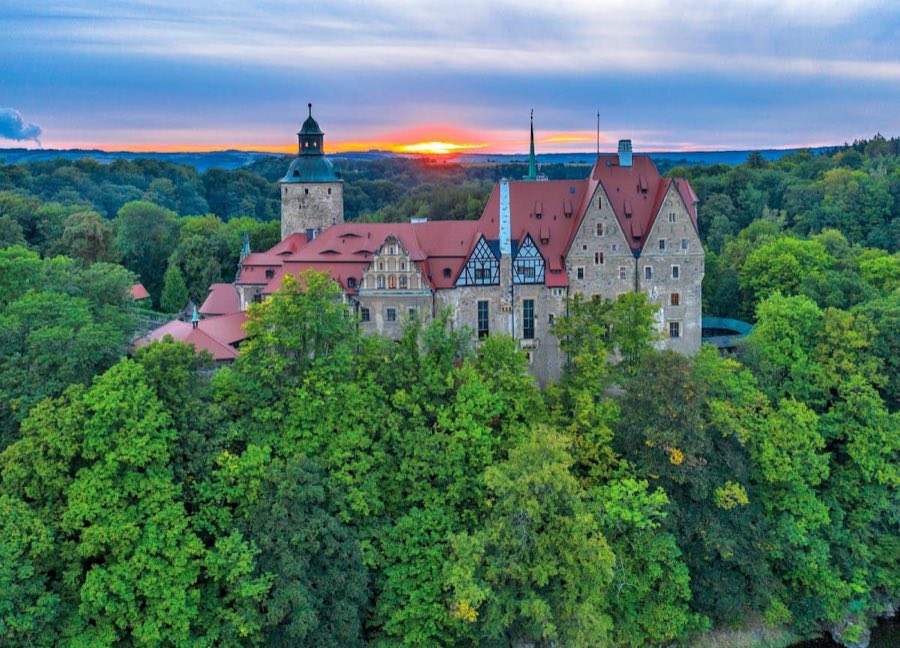
Czocha Castle is a castle in Poland with origins associated with the 13th century.
See all castles in PolandCzocha Castle, situated in the municipality of Leśna in present-day Poland, was originally built in the mid-13th century by a medieval European civilization, likely overseen either by the Silesian Piast dynasty or King Wenceslaus I of Bohemia. Its construction, completed between 1241 and 1247, served a strategic role as a defensive stronghold along the border between the regions of Silesia and Lusatia.
Throughout its early history, the castle changed hands several times due to shifting political and military circumstances. In 1253, the fortress was seized by the Margraviate of Brandenburg and subsequently granted as a fief to the Bishop of Meissen, known as von Weisenow. Later, in 1319, it became part of the Duchy of Jawor under the rule of Henry I. Ownership then passed to Bolko II the Small in 1346. Following the death of Duchess Agnes of Habsburg, the castle was reincorporated into the Bohemian Crown during the reign of Emperor Charles IV.
Between the late 14th century and the mid-15th century, Czocha Castle belonged to several knightly families, notably the von Dohn and von Klüks clans. The Lusatian noble family von Nostitz took possession of the castle in 1451 and maintained ownership for over two centuries until 1700. This period saw the castle withstand military challenges such as the Hussite sieges in the early 1400s. Although the Hussites were unsuccessful in capturing the stronghold, it was briefly held in 1427 by a detachment led by an individual named Czernin during the owners’ absence, only to be swiftly reclaimed thereafter.
By the mid-19th century, the castle had fallen into disrepair, described as dilapidated by 1847. A major turning point came in 1909 when Ernst Gütschow, a tobacco manufacturer from Dresden, purchased Czocha Castle for 1.5 million marks. He commissioned an extensive reconstruction carried out between 1912 and 1920, guided by architect Bodo Ebhardt of Berlin, who relied on an engraving from 1703 as a reference. This renovation significantly altered the castle’s original fabric, leading to the loss of many of its oldest sections.
During the Second World War, unverified speculation suggests that the castle may have housed an Abwehr (German military intelligence) cipher school, though this has not been conclusively proven. After the war, as the borders shifted and the castle became part of Poland, it suffered considerable damage from repeated looting by Soviet and Polish forces. Valuable furnishings and collections were stolen or dispersed, with some belongings later recovered and sent to Wrocław. A sensational but ultimately disproved claim circulated around a 1946 theft involving the mayor of Leśna and the castle librarian, who were rumored to have transported a large cache of Romanov regalia and other valuable artifacts to the American-controlled zone.
Following these turbulent years, Greek refugees briefly occupied the castle, their use of the knights’ hall to house livestock causing additional harm. In 1952, the castle was converted into a Military Holiday House and deliberately omitted from official maps for security reasons. Finally, in 1996, Czocha Castle was opened to the public as a hotel and conference center under the ownership of a Polish military property agency.
Czocha Castle is perched on ancient gneiss rocks, which are part of the Izera metamorphic complex, providing a sturdy natural foundation for its imposing structure. Its layout reflects its original purpose as a border fortress, combining defensive elements with residential spaces. The oldest surviving part of the complex is a central tower called a stołp, located near the main gates. This robust tower was later integrated into a residential wing, with the northern section of this living area representing some of the earliest extant construction.
Access to the castle is controlled through two main gates situated at different levels. The lower gate is the older of the two and historically formed the castle’s primary entrance. A newer upper gate was added later to enhance defensive capabilities and control movement within the fortress. These portals preserve heraldic decorations that offer insight into the castle’s past ownership. Above the entrance to the lower courtyard and on the main gate, coats of arms belonging to the von Nostitz family are prominently displayed, reflecting their long tenure from the 15th to 18th centuries.
In addition to the von Nostitz heraldry, the castle features emblematic stone carvings and stained glass windows that commemorate other influential families tied to the property’s history, including von Debschitz, von Üchtritz, von Seydlitz, and von Gütschow. The stained glass was crafted by Eduard Stritt, an artist active between 1870 and 1937, who contributed to the castle’s historical ambiance during the early 20th-century restoration.
The extensive renovation undertaken from 1912 to 1920 brought significant transformations but also led to the destruction of numerous original elements. Notably, the castle’s former moat was repurposed into a menagerie, altering the medieval defensive landscape into a setting for animals. Despite suffering damage and the loss of furniture caused by wartime and postwar neglect, several structural components remain intact, offering a glimpse into the castle’s defensive and domestic functions over the centuries.
Today, Czocha Castle overlooks the Kwisa River near the Leśniańskie Reservoir, situated above this watercourse in the Polish section of Upper Lusatia. The site preserves a layered historical narrative evident in its surviving stonework, gated entrances, heraldic decorations, and the stołp tower that stands as a silent witness to its long and varied past.
No. 52392
No. 96124
No. 69158
No. 82756
Comments
Comments for Czocha Castle will require a verified account before posting.
We'll send a verification link before your first comment is published.