No. 26046
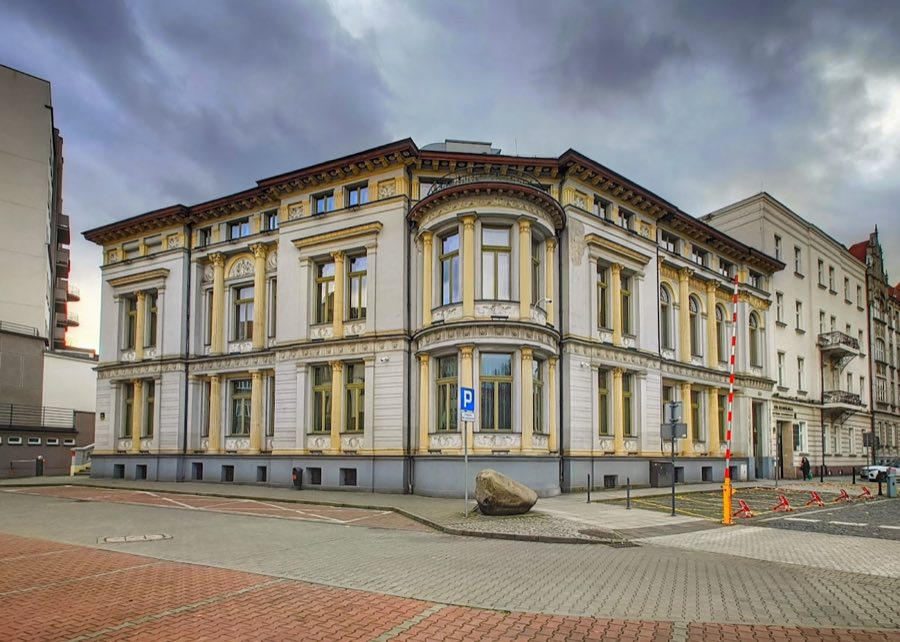
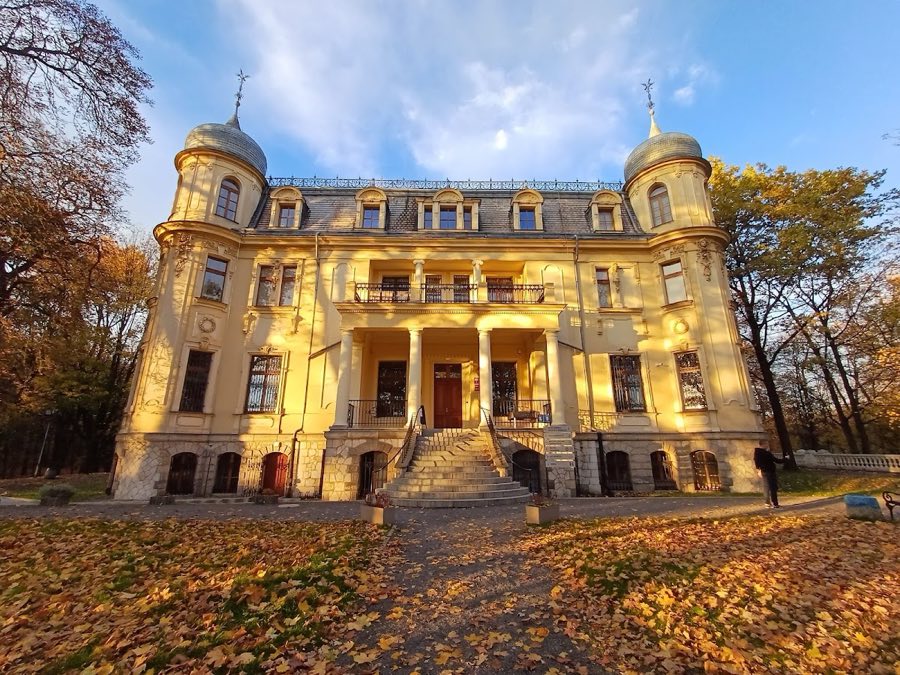
Goldstein Palace, Katowice
Katowice, Poland
PalaceRestoredFor events21st century
No. 83425
Manor house · Poland
No. 83425 · 50.308 N, 19.027 E
For rent
Donnersmarck Palace is marked for bookable castle accommodation. Nightly pricing, sleeps count, stay rules, and amenities are displayed only when public operator data is available.
Rental type: Hotel / bookable stay, Short-stay rental
Short-term availability: Bookable accommodation signal
Quick summary
Donnersmarck Palace is a manor house in Poland with origins associated with the 17th century.
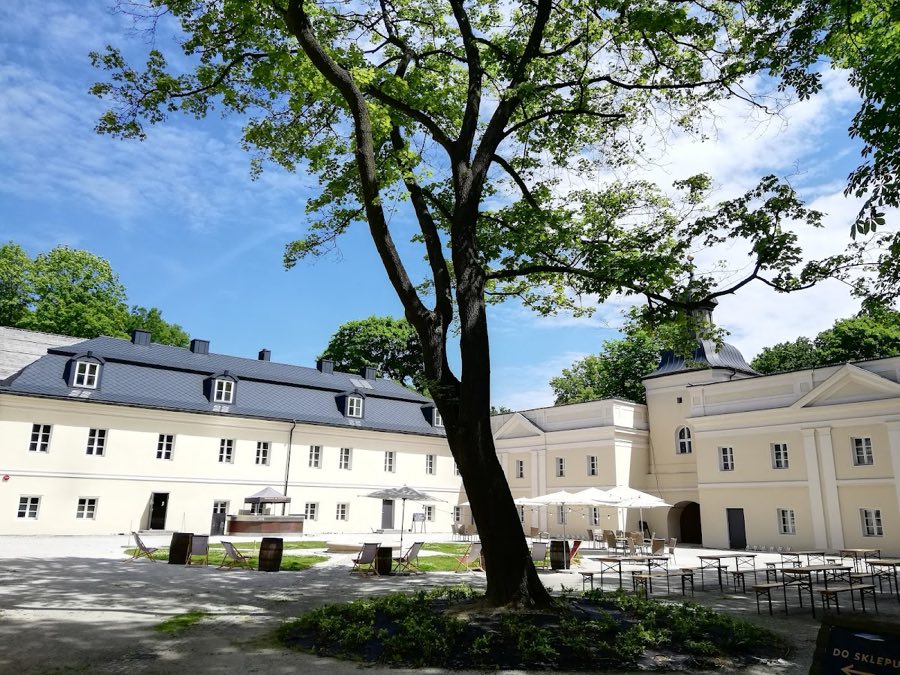
See all castles in PolandDonnersmarck Palace in Siemianowice Śląskie, Poland, is a Classical palace whose building began in the 17th century under the Polish noble Mieroszewski family, who bore the Ślepowron coat of arms. The complex combines an older Baroque wing with later Classical additions and played a continuous role as a landed estate seat and noble residence from the early modern period into the 20th century, undergoing repeated rebuilding, change of ownership, and adaptation to new uses.
The estate belonged to the Mieroszewski family from at least the 16th century and the family initiated construction in the 17th century. Ownership passed in 1692 from Stanisław Mieroszewski to Bogusław Hunter von Grandon, and in 1718 Grandon sold the property to Juliana Maximiliana Coob von Neyding. After her death the estate passed to her son Karol Henckel von Donnersmarck, and Karol’s son Łazarz Henckel von Donnersmarck established the palace as the family’s permanent home. Between 1778 and 1789 the northern Mieroszewski wing received a new west wing, enlarging the main corps.
During the Napoleonic Wars the palace was plundered in 1807, an episode of damage within the wider conflict of the Fourth Anti‑French Coalition. Around 1830 a significant reconstruction reshaped the complex: the chapel and the facades were rebuilt, a Classical east wing was added and linked to the older northern Baroque wing, and an earlier gate tower was incorporated into the new east range. By the mid‑19th century the ensemble comprised the main corps, two outbuildings called officines, a gate, two farm buildings, and a surrounding park.
Around 1850 a southern outbuilding was attached to the main building, and later in the 19th century alterations included changes to the stairway. The southern addition was removed in 1934. At the end of the 19th century the Donnersmarck family sold the complex and the 20th century brought frequent changes of ownership. The palace was modernized between 1921 and 1926. From 1926 until 1932 the most notable interwar occupant was Józef Kiedroń, a former government minister who directed the Upper Silesian United Steelworks Królewska and Laura while living at the palace.
During the German occupation from 1939 to 1945 authorities converted representative halls into small office rooms and cut new window openings, interventions that severely damaged historic interior decoration. Municipal ownership passed from the local mine to the city in 1990. In 2005 a private company bought the property with a discount and prepared a plan to adapt the building for hotel use, and partial renovation work began in 2009. Ownership then changed hands several times, including purchases in 2011 and 2013, and the current owner is Inspiration Point S.A. The main corps has a volume of more than 23,000 cubic metres. In 2016 the city council placed the palace in a local revitalization program that allowed applications for European Regional Development Fund financing. In April 2018 grant agreements were signed with the regional marshal and the owner was scheduled to receive nearly 20 million PLN for further revitalization, with about 80 percent of the palace area designated for social activities. As of July 2021 the renovated building contained a brewpub restaurant, and plans called for rooms for exhibitions, vernissages, and art workshops.
The palace complex presents a layered plan in which an older Baroque section sits beside later Classical wings, all set within what historically was a park. The oldest surviving element is the northern wing from the Mieroszewski period, which retains its Baroque character and is covered by a Polish broken roof, a stepped roof form typical in the region. This wing links directly into the larger main corps whose volume exceeds 23,000 cubic metres.
A west wing was added to the northern block between 1778 and 1789, enlarging the residence. Around 1830 a Classical east wing was built and physically joined to the northern Baroque block, and an earlier gate tower was incorporated into that east range. The rebuilding of the chapel and the refacing of exteriors at that time are part of the same phase of transformation.
Around the middle of the 19th century a southern outbuilding was attached to the main corps and the complex also included two smaller service outbuildings known as officines, a formal gate, and two agricultural buildings that formed the working estate, all surrounded by the park. The southern addition was demolished in 1934. Alterations to the principal stairway took place in the second half of the 19th century and reflect changing internal circulation needs.
Interventions made between 1939 and 1945 altered internal layouts when representative halls were subdivided into small office rooms and new window openings were cut, changes that damaged historic interior decoration. Partial restoration work began in 2009 and further revitalization took place in the 2010s. A gate building with a modern glass annex is shown in recent images from 2024. Today parts of the palace stand restored and adapted for new uses, while other elements show the results of the building’s long sequence of additions, removals, and repairs.
No. 26046
No. 37589
No. 86357
No. 93261
Comments
Comments for Donnersmarck Palace will require a verified account before posting.
We'll send a verification link before your first comment is published.