No. 85144
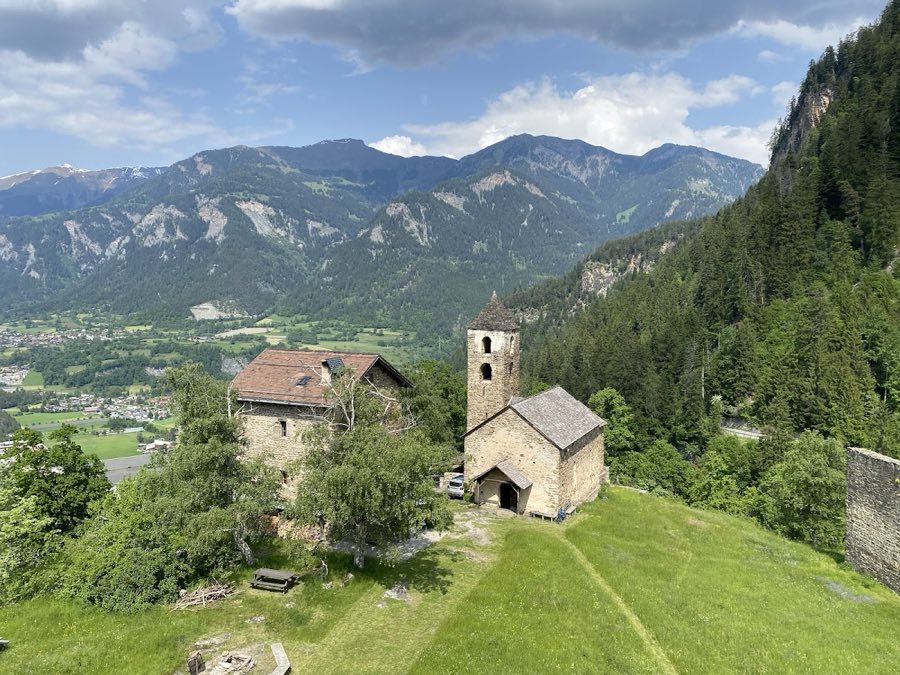
Hohenrätien (Hoch Rialt)
Switzerland
CastleRuin13th century
No. 50459
Castle · Switzerland
No. 50459 · 46.697 N, 9.452 E
Quick summary
Ehrenfels Castle is a castle in Switzerland with origins associated with the 13th century.
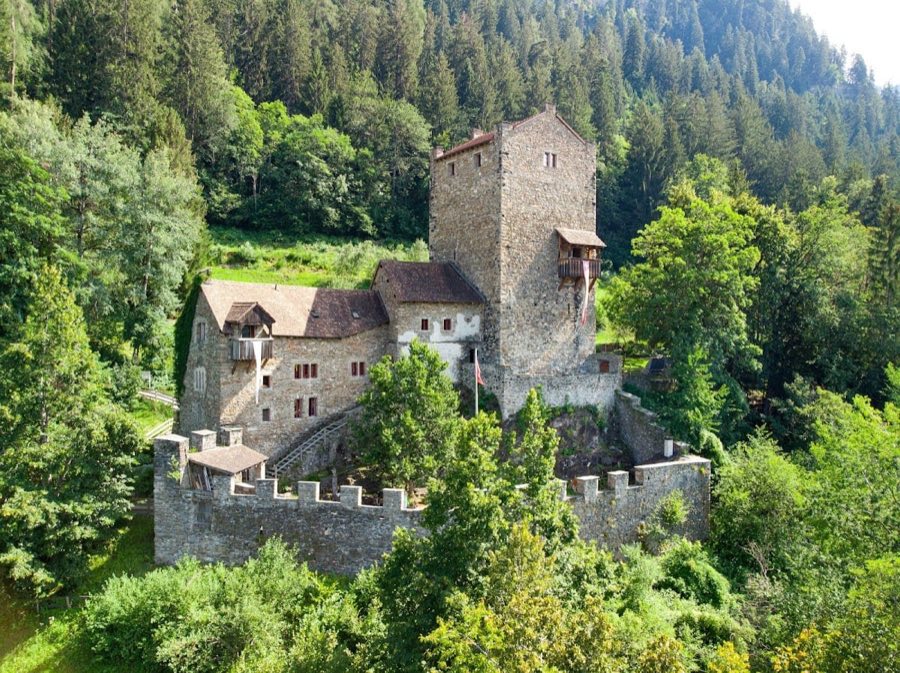
See all castles in SwitzerlandEhrenfels Castle stands near the village of Sils im Domleschg in Switzerland, built during the medieval period by local noble families. The core structure dates back to the early 13th century, marking the beginning of its role in regional affairs.
The earliest portion of the castle, a sturdy four-story tower known as a bergfried, was likely erected in the first half of the 1200s. The family associated with the castle, the Lords of Ehrenfels, first appear in records in 1257. From that time, the castle gradually expanded, with additional residential buildings and defensive walls added mainly during the 1300s and 1500s. These modifications reflect both changes in living standards and defensive needs.
By the late 1400s or early 1500s, ownership of the castle shifted to Cazis Monastery. Despite this, members of the Ehrenfels-Schauenstein family continued residing within, including notable individuals such as Rudolf and Kaspar von Ehrenfels-Schauenstein. During this period, the castle served both as a noble residence and a manorial center connected to the local ecclesiastical authority.
Shortly after 1600, the castle was abandoned and fell into decay. By the 18th century, it was described as a ruin, and parts of its stonework were quarried for other construction projects, including an unsuccessful plan to supply materials for a regional railway. The male lineage of the Ehrenfels-Schauenstein family ended in 1742, resulting in the property passing into the hands of the Buol family.
In the 20th century, the neglected ruins became overgrown until 1933, when the Schweizerische Burgenverein, or Swiss Castle Association, acquired the site. Restoration efforts were undertaken under architect Eugen Probst, employing unemployed youth to clear vegetation, stabilize structures, and partially level the ground. These efforts concluded by the late 1930s, though no formal archaeological investigations were conducted at that time. Two decades later, in the early 1950s, the castle was sold to Swiss Youth Hostels and repurposed as a hostel, a function it still serves today.
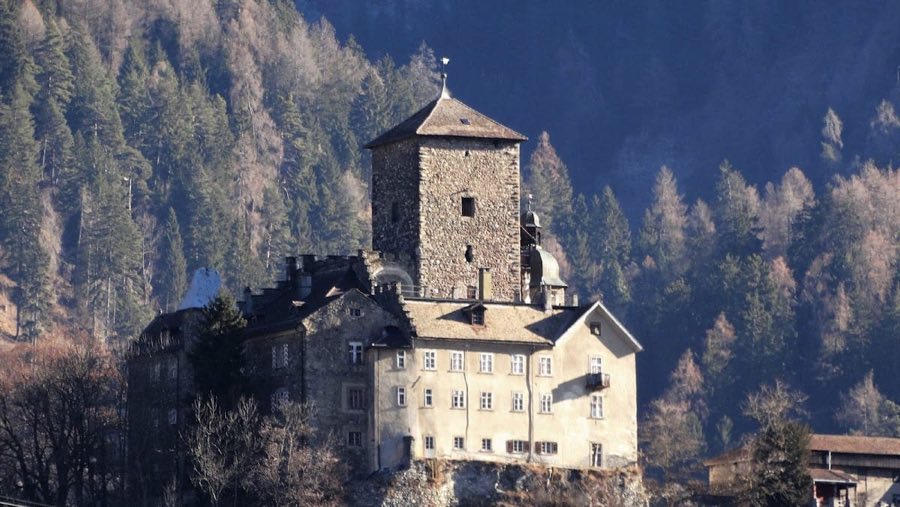
Ehrenfels Castle occupies a prominent rocky spur south of Sils, situated on two levels that provided natural defenses. Its core is a tall bergfried, a defensive tower characteristic of medieval castles, rising four stories high. This tower originally featured an elevated entrance on its northern side, accessible directly to the second floor—a design common in fortifications to hinder attackers. Later alterations moved the main entrance to the courtyard side facing the valley. In the 1960s, an additional access point with a southern entrance was introduced.
Surrounding the tower, remnants of a ring wall encircle the castle site, showing evidence of at least partially double layers of defensive walls probably built during the 14th century. These walls helped fortify the castle against hostile forces and controlled entry into the complex.
Adjoining the bergfried is the residential building, called the palas, which was constructed in the 16th century during a renovation aimed at improving the comfort and livability of the fortress. This addition reflects a period when castles transitioned from purely military functions to noble dwellings. Although much of the palas has survived only as fragments of walls, it marks a significant phase in the castle’s development.
The restoration carried out in the 1930s cleared the dense overgrowth enveloping the ruins and secured the remaining structures, especially the bergfried. The process involved excavation and leveling that altered some original ground features. Despite these changes, the bergfried’s height remained largely intact by the early 20th century, preserving the castle’s distinctive silhouette on the ridge.
Today, the castle’s remains consist of this well-preserved tower and partial sections of the outer wall and residential quarters. These elements stand as evidence of the site’s layered history and architectural evolution from a 13th-century fortress to a 16th-century noble residence. Managed by the Swiss Foundation for Social Tourism, the restored structures now accommodate overnight stays, integrating heritage preservation with adaptive reuse.
No. 85144
No. 95008
No. 72102
No. 17007
Comments
Comments for Ehrenfels Castle will require a verified account before posting.
We'll send a verification link before your first comment is published.