No. 94232
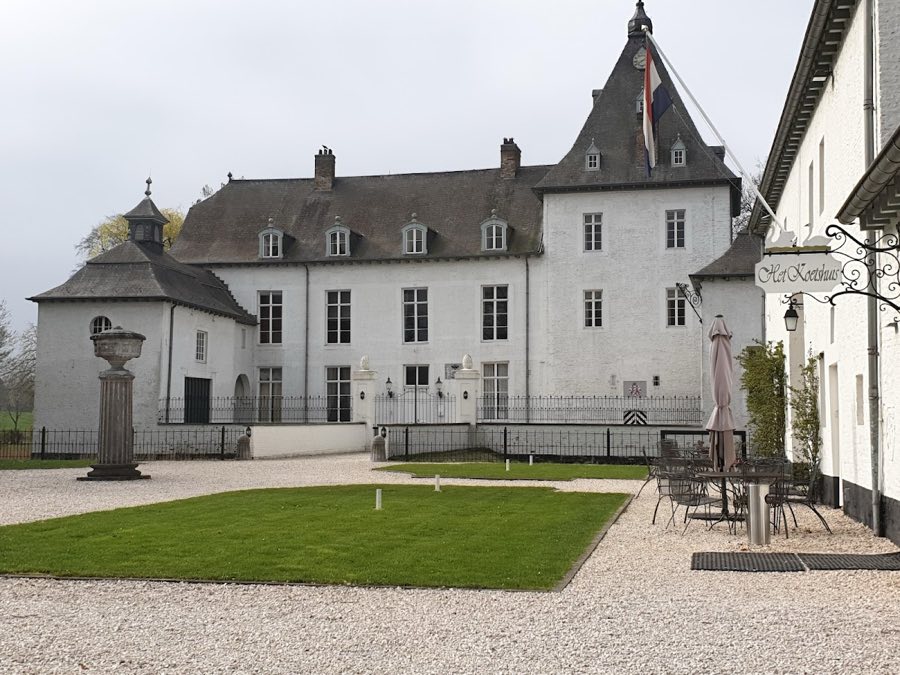
Castle of Rijckholt
Netherlands
CastleRestoredFor rent12th century
No. 66993
No. 66993 · 50.774 N, 5.700 E
Quick summary
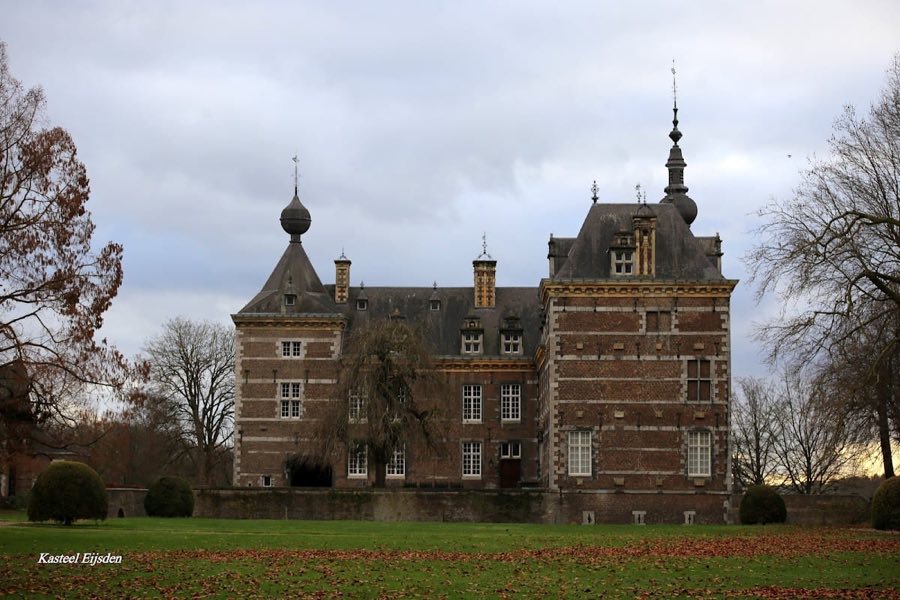
Eijsden Castle is a castle in Netherlands with origins associated with the 16th century.
See all castles in NetherlandsEijsden Castle is situated in the municipality of Eijsden in the Netherlands. Its origins can be traced back to the early Middle Ages, when the estate belonged to the prince-bishops of Liège, a powerful religious and political authority in the region. The estate was historically known as “den hof tot Esde,” a name recorded in 1334 when Duke John III of Brabant granted it to Thierry (Dyederic) de Montjoie and Valkenburg. This transfer brought the property into the hands of the Lords of Valkenburg, represented by Walram II of Valkenburg.
In the mid-16th century, the castle changed ownership to Arnold II Huyn d’Amstenraedt. He held significant regional titles including lord of Geleen, drost (a judicial and administrative official) of Valkenburg, governor of Maastricht, and captain-general of Limburg and the Landen van Overmaze. In 1558, Arnold II became the estate’s owner. His daughter Anna’s marriage to Willem de Lamargelle marked a new chapter. Their son Arnold de Lamargelle initiated major changes in 1636 by replacing the old court with the present castle and its attached pleasure garden.
During the late 17th century, the castle briefly came under the Van Hoensbroeck family through marriage. Later, in 1729, it passed to the De Geloes family through inheritance. The coat of arms representing the De Geloes family remains visible today in the form of an emblem displayed on the basin located in the castle’s forecourt. At the beginning of the 20th century, the last female of the De Geloes lineage married Count Marcel de Liedekerke, and the property remains in the hands of their descendants.
Eijsden Castle also played roles during significant military campaigns. Most notably, it served as the headquarters for William III of Orange between 1672 and 1676, during his efforts to repel French forces, including the 1673 Siege of Maastricht. Later, in 1748, it functioned as a command post for French Marshal Count Ulrich Friedrich Waldemar von Löwenthal at the Battle of Lauffeld. The castle’s historical importance endured into modern times; Queen Beatrix stayed there in 1995 amid national celebrations. A major structural event took place when the entrance tower collapsed in 1952 but was subsequently reconstructed in 1958.
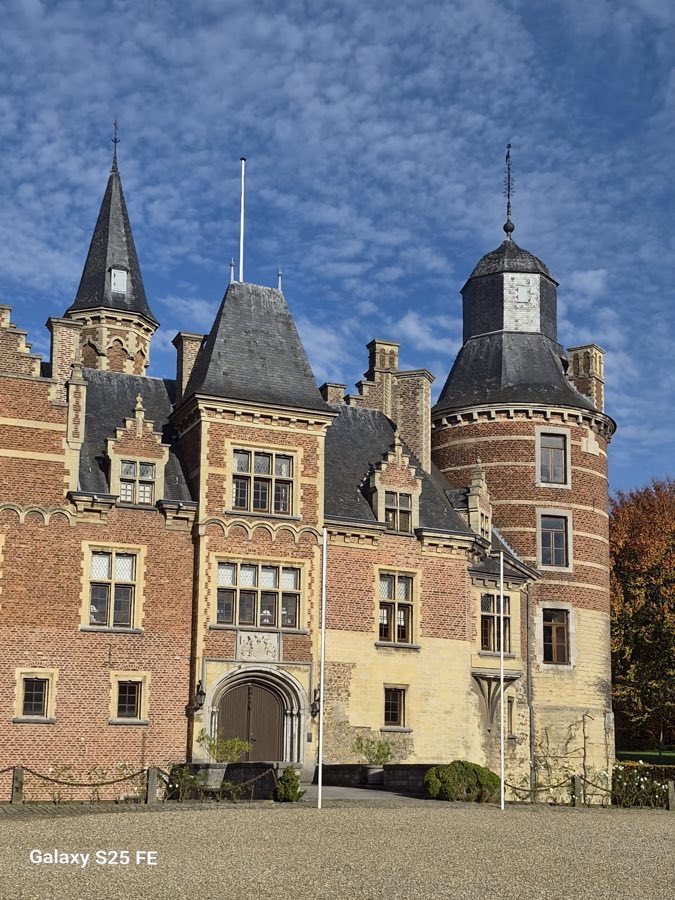
Eijsden Castle presents a layout formed by two wings set at right angles, connected at their outer corner by a substantial tower. The castle, built originally in 1636 and substantially rebuilt in 1767, exemplifies the Mosan Renaissance mannerist architectural style. This style is recognizable by the alternating horizontal bands of white Namur stone and red brick, known as “speklagen,” which richly adorn the facades. Window frames and cornices consist of the same white Namur stone, providing both strength and decorative effect. Surrounding the entire complex is a water-filled moat, classifying it as a water castle and highlighting its defensive character.
At the corner linking the two wings, there is a prominent heavy corner tower, accompanied by a slender stair tower. Both towers feature traditional helmet-shaped roofs topped with bulbous spires, a distinctive shape that was renewed during restoration efforts in the late 19th century. On the eastern end, a tower-like guardhouse provides access to the courtyard through a gate marked with the castle’s original completion year of 1636. Above this entrance, one finds the combined coat of arms of the De Lamargelle and von Bocholtz families, symbolizing the alliance of these noble houses. This guardhouse also carries the characteristic helmet roof with a bulbous spire.
Inside, the castle underwent notable interior enhancements from 1767 to 1770 under architect Etienne Fayen from Liège. The ground floor rooms feature decorative stucco and wood paneling crafted in the Louis XV style, including painted lintels above dining room doors. The first floor was later refined with staircases and landings reflecting the Louis XVI aesthetic. Among the furnishings is a mantelpiece originally from nearby Oost Castle, linking Eijsden to other regional noble estates.
A major restoration between 1881 and 1886 introduced dormer windows to the roof, renewed the corner tower’s spire, and added the bulbous spire to the stair turret. The south facade was enhanced with blue stone cross windows, while portions of the cornice were refreshed. The entrance from the courtyard received a neo-Renaissance update, blending historical styles with 19th-century tastes.
The gatehouse and forecourt, dating from 1649 following a fire that required rebuilding, stand as important parts of the castle’s layout. These structures possess a helmet roof crowned by a bulbous spire, and the terrain side of the doorframe is crafted from robust blue stone. Restorations carried out in the early 1880s repaired and reconstructed the northern part of the forecourt to preserve its historical character.
Surrounding the castle, the current park traces its design back to around 1900 when French landscape architect Achille Duchêne replaced an earlier garden that had been established in the late 18th century. The northern section of the previous garden remains, including an 18th-century ice cellar used for storing food before refrigeration. The newer park features a neo-Rococo pond and a sculpture group depicting three putti, or cherubic figures. Additionally, the southern terrace wall displays garden ornaments salvaged from Oost Castle, such as busts, vases, and a statue representing the shepherd god Pan, thereby linking the estate’s landscape to classical themes.
No. 94232
No. 95327
No. 54313
No. 52283
Comments
Comments for Eijsden Castle will require a verified account before posting.
We'll send a verification link before your first comment is published.